
Get a Cape Coral commercial roof inspection that records seams, drainage, penetrations and repair priorities for facility and capital planning.
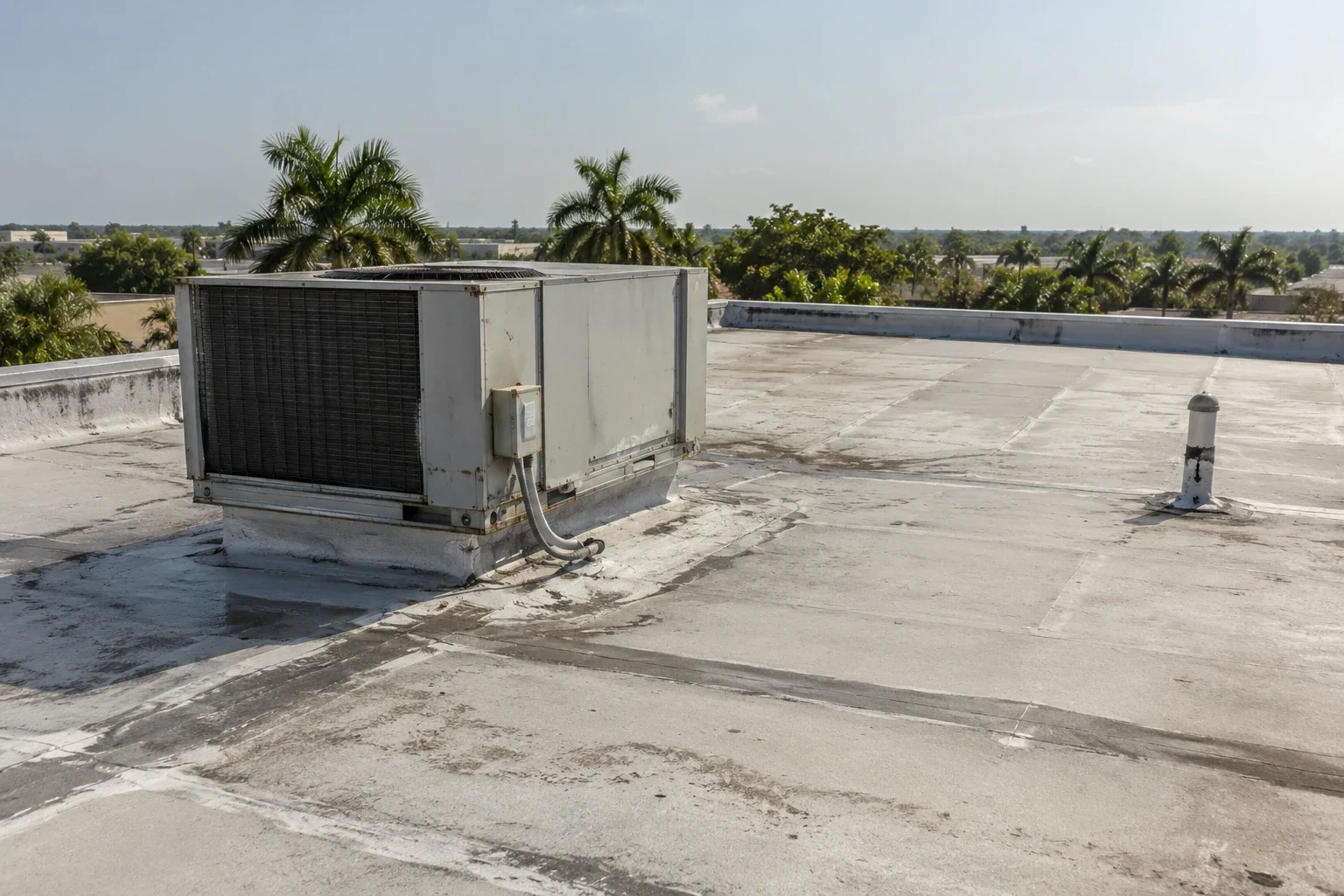
A loose termination bar at a parapet can expose a repair issue long before water reaches a ceiling. A commercial roof inspection records the field, edges, penetrations and drainage as one assembly, then separates visible defects from questions that need testing. In Cape Coral, heat, humidity and seasonal rain shape how roof materials behave, but inspection findings must come from the actual building. We note access limitations, photograph representative conditions and identify which repairs are immediate, planned or still unverified. The report gives the facility manager a roof condition record that can be compared with roof condition reporting and future capital planning.
What a Hands-On Roof Walk Covers
Begin with the roof plan and the building’s access rules. Identify roof sections, system changes, equipment locations, drains, scuppers, expansion joints and areas that cannot be safely reached. At the surface, examine seams, patches, punctures, membrane shrinkage, exposed reinforcement, loose metal, sealant and flashing transitions. Look for debris or standing water at drainage paths, then record whether a blockage or a larger slope issue appears to be involved.
Details deserve close attention because they join dissimilar materials and movement. Inspect wall terminations, curb corners, pipe penetrations, skylights, perimeter edges and equipment supports. Check whether fasteners remain secure, metal shows corrosion, sealant has split, and the prepared substrate appears stable. Describe the observation rather than jumping straight to a replacement recommendation. A clean-looking field does not establish the condition of a concealed layer or a detail hidden beneath equipment.
For larger facilities along Pine Island Road, divide the inspection map into roof sections so a later repair can be tied to an exact area. A healthcare site such as Cape Coral Hospital has multiple clinical and support functions, so roof access and inspection timing should be coordinated with facility staff. The building type changes logistics, not the inspection standard.
Separate Observations From Conclusions
A useful report says what was visible, where it was found, why it matters and what would verify an uncertain condition. Photograph the defect with a location reference, describe its size and material, and mark it on a roof plan. Identify urgent water entry separately from maintenance work and longer-range replacement concerns. If a surface condition cannot be confirmed from the accessible area, state that limitation and recommend a defined next step.
Interior observations belong in a separate record from roof-level findings. A ceiling stain can help direct attention, but water may travel before it appears indoors. Likewise, standing water may signal drainage or deflection concerns without proving a leak. Report the relationship that can be observed and avoid assigning cause without enough evidence. Where several areas show related deterioration, explain the pattern and note which portions were not inspected.
Use a priority system that connects action to evidence: repair now to control active entry, schedule maintenance before a detail opens further, test an uncertain assembly, or monitor a stable condition. Avoid broad ratings without an explanation. A report used by an owner, property manager or contractor should let each reader understand the condition and the recommended scope.
When Testing Adds Useful Evidence
A visual walk cannot confirm every layer below the membrane. If wet insulation, trapped water or a recover decision is at issue, additional evaluation may be warranted. Infrared imaging identifies patterns that can guide sampling; it does not independently prove moisture. Core cuts confirm conditions at their exact locations. The survey should state the method, sample points, findings and limits, then explain how each result changes the proposed repair boundary.
Do not make an opening without authorization and a plan for temporary closure. Identify who approves the test, how the roof is restored and whether destructive testing could affect a warranty or active building operation. For a roof with several additions or repair generations, test points should account for changes in assembly instead of treating the full roof as uniform.
A commercial infrared moisture survey may complement the walk where the roof area is broad or wet insulation is suspected. If access is constrained, drone imaging can document visible surfaces where allowed and safe, while hands-on inspection remains necessary to evaluate attachment and material condition. Use leak investigation when an active interior report needs a water-path assessment.
Read Findings in the Cape Coral Setting
Fort Myers Page Field, the nearest long-running official climate station used for Cape Coral, records average highs around 91 to 92 degrees from June through September and about 57 inches of annual precipitation. Plan drainage, surface preparation and work windows with those regional conditions in mind. Hurricane Ian brought severe surge to parts of the Lee County coast in 2022; post-storm inspections compare current roof conditions with dated records and document findings by building.
Salt exposure varies with shoreline proximity and local shelter. Photograph fasteners, edge metal and exposed rooftop equipment at the building, and recommend further evaluation when inspection shows deterioration.
Commercial and employment properties in City Centrum, Del Prado North Commerce Park and along the Pine Island Road corridor each need an inspection mapped to the installed assembly, access and occupancy.
Turn the Report Into a Workable Plan
Organize recommendations by roof section, action and evidence. A localized defect may need a defined repair; drainage restrictions may call for drain or scupper work; widespread deterioration can justify comparing recover with replacement. List dependencies such as moisture testing, tenant coordination, permits or rooftop equipment clearances so the owner can schedule the next decision.
Retain the inspection date, weather notes, photographs, roof plan and records reviewed. Give the facility contact a clear note on restricted areas, unresolved questions and changes that should prompt a new inspection. Reusing the same location labels lets future inspectors compare conditions without relying on memory. Where multiple properties share a maintenance program, consistent reporting supports budgeting while each building keeps its own findings.
For a useful site visit, provide roof access instructions, past repair records, leak reports, equipment changes and any warranty documents. We can then inspect accessible areas, explain the evidence and identify the right next step without presenting an unverified condition as a fact.
Commercial Roofing Questions
What will a commercial roof inspection document?
The report records accessible roof sections, visible field and edge conditions, penetrations, drainage, photographs, location references and recommended next steps. It should distinguish active defects from maintenance items and note areas that could not be reached. Testing recommendations should explain what question they answer and how results could change the work scope.
Can an inspection tell us whether insulation is wet?
A visual inspection may identify clues but cannot confirm every concealed layer. Infrared patterns can direct sampling, and an authorized core cut verifies material at its location. The report should show test points and limits. If no testing was performed, state that moisture below the visible surface remains unconfirmed.
How should we use inspection findings to set priorities?
Start with active water entry and safety concerns, then address details likely to admit water, drainage restrictions and recurring deterioration. Separate repairs from testing and longer-term replacement planning. Each recommendation should point to an observed condition and location so the facility team can verify the reason for the work.
Does storm history mean our roof needs a storm repair?
Regional storm history helps frame preparedness, but it does not prove damage at a particular building. Inspect the roof, compare current conditions with prior records and document observed changes. If the origin of a defect is uncertain, describe the evidence and next investigation rather than assigning a cause based on location alone.
Provide roof access rules, available plans and repair history. We will inspect accessible details, document findings by roof section and identify repairs, tests or planning steps supported by the evidence. Call 555-555-5555 or request a roof assessment for Commercial Roof Inspection in Cape Coral, FL.