Evaluate PVC commercial roofing in Cape Coral by checking welded seams, chemical exposure, drainage and the condition of each roof transition.
A split PVC lap beside an exhaust curb can start as a small detail and become a water path across the roof. We inspect the weld, the flashing turn and the surface around the curb before choosing a repair. PVC is a thermoplastic single-ply membrane with heat-welded seams; a sound connection depends on compatible material, clean preparation and controlled welding. In Cape Coral, FL, warm weather and high humidity make drainage and dry work surfaces part of the installation plan. We record the roof in front of us before deciding whether a patch, detail rebuild or broader replacement fits.
Commercial roofs near the South Cape CRA include changing mixes of commercial and mixed-use property. We confirm membrane type, attachment and prior repairs at each address before setting a repair boundary. A TPO system can be compared when the substrate and project requirements make it a candidate.
Chemical Exposure and Surface Condition
PVC is often selected where a roof may encounter oils or grease, but the exposure must be identified before a product is specified. Kitchen exhaust, process vents, maintenance fluids and rooftop equipment can leave residue that affects cleaning and seam preparation. We inspect the source, the path of discharge and the membrane below it. If the surface has softened, changed color or lost reinforcement, we document the extent and determine whether the condition reaches the seam or insulation. Select materials for the observed exposure and system requirements.
A patch needs a clean, dry surface and compatible membrane. We remove residue within the work area, prepare the sheet, weld the repair and check cooled seams and corners. If oil has affected a broad area, a small overlay may conceal rather than correct the material problem. A roof inspection can map the surface and identify where further testing or removal is warranted.
At a restaurant or service building in Tarpon Point, the operating use and waterfront setting call for a site-specific review of rooftop discharge and access. Restaurants and marina services at Tarpon Point make exhaust routing worth checking, but do not establish grease exposure on a particular roof. We inspect before recommending a system change.
Welds at Seams and Penetrations
A PVC weld should join both sheets continuously without a channel at the edge. We check laps, patches and flashing seams for open corners, wrinkles, fishmouths and areas where the sheet has pulled from a curb. A test weld on a prepared sample can help set equipment conditions when the material and weather change. After the finished seam cools, probe its full length and record any weak segment for repair.
Penetration boots, pipe seals and equipment curbs need corners that remain closed through movement and temperature changes. A replaced or shifted unit may leave a mismatched curb. We measure the transition and inspect the substrate before specifying new flashing. A leak investigation compares the room report with roof-level evidence.
Metal edges require a compatible connection between sheet, termination and coping. We check fasteners and corrosion, then confirm where the membrane ends and where counterflashing takes over. A loose edge may need metal work beyond the PVC repair itself. The proposal can identify coping and edge corrections as a distinct item, with photographs showing the transition before work.
Rain, Heat, and Drainage
Fort Myers Page Field's normal annual rainfall is close to 57 inches, and summer highs there commonly reach the low 90s Fahrenheit. For Cape Coral roofs, track heat exposure, wet-surface preparation and outlet capacity. PVC membrane should drain to functioning outlets without being forced around debris or ponded areas. We check sumps, drain rings, scuppers and the membrane tie-in, then distinguish a blockage from a low spot that needs slope correction.
Rain can interrupt adhesion, welding and exposed-roof work. We confirm the surface is ready and protect open sections at each shift, especially near drains and parapets. If a drainage path is inadequate, a drain and scupper review can define corrections before a new membrane covers the roof.
Salt exposure varies with distance from open water and the shelter around a building. At coastal sites, we inspect exposed metal and fasteners for corrosion before specifying the membrane-to-metal transition. A Clipper Basin property has a waterfront planning context, while its roof materials and exposure still require a direct inspection.
Attachment and Project Controls
Replacement planning starts with the deck, insulation, existing attachment and roof geometry. A PVC assembly may be mechanically fastened or adhered, and each method changes preparation and sequencing. We identify the system layers, check edge conditions and review available records before writing the scope. Cape Coral follows the Florida Building Code, 8th Edition (2023); the project team confirms applicable wind, energy and permitting requirements for the proposed assembly. We verify fastening needs at the building.
For occupied buildings, coordinate staging, access routes, equipment clearances, noisy work and deliveries with the facility contact. Installation details should list membrane, attachment, flashing, metal transitions, drainage corrections and closeout photographs. If removal exposes wet insulation or an unsound deck, the owner needs an agreed review path before the crew extends the scope.
We document weld checks and completed details by roof zone so maintenance staff can identify the new work later. Where PVC is not the preferred fit, a comparison with KEE roofing can examine the actual exposure and project priorities. The system choice remains tied to the building, not the name of a material alone.
Defining the Repair or Replacement
A localized puncture or open lap may be repaired when surrounding PVC remains sound and can accept a new weld. If seams fail across multiple zones, contamination has damaged the sheet or insulation is wet beyond a manageable boundary, a larger scope may be justified. We map the findings, note test locations and separate confirmed work from conditions visible only after removal. That lets the facility director compare repair, recover eligibility and replacement on consistent assumptions.
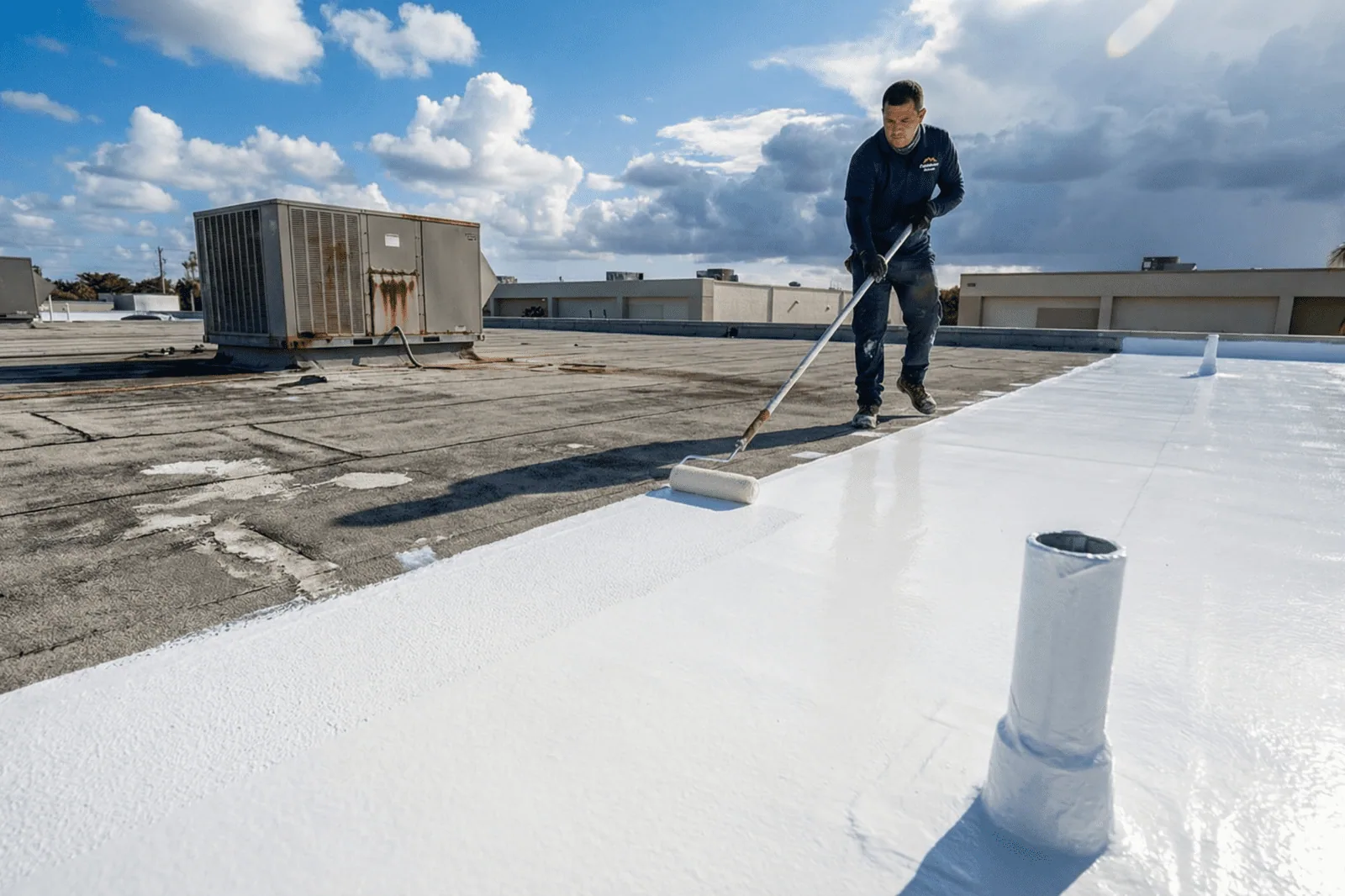
Coating is a different approach from replacing membrane. It requires a suitable surface and compatible preparation, and it does not rebuild a weak curb or correct a blocked drain by itself. If restoration is being considered, compare it with a coating assessment that names the substrate condition and detail work. State corrections, exclusions and concealed-condition handling in the proposal.
Send the address, roof plan, repair records and leak report. We will inspect welds and transitions, identify useful tests and return a PVC scope for the property.
Commercial Roofing Questions
Does PVC tolerate grease from rooftop exhaust?
PVC may be appropriate for certain grease exposures, but the source and intensity should be identified before system selection. We inspect the exhaust path, residue and membrane condition, then check compatibility and preparation requirements for the proposed repair. A broad area of material change may require removal or a different assembly.
What field checks confirm the quality of a PVC weld?
We examine the full lap, probe cooled welds and inspect the sheet around corners and penetrations. A weak seam is marked by location and tied to photographs. If a leak report suggests moisture beneath it, we recommend a defined test rather than treating the seam alone as proof of the entire roof condition.
Can a PVC roof be installed over an existing roof?
A recover depends on layer count, moisture, deck condition, attachment and the applicable code path. We inspect records and perform approved testing before recommending another layer. A comparison with EPDM may also suit some roof geometries. If wet or unstable material is present, the scope should address its removal instead of hiding it beneath new membrane.
What Cape Coral conditions affect PVC roof work?
High summer temperatures, humidity and seasonal rainfall influence surface preparation, welding windows and temporary closure. Drainage and exposed metal also deserve attention, while salt exposure varies by site and shelter. We record the conditions at the building and schedule each work area around the system requirements.
Send the roof plan, PVC product records and locations of open seams, flashing or water entry. We will verify membrane compatibility and document the repair boundary. Call 555-555-5555 or request a roof assessment for PVC Roofing in Cape Coral, FL.