Keep Cape Coral logistics buildings dry with roof work coordinated around dock schedules, inventory protection, truck routes and facility access.
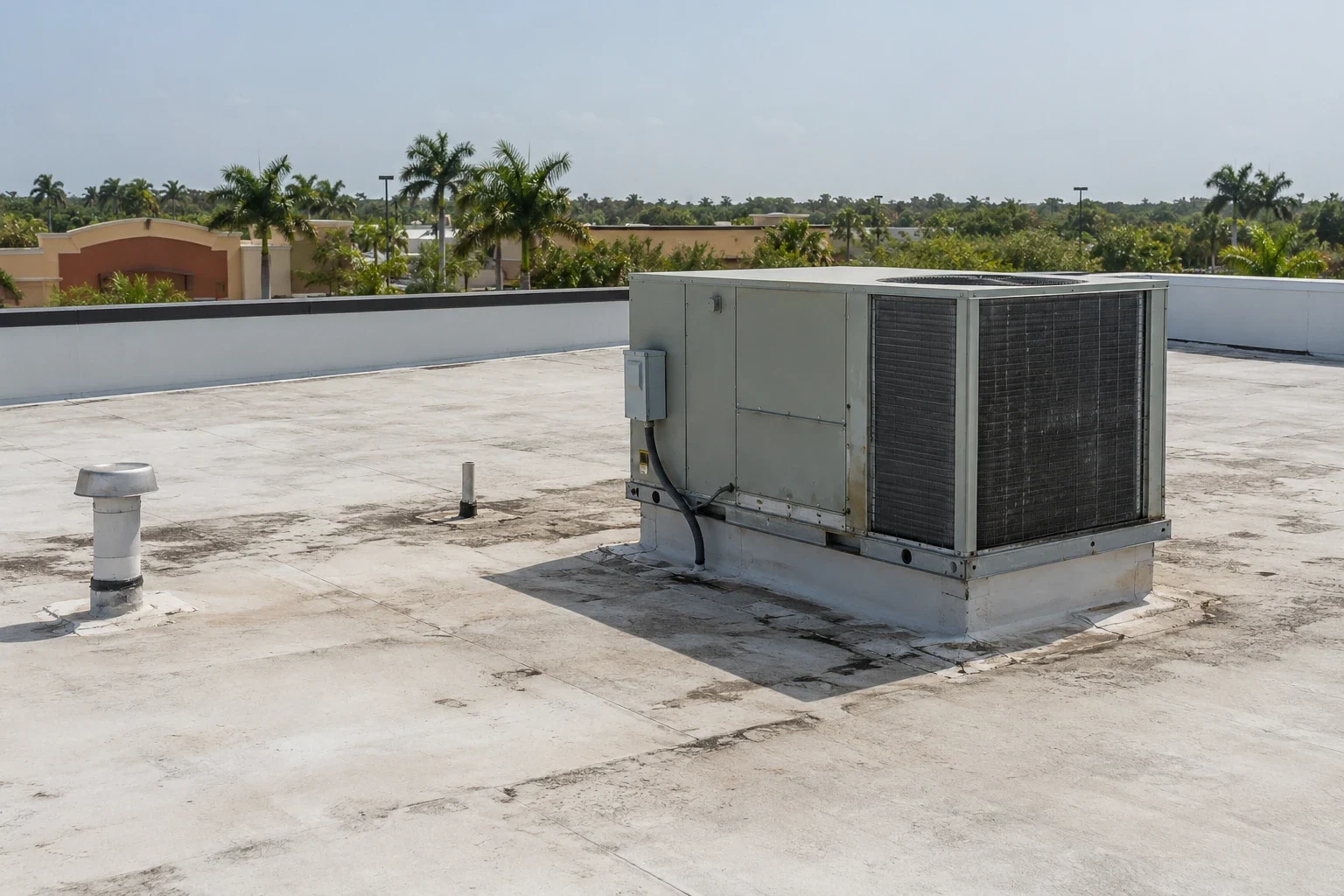
A puncture near a loading-door canopy can wet stored cartons well before water appears in the office. We inspect the roof above the report, trace the membrane and edge details into the drainage path, then mark where a repair can stop at sound material. The Pine Island Road corridor includes warehouse and industrial uses, with regional air and rail connections supporting freight movement across the Cape Coral market. A roof project at a distribution operation therefore needs more than a material schedule: it needs dock access, staging and inventory controls. We inspect, repair, maintain and replace logistics roofs, with emergency response available all hours when water entry threatens goods or operations.
Locate the Leak Against Racks and Loading Bays
Record the affected dock, storage row, office or equipment area before inspecting above it. Water can travel along deck flutes, insulation joints or conduit, so the interior wet spot does not automatically mark the roof opening. We compare the report with seams, curbs, drains, skylights and perimeter metal, then photograph the evidence by roof zone. If high-bay access is limited, identify the visibility limits and safe inspection method before making a claim about concealed material.
Hancock Creek Commerce Park sits at Pine Island Road and Diplomat Parkway, with planned office, flex, manufacturing and warehouse uses. Seminole Gulf Railway’s Bayshore Transload Center and Southwest Florida and Punta Gorda airports connect the market to regional freight routes. At each property, verify the roof assembly against its drawings and the details found in the field. A marked roof inspection can tie findings to dock and storage locations, while a photo condition report gives operators a record for maintenance and carrier or ownership review.
Set the Work Boundary Around Freight Movement
Dock doors, trailer lanes, yard circulation, employee entrances and fire access all influence the roofing sequence. Confirm where materials can be unloaded, whether a drive may be restricted and which doors need to stay active. If a crane or lift crosses the truck path, agree on setup and clearance with operations before the delivery window is booked. A shift handoff should identify the roof section opened, the protection installed and the point where work can safely resume.
North Cape Industrial Park and Lee County Industrial Park serve industrial and flex businesses, while Pine Island Road links a range of commercial uses. A logistics site may share a landlord or campus with manufacturing operations, so a plant maintenance contact can help confirm process equipment or discharge constraints. Property managers can coordinate common access rules across a multi-building portfolio, but dock schedules and inventory priorities still come from the individual operator. We use the approved route and work window, keep drains open and define how stored goods and air intakes are protected below active work.
Limit Exposure Above Stored Product
Before removing membrane, identify what is stored below, whether racks or conveyors block an interior inspection and who can authorize product movement. Temporary interior protection may be needed under the work area, but it does not replace a watertight roof boundary. Keep tear-off limited to a zone that can be secured before weather arrives. If rain interrupts the shift, document the temporary termination and the person checking it before the crew leaves.
Fort Myers Page Field's 1991 to 2020 normal is about 57 inches of precipitation annually; summer roof surfaces also face intense heat. Check current conditions before opening a dock-side roof area, since a passing shower can alter protection needs quickly. We check the substrate for moisture before placing new material. If a drain bowl or overflow is restricted, drain and scupper repair can be coordinated with adjacent membrane work. For an opening after normal dock hours, emergency roof response is available day and night, including weekends and holidays, when access conditions are safe.
Compare the Repair Area With the Roof Renewal Plan
A localized puncture or seam defect may be repaired where surrounding material is attached, dry and compatible with the new detail. Repeated failures at roof transitions, widespread moisture or loose edges require a broader review. Recover is considered only after layer count, attachment, drainage and deck suitability are established. Replacement allows concealed layers to be examined but creates additional movement of materials, equipment and debris around dock operations. We state what is known and list testing that could change the scope.
A system choice also affects future access. Rooftop units, exhausts, conveyors and future service routes should remain clear after the new detail is installed. TPO roofing or a metal retrofit may be options when the existing roof and project requirements support them; a system name alone does not decide suitability. A phased reroofing plan can keep defined areas watertight while dock operations continue. Scope should identify the roof zone, drains, edge closures, staging, haul route and closeout evidence so later maintenance can find each repaired location.
Use Regional Weather for Readiness, Not Assumptions
After safe access returns, inspect windward edges, rooftop equipment, penetrations, drains and temporary repairs. Record visible movement or water entry and note any section that could not be reached. For logistics sites, schedule access around dispatch and dock operations, then document roof zones, loading constraints and temporary protection.
Cape Coral’s north-side commercial activity includes the Pine Island Road corridor and Hancock Creek Commerce Park, while freight links extend beyond the city. For a site near Hancock Creek Commerce Park, include gate instructions, truck restrictions and the approved staging contact in the work file. Emergency readiness should list who can authorize access and where temporary materials are stored; do not expose crews to unsafe wind, lightning or roof conditions to reach a building.
Commercial Roofing Questions
Can roof work be scheduled without closing the loading docks?
Often, if the work zone, lift setup, material delivery and haul route can be separated from the active dock schedule. We confirm the doors and lanes that must remain available and phase each roof section to a secure stopping point. A temporary closure may still be needed for a specific lift or safety boundary, and operations should approve it before staging.
How do you protect inventory beneath a roof repair?
Identify stored product, high-rack limits and interior access before opening the roof. The facility may need to move or cover inventory under the work area. We keep the roof opening small, install temporary protection as conditions allow and record where the assembly remains exposed or inaccessible.
What should a logistics operator do after a major rain event?
Check interior reports, drains and known temporary closures, then arrange a safe roof inspection when weather permits. Compare photographs and roof-plan labels with the current condition. Regional rainfall or storm history is context; only a building-level review establishes which detail needs work.
When is replacement worth evaluating instead of repeated patching?
Compare renewal when failures recur across seams or penetrations, wet insulation is extensive or edge attachment is no longer sound. We document the roof zones, tests and access assumptions that support the decision. Recover and replacement should also be checked against drainage, deck condition and the need to keep freight routes operating.
Share the facility address, roof plan, affected dock or storage area, access rules and operations contact. We will map the roof condition and define repairs or renewal phases around freight movement. Call 555-555-5555 or request a roof assessment for Logistics and 3PL in Cape Coral, FL.