Keep Cape Coral shopping centers protected with roof repairs planned around tenant access, shared drainage, storefronts and active customer areas.
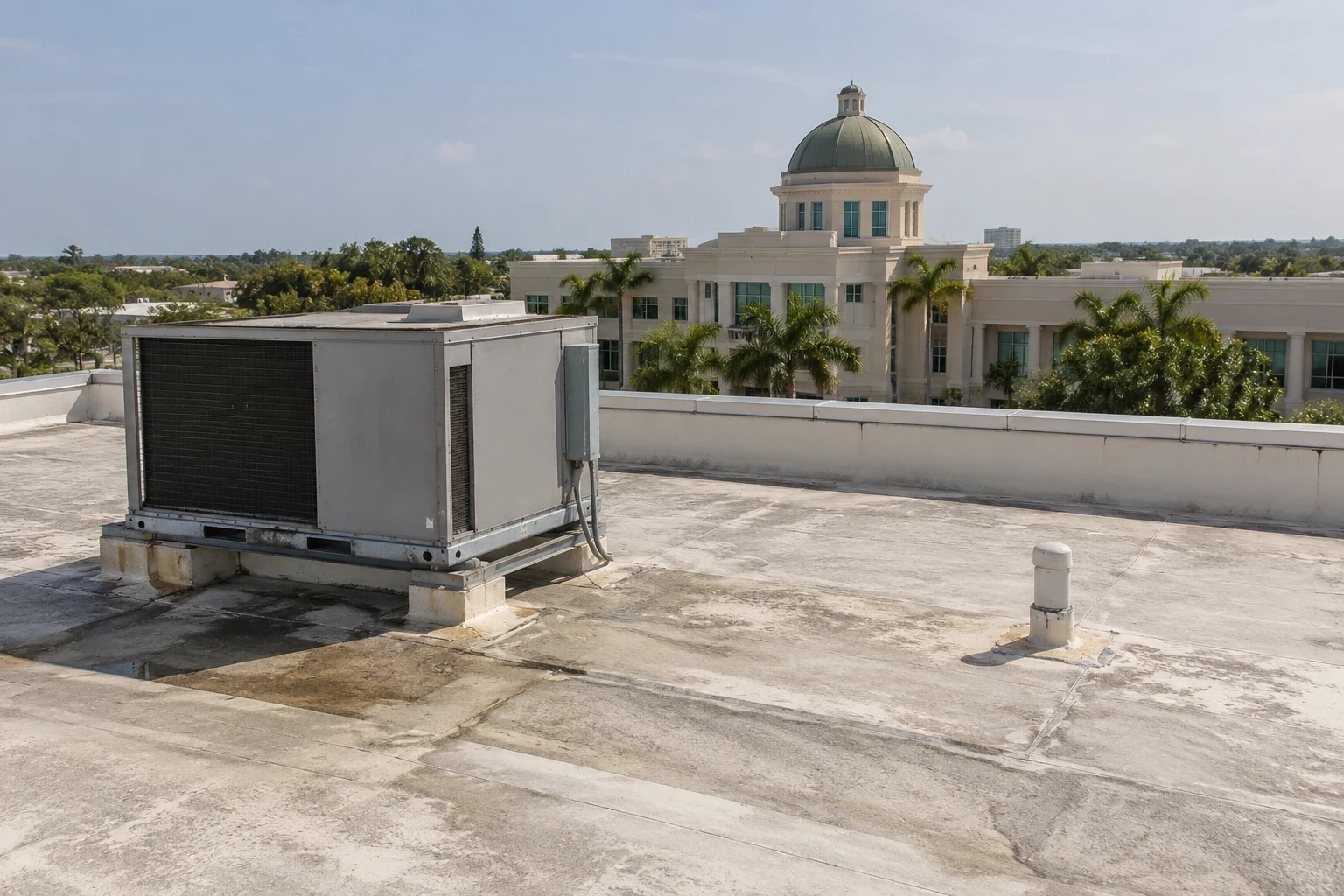
A failed lap above one storefront can send water across a shared ceiling bay and leave the property manager coordinating several tenants before the source is clear. We inspect the membrane, nearby penetrations, drains and parapet transitions, then mark the affected roof zone separately from adjoining sections that remain dry and attached. In Cape Coral, Coralwood Center stands along Del Prado Boulevard, and Merchants Crossing connects Pine Island Road with US 41 as a large retail destination. At each center, confirm tenant hours, deliveries, common-area drainage and roof access before setting the work sequence. We repair, replace, inspect and maintain shopping-center roofs, with emergency response available day or night when active water entry threatens occupied space.
Trace the Leak Across Tenant Boundaries
Water can follow a deck flute, insulation joint, conduit or wall before appearing below, so a stained ceiling does not identify the roof opening. We compare the report with seams, rooftop units, skylights, wall transitions and drains, then photograph evidence by roof section. The survey distinguishes the likely entry from the interior impact and identifies suites needing follow-up.
Tenant changes can leave different repair generations across a center. A patch, replacement curb or sign support may interrupt the original assembly. We inspect each transition and confirm a repair can tie into prepared, dry material. Infrared patterns may guide moisture sampling but do not establish wet insulation alone. A roof inspection with photographs creates a common record for ownership, property management and affected tenants. Where the leak is active, commercial leak repair can focus on tracing and closing the entry before broader capital work is considered.
Keep Storefronts and Service Routes Open
Retail work has several access constraints: storefronts, loading, waste collection, fire lanes, rooftop equipment and customer parking. We confirm restricted areas and operating hours, then define staging, debris movement and notice for noisy work. If lifting equipment is needed, its approved setup must leave required exits clear.
Pine Island Road is a major commercial corridor with retail, office, light-industrial and mixed-use uses. Merchants Crossing sits where that Cape Coral corridor meets the US 41 commercial spine, while Coralwood Center fronts Del Prado Boulevard. In both locations, confirm tenant access with each property contact. Our occupied-building reroofing sequence divides tear-off into closable sections and tracks temporary protection at each shift. For a large-format retailer sharing the roof with other tenants, big-box roof work can also involve separate delivery windows and equipment coordination. A grocery building adds its own cooling and receiving requirements, so confirm them with the operating manager instead of assuming a standard shutdown.
Read Ponding and Overflow as System Conditions
Water held at a low point repeatedly wets seams, patches and penetrations. We check drain bowls, strainers, scuppers, overflow openings and slope for debris or compressed insulation. A slow drain may need clearing, while recurring ponding can indicate a slope or assembly problem. Record the location and condition so later visits can show whether it changed.
Retail roofs often have rooftop units and service lines that interrupt the drainage field. Confirm that condensate discharge does not direct water onto a seam or wall, and keep access around equipment available for both roofing and mechanical trades. Drain and scupper repair can be coordinated while nearby membrane is accessible. If the existing roof remains stable and dry, TPO roofing may be one replacement system considered against the building’s design and project requirements; a current membrane alone does not determine what should be installed. Every option must preserve positive drainage and a maintainable route to drains and equipment.
Plan Around Cape Coral Heat and Storm Readiness
The Cape Coral climate reference at Fort Myers Page Field records summer average highs of 91 to 92 degrees Fahrenheit and annual precipitation near 57 inches. Heat affects surface temperature and crew exposure, while warm-season rain can interrupt application, tear-off or adhesive work. We set a daily stopping point that can be secured before weather arrives and check the exposed substrate before covering it. Humid air makes a wet insulation finding consequential, but the moisture boundary must come from inspection or authorized testing rather than assumption.
A post-Ian roof review at a Cape Coral shopping center should account for the storm’s 2022 Category 4 landfall in Lee County and severe surge along the Gulf coast, low-lying areas and canals. After a storm, inspect the center’s edges, equipment, drains and membrane, then compare dated photographs. A storm-related roof assessment should record observed conditions separately from cause attribution. When a sudden opening cannot wait for business hours, emergency roof response is available all week, including holidays, subject to safe access and weather.
Compare a Defined Repair With Broader Work
A localized patch is appropriate when sound membrane remains around the defect and the repair can be welded, adhered or flashed in a compatible manner. Repeated seam openings, widespread wet insulation or loose perimeter metal may point to a larger scope. Recover can be considered only after layer count, attachment, drainage, deck capacity and code requirements are reviewed. Replacement removes more existing material and can expose the deck, but it also requires stronger tenant coordination, staging and debris control. We describe these cost and schedule drivers in the scope rather than promising a fixed duration before the roof is examined.
A shopping center can be phased by suite row, drain basin or access zone. Mark tie-ins and storefront notices. Before proposing a coating, test the surface and resolve wet areas or failing details; coating will not correct an unstable substrate or blocked drain. Replacement planning should include curb and edge transitions, while a photo-based condition report can help ownership compare immediate work with later capital needs. List areas not included, testing allowances and conditions that could change the repair boundary.
Close Each Phase With a Shared Record
Before closing a phase, photograph concealed conditions, completed laps, edge metal, drains and temporary terminations. Mark the work area on the property roof plan and identify any remaining defect or inaccessible section. This lets property management record what was completed. Keep tenant notices and after-hours contacts with the roof record so future work follows the correct access rules.
Coralwood Center and Merchants Crossing are local retail settings, while South Cape includes commercial and mixed-use storefronts. Each property has its own assembly, restrictions and drainage pattern. Send us the property address, available plans, leak reports and tenant or facilities contact. We will inspect the accessible roof areas, document findings and define a repair or replacement scope that protects the shared operating space.
Commercial Roofing Questions
How do you locate a leak that appears in a tenant suite?
We start with the room and time of the report, then compare that location with seams, curbs, drains and wall transitions above. Water may travel before it reaches a ceiling, so the affected suite does not automatically identify the roof opening. The report records the likely path, observed evidence and any area that needs testing or a second visit.
Can the roof be replaced without closing the shopping center?
Many projects can be phased while stores remain open, but the work zone, delivery access, noise, debris path and lift setup must be agreed with property management. Each section needs a secure end-of-day boundary. Some operations may require a temporary closure or restricted route, and the schedule should state those limits before tear-off begins.
What does recurring ponding mean for a retail roof?
Standing water can reflect a blocked drain, settled insulation or a slope condition. We clear and inspect the drainage path, then determine whether the surrounding roof sheds water as intended. If the same area holds water after maintenance, document it on the roof plan and evaluate the assembly before applying a coating or adding another layer.
Does Hurricane Ian establish that a Cape Coral center has roof damage?
No. Ian affected Lee County and parts of the regional Gulf coast, but a specific property needs its own inspection. We document visible changes and compare prior records if available. If the evidence does not establish why a defect occurred, the report states the condition without assigning an unsupported cause.
Share the property address, current roof plans, reported leak locations and tenant access contact. We will document the assembly and prepare a defined repair, maintenance or replacement scope for the affected areas. Call 555-555-5555 or request a roof assessment for Shopping Center Roofing in Cape Coral, FL.