Commercial roofing for Cape Coral buildings, from the first leak call to the closeout file.
A lifted edge termination is a connection problem before it is a coating problem. We inspect how the membrane meets the metal, whether fasteners still hold, and whether the substrate can accept a lasting repair. In Cape Coral, hot summer surfaces, humid air and recurring rain make moisture findings and daily closure part of the roof decision. We record the assembly and observed condition before recommending repair, restoration or replacement.
A facility can call us after hours, overnight, on weekends and holidays when water entry needs prompt attention. We coordinate safe roof access, protect the area below and record the next inspection or permanent repair needed.
Inspect What the Roof Shows
A report of water inside is a useful start, but it does not locate the opening by itself. We map the room or equipment affected, inspect nearby seams, drains, curbs, walls, edges and prior repairs, then consider how water might move through the assembly. When the roof record is incomplete, we identify what can be verified visually and what needs testing. Our commercial roof inspections put findings on a roof plan with photographs and access notes.
Drone views can help document broad areas or locations that are difficult to reach from a safe vantage point. Infrared scans can help identify temperature patterns for further moisture investigation, but a scan does not replace verification when the assembly requires a test opening. We distinguish observed defects, likely paths and unresolved questions so a facility contact can make the next decision with clear limits.
A practical report records roof zones, edge termination, membrane laps, metal transitions, penetrations, drains, prior patches and areas not inspected. If removal exposes wet insulation or a weak deck, we locate it, protect the opening and ask before broadening the work. The report should follow the roof condition rather than suggest certainty beyond what inspection or testing established.
Repair, Maintain and Renew
Commercial roofs need system-specific repairs. We work with TPO, PVC, EPDM, KEE, modified bitumen, built-up roofing, standing-seam metal, retrofit metal, spray foam, and silicone and acrylic coatings. Product choice follows the existing assembly, substrate, moisture, drainage and detail compatibility. A repair scope states preparation, material, tie-in and closeout; a maintenance visit checks drains, seams, flashings and exposed metal before a small issue grows.
If an active leak needs immediate attention, our emergency response runs through every hour of the week. We coordinate safe access and appropriate temporary protection, document what is visible and identify the follow-up inspection or permanent repair. A temporary measure is labeled as such. Permanent work depends on the roof's actual condition and the owner's authorization.
Replacement, recover and coatings each have prerequisites. We check moisture, attachment, deck capacity, drainage, edge conditions, curbs and the prepared substrate before comparing them. A replacement proposal accounts for insulation, removal, staging, equipment transitions, disposal, occupant protection and daily closure. A restoration scope describes preparation and eligible areas rather than assuming a coating can correct a failed assembly.
Work With the Cape Coral Building Context
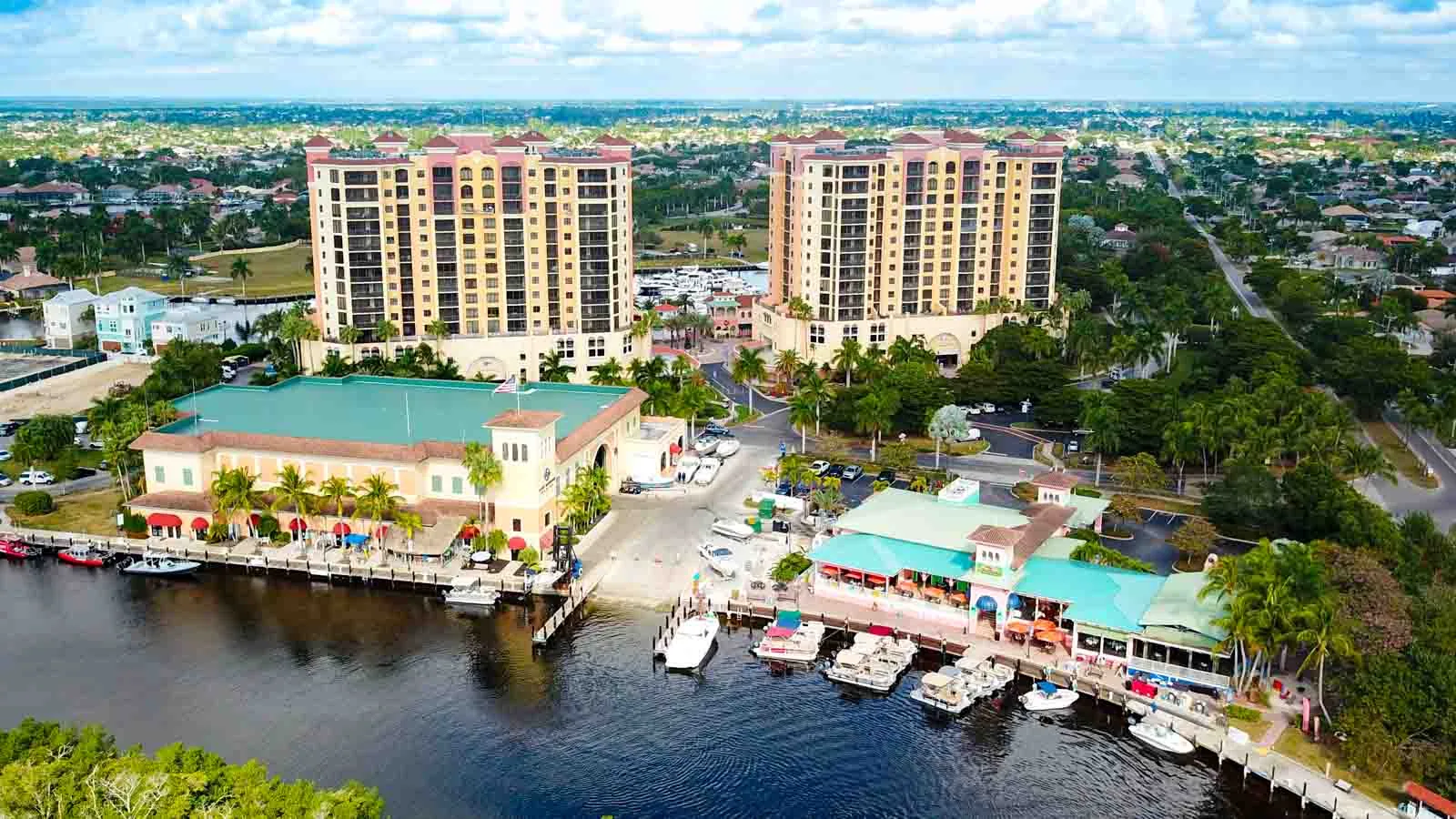
Pine Island Road, City Centrum and the South Cape redevelopment district organize Cape Coral's commercial activity alongside industrial parks and other employment areas. Healthcare, education, government, retail, construction, hospitality and industrial services all contribute to the local work base. At each address, confirm operating hours, access needs and the installed roof assembly before setting the work sequence.
At a healthcare facility such as Cape Coral Hospital on Del Prado Boulevard, the facilities contact may need to coordinate restricted spaces, patient care, service routes and equipment. A warehouse near Pine Island Road may require a different staging and delivery plan. South Cape includes commercial and mixed-use redevelopment activity, while municipal facilities around Cultural Park support public operations. The property and its authorized contact set the field plan in each case.
Fort Myers Page Field provides Cape Coral’s long-term climate reference, with summer average highs in the low 90s and yearly rainfall near 57 inches. Heat affects exposed material and working conditions; humidity makes surface preparation important; rain tests drains and temporary closures. We plan the work window around the selected system's installation requirements and the amount of roof that can be made watertight before the crew leaves.
We inspect the roof and document what is present before assigning a repair cause or limit. Our work begins with the property record, a field review and a scope the owner can use to plan a repair or replacement.
Protect Occupied Buildings and Working Sites
Roofing work is often performed while people, inventory, equipment or public services remain below. We agree on access points, lift locations, staging, deliveries, work hours, noise periods, interior protection and the person who receives updates. The scope identifies which roof area will be open and where the crew plans to stop at the end of a shift. For larger work, our occupied-building sequence describes tenant or staff coordination, daily closure checks and phase handoffs.
Equipment work requires coordination with the owner and qualified trade responsible for disconnecting and restarting the unit. We do not move equipment or change a service connection based on a roof observation alone. Where a curb or penetration is part of the roofing scope, identify the repair detail and the trade handoff so that the membrane and equipment transition are both accounted for.
Cost and duration depend on roof area, detail count, testing, existing layers, access equipment, material lead time, disposal, protection and weather. If hidden conditions appear after removal, we photograph and locate them, secure the exposed area and request approval before the limit grows. The owner can then compare added repair with a broader alternative using the same roof map and documented condition.
Leave the Next Decision Ready
Closeout includes photographs, materials installed, preparation, drain and edge observations, test results, concealed conditions and areas left outside the work. We record what was completed and what remains open, along with the person who accepted the roof section. A condition report can preserve those details so the next facilities contact does not need to reconstruct the repair from an invoice alone.
For owners with multiple properties, roof asset records keep inspection notes, repairs, equipment changes and maintenance dates attached to each address. Capital planning can organize confirmed findings by urgency and identify testing that might change a future renewal decision. A portfolio summary is more useful when it preserves the differences among each building's roof assembly and operations.
Bring us the property address, roof drawings or prior reports, leak history and operating limits. We will inspect the assembly, show what the findings support and prepare a repair or renewal scope tied to the actual building. For roof access and staging along Pine Island Road and in South Cape, we confirm each building's operations and keep its roof record tied to the address.
Commercial Roofing Questions
What kinds of commercial roofing work do you handle?
We inspect, repair, maintain, replace, recover and restore commercial roofs, and document conditions with photographs and written reports. The recommended service follows the installed assembly and the findings at the property.
Do you work on occupied buildings?
Yes. We coordinate access, staging, work hours, interior protection and daily closure with the property contact. The sequence is adjusted to the site operation and restricted areas.
How do you choose a roof system in Cape Coral?
We identify the existing assembly, moisture, substrate, drainage, edges, penetrations and operating needs first. We compare compatible options against those conditions and the installation window, rather than selecting by location alone.
What should we expect after an inspection?
You receive mapped observations, photographs, access limitations and practical repair or renewal options. The report states which findings are confirmed, what testing could change the scope and the work needed to close each area.
Talk Through Your Commercial Roof
Share the property address, roof records, reported condition and operating requirements. We will inspect the assembly and lay out a documented path for repair, maintenance or renewal.