
Build Cape Coral roof budgets from documented condition, repair history, access needs and replacement timing for clear facility and portfolio decisions.
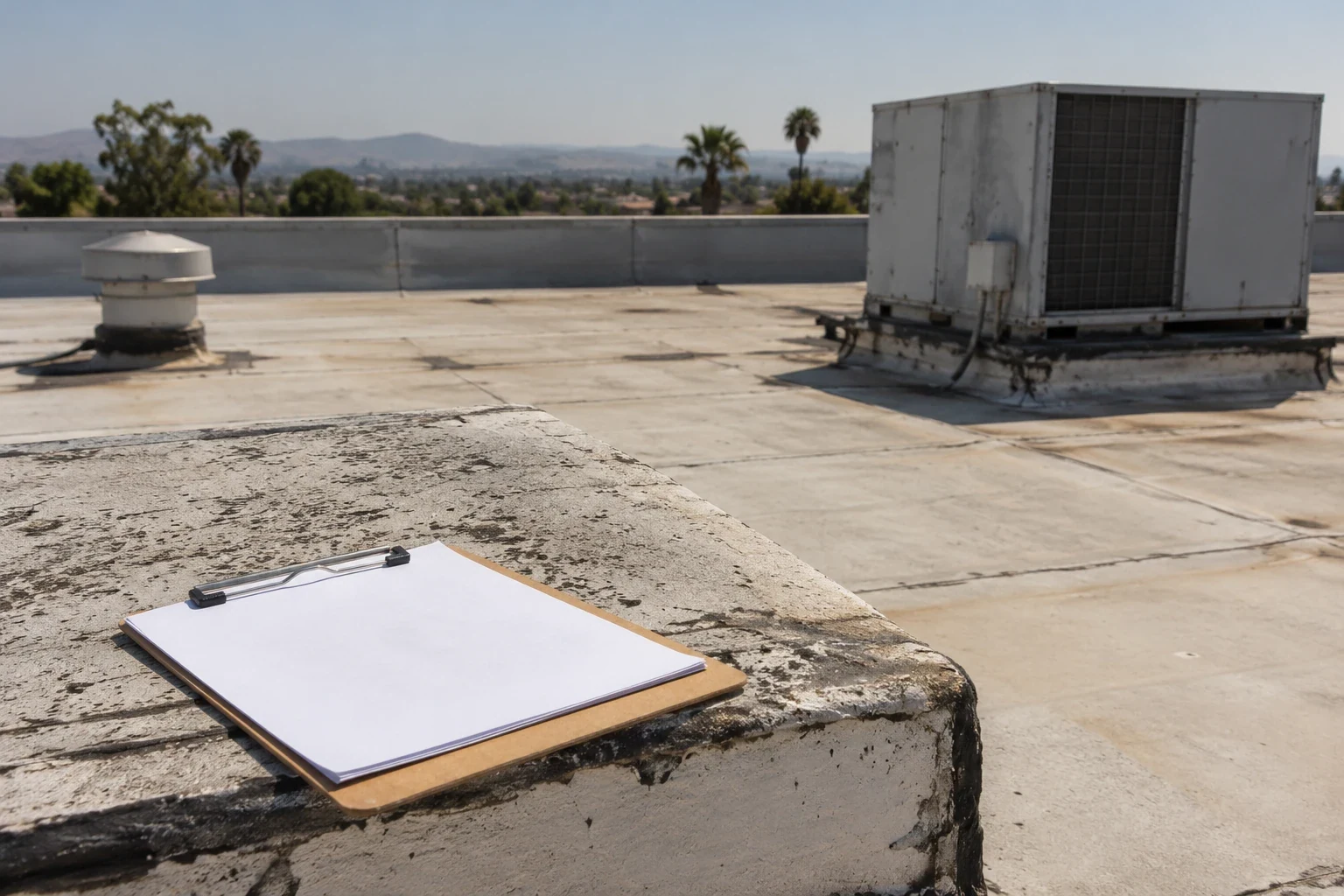
A bubbling membrane at a drain can move a roof from routine maintenance into a budget decision, but one visible defect does not set a replacement year. Capital planning starts with the condition map, tests and repair history, then separates work that needs action now from renewal that can be scheduled. Summer heat and high moisture make the roof's outlets, laps and perimeter details practical budget items in Cape Coral.
Pine Island Road supports commercial, office, flex and light-industrial activity, while City Centrum includes public facilities and professional uses. Those different assets may compete for the same annual funds. Each roof needs a documented scope and operating context before projects are ranked together.
Establish the Condition Behind the Budget
Start with a current roof plan, system information, dated photographs and a list of completed and open repairs. Record active entry, seam or flashing failures, wet insulation, drainage restrictions, edge condition and access limits by roof section. An estimate built from a single building-level rating hides the difference between a local repair and a roof with multiple areas requiring work. A commercial roof inspection gives the budget discussion a field record rather than an assumption.
Testing belongs where it can change the scope. Infrared patterns or core openings may help determine moisture extent, but each method has limits and sample points should be located. Note what is visible, what is confirmed and what remains unknown. A condition report can organize those findings by location and proposed action. Keep photographs and the roof plan with the record so a reviewer can follow the recommendation back to the detail.
For a mixed portfolio, compare assets with consistent action categories while keeping roof age, assembly and condition separate. A roof asset record can hold the repair history and open decisions behind each budget line. Avoid assigning a remaining life as a precise number when the inspection cannot support it; identify the condition that would trigger another review instead.
Rank Work by Exposure and Consequence
An active leak above an occupied room, failing drainage before a rainy period or loose perimeter metal may deserve earlier action than a stable surface defect. Rank each project by observed condition, likelihood of further water entry, consequence below the roof, safety exposure and time needed to arrange access or testing. Explain why an item sits at the top of the list. A priority without a roof location or reason is difficult to defend at budget review.
Cape Coral Hospital operates a broad clinical campus, so work sequencing there must follow its established care routines. A warehouse near Pine Island Road may be driven more by loading access, inventory and delivery windows. Operations affect timing only after the inspection establishes which roof work is needed.
Separate immediate leak correction from planned replacement and optional improvements. A targeted repair can preserve sound areas when the defect is localized. Routine maintenance work can clear outlets and address exposed details while a larger project is designed. Capital planning should show the consequence of deferring each item in practical terms, such as additional water protection, restricted access or more extensive investigation.
Compare Alternatives on the Same Scope
For each candidate roof, define the repair boundary and compare it with replacement or recover only where those options fit the assembly. A replacement proposal should identify roof sections, removal, insulation, perimeter details, penetrations, drainage, staging and daily closure. A recover review needs existing layer count, moisture condition, deck capacity and code review. Coating may suit a prepared surface, but it cannot correct wet insulation, failed attachment or a weak substrate.
Cost and schedule follow quantities, access, testing, material selection, roof geometry, equipment protection, disposal and concealed conditions. Rain windows and humidity affect the work sequence and preparation in Cape Coral. An allowance for an unknown condition should be tied to how it will be measured and authorized. Keep base work, optional scope and investigation distinct so finance can compare alternatives without treating unconfirmed quantities as fixed.
A project along the Pine Island Road corridor may have warehouse, retail or office use, with different deliveries and occupancies. The city has also reported active commercial construction investment, so roof renewal can intersect with other planned building work. Record the responsible owner, operating contact and design review path before a budget date is fixed.
Stage Projects Around Design and Operations
A capital line needs a next step and a date for review. Identify when testing is needed, who will confirm the work window, whether a permit or design professional must weigh in and how procurement will compare scopes. Set a decision point after the inspection and another before the expected work season. This prevents a roof marked for future renewal from remaining without an owner or updated evidence.
Group projects when mobilization or procurement can be coordinated, but do not combine unrelated roofs into one vague scope. Each building keeps its own drawings, assembly, quantities and exclusion list. An annual multi-site program can coordinate inspections and bid timing across properties while retaining building-level decisions. For acquisition or refinancing, a due-diligence survey may supply a separate time-specific condition snapshot.
For this budget, use dated inspection findings at each property and allocate funds against confirmed conditions. Budget for observed repairs and any inspection needed to clarify present conditions, then update the capital plan when field evidence changes. Capital planning works best when each proposed roof phase is tied to a dated condition survey, remaining service life and an approved budget window.
Keep Budget Assumptions Traceable
For every planned project, retain the inspection date, roof sections, photos, testing limits, repair history, assumptions and the reason for its proposed timing. Record what would bring the next review forward, such as a new leak report, failed outlet or change to rooftop equipment. When the work is completed, replace the estimate assumptions with actual scope, change decisions and closeout images.
In Cape Coral, provide the facility address, roof plans, budget horizon, repair records and current operating restrictions. We can inspect accessible surfaces, compare supported repair and renewal paths, and return a capital scope whose line items trace back to documented roof conditions.
Commercial Roofing Questions
How do you decide which roof project belongs in next year's budget?
Start with active water entry, safety or access concerns, drainage failures and defects likely to expand. We map each item, state its evidence and identify any test that could change the scope. The budget sequence should reflect both roof condition and the consequence of deferring the work.
Can a roof inspection assign an exact replacement year?
A field review can support a planning window, but a precise year needs reliable condition, assembly and maintenance information. We identify what is sound, what is deteriorating and what change would prompt an earlier decision, then update the plan as new observations arrive.
Which costs change a commercial roof project scope?
The main drivers include roof area and detail count, removal depth, wet insulation, access, equipment protection, staging, testing, disposal and material selection. We list confirmed work separately from allowances for conditions that can only be measured after opening.
How should a portfolio compare roofs with different systems?
Use common priority definitions and retain a separate condition map for each assembly. A shared score can help sort attention, but it should not replace the evidence, repair history, access requirements or work assumptions for the individual building.
Send the Cape Coral roof list, current plans, repair history and budget timeline. We will map conditions, identify decision points and compare supported repair and renewal scopes. Call 555-555-5555 or request a roof assessment for Commercial Roof Capital Planning in Cape Coral, FL.