Plan Cape Coral manufacturing roof repairs around equipment penetrations, drainage, production access and the observed condition of each roof section.
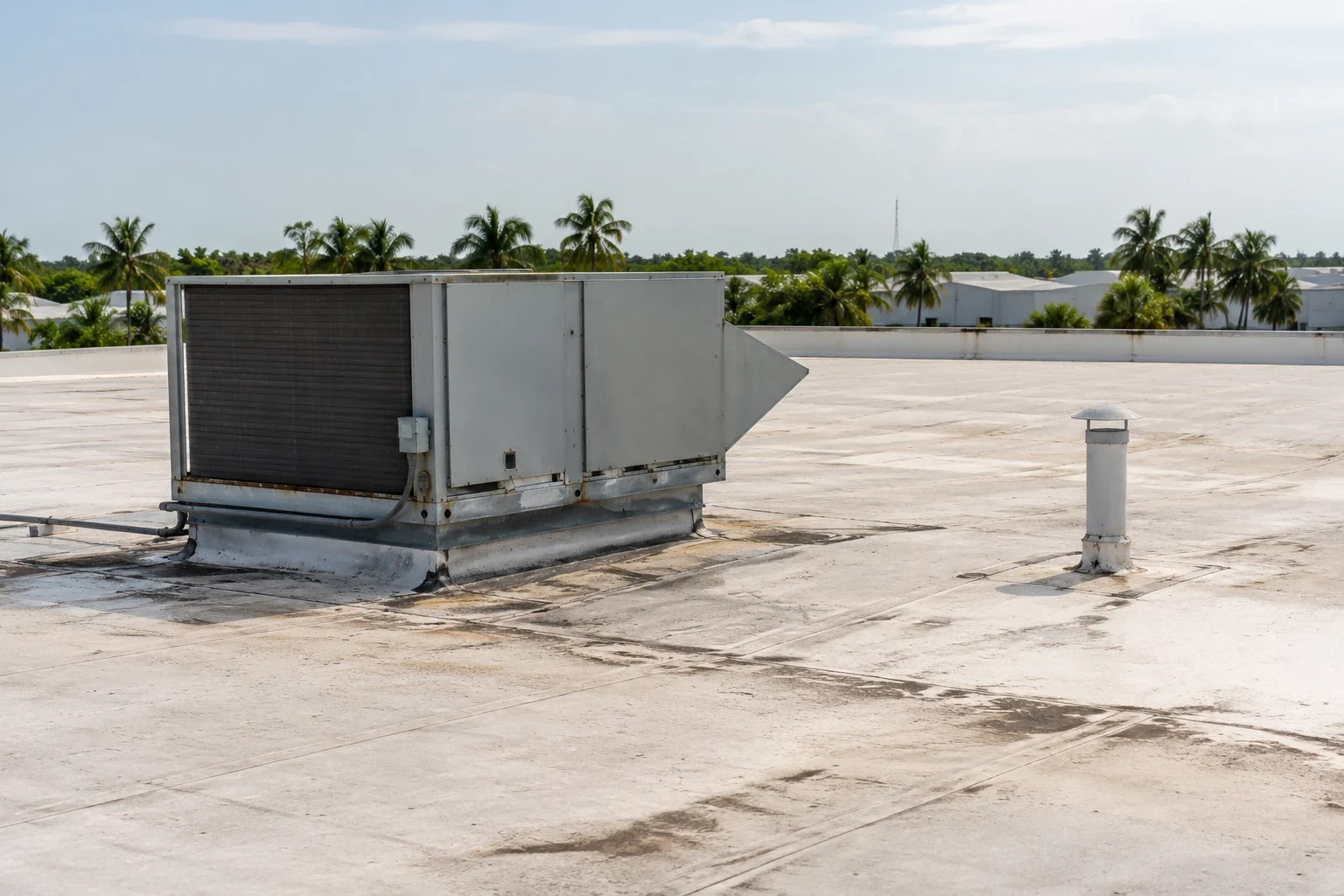
Residue caught at an exhaust curb can show where roof maintenance and plant operations meet. A manufacturing roof needs inspection around equipment, penetrations and service routes, with each repair tied to the installed assembly and production schedule. Cape Coral’s industrial areas include fabrication, assembly and equipment-related businesses, while summer humidity and rain make drainage and wet insulation relevant to routine condition checks. We map the roof sections, record what is visible and identify any test or access limits before setting a repair boundary or planning a larger renewal.
Coordinate Roof Work With Plant Operations
Before inspection, identify process areas, production hours, roof access points, rooftop units, exhausts and any equipment that must remain online. Coordinate the route with facility staff so a ladder, lift or material staging area does not interrupt deliveries or safe movement. If a leak occurs over machinery or stored inputs, document the interior location and protect the area while a qualified roof inspection is arranged.
On the roof, inspect membrane seams near curbs and penetrations, metal transitions, exposed fasteners, equipment supports and service paths. Vibration or later equipment work can loosen flashing or damage the membrane around a support. Check the substrate and attachment where accessible, and record areas hidden by ductwork or piping. A replacement unit or new conduit may change an existing roof detail, so include the mechanical work history in the inspection notes.
The North Cape Industrial Park and Lee County Industrial Park support a mix of fabrication, boatbuilding, construction services and assembly businesses.
Protect Penetrations and Equipment Curbs
Exhaust curbs, vents, stacks, pipes and support frames interrupt the roof plane. Inspect corners, flashing height, membrane termination, fasteners and the metal-to-membrane connection. Look for open laps, split sealant, corrosion, movement, scorching or residue that collects at the detail. A roof opening may be adjacent to, rather than directly beneath, the interior leak because water can travel along the deck or insulation.
Verify the existing membrane before selecting repair materials. A patch that bonds to one surface may fail against another coating or metal finish. Remove unsound material only within the approved boundary, prepare the substrate and rebuild the flashing to suit the system. If equipment blocks access, document the blind area and agree on a safe way to inspect it; do not claim the hidden detail is sound.
When a production change adds a curb, pipe or support, plan the roof connection before the trade opens the assembly. Set responsibility for membrane restoration, insulation replacement, temporary closure and final photographs. If an active leak requires immediate attention, urgent response can reach the facility nights, weekends and holidays, provided roof access is safe.
Review Drainage Across Process Areas
Manufacturing roofs can contain separate sections, internal drains, scuppers or perimeter gutters. Map the low points and follow the flow path to each outlet. Debris, packaging fragments or maintenance residue can restrict a bowl or scupper, while standing water that persists after cleaning can reflect a slope or deck question. Note the observation, outlet and time after rain; one photo cannot show how long water has remained.
Keep outlet cleaning separate from slope correction. A clear drain does not fix a sagging deck or poorly directed tapered insulation. Inspect crickets at curbs, membrane laps near sumps and discharge points below the roof. Where ponding or a damaged outlet connects to a leak report, match the findings with the interior location and test concealed material only when it can affect the chosen repair.
Corrective drain and scupper work may need a different crew sequence from exhaust or curb repairs. A condition inspection can map the larger roof, and insulation and cover-board work can address material that must be removed and replaced in the approved scope.
Define Repairs by Assembly and Production Window
A repair scope should name the roof section, defect, access window, preparation, material and tie-in. Identify whether production needs protection from dust, water or temporary equipment shutdown. If test openings are authorized, locate them on the roof plan and state how each opening will be closed. Photograph underlying conditions before cover-up and confirm added work if wet insulation, damaged board or deck corrosion is exposed.
For one failed curb or seam on a sound surrounding roof, a bounded commercial roof repair may be appropriate. Repeated defects across process areas, broad wet insulation or failed perimeter attachment can support a larger review. Compare local repairs with replacement planning or an eligible recover after verifying the assembly. If a specific roof system is confirmed, use the matching details, such as TPO seam repair, rather than selecting a method from the plant type alone.
Build the schedule around material cure or weld conditions, rain exposure and any production constraint supplied by the facility. Keep a clear dry-in limit at shift end. Cape Coral’s warm-season weather can close the work window quickly. Assign who checks incomplete sections and contacts the plant if the sequence changes.
Use Cape Coral’s Industrial Setting as Context
Cape Coral’s inventory identifies industrial and flex businesses across North Cape and Lee County Industrial Park, with the wider industrial base including light manufacturing, processing, warehousing and distribution. Survey each facility to map its assembly, equipment, access and condition.
For a plant near Pondella Road and NE 19th Place, coordinate staging and roof access with the facility’s actual loading and process hours. Along the Pine Island Road corridor, plan delivery and lift positions around the specific site. For each plant, retain dated roof photographs and inspection notes with access limits for process areas and rooftop equipment.
Maintain a roof plan with equipment additions, exhaust changes, drains, repairs and inspection photos. A roof asset record can keep those details available to future facility managers without merging separate buildings or process systems.
Keep Roof and Equipment Changes in the Same File
Retain the roof plan, system identification, equipment layout, repair records, photographs, moisture test locations and open recommendations. Record dates when mechanical trades add or move penetrations. Mark any section that was unavailable for inspection and identify who can authorize access later.
Compare future observations with earlier images at the same curb, seam or outlet. Note whether corrosion, movement, residue or water staining has changed. If roof access is interrupted by production or a safety restriction, log the area and arrange a return rather than treating it as complete. For a related warehouse roof or distribution facility, keep property histories distinct even when the same portfolio manager coordinates both.
Provide roof drawings, prior leak records, equipment work orders and site access procedures before requesting a visit. We can inspect available sections, identify immediate protection or repair needs and describe the remaining decisions in terms the operations and maintenance teams can act on.
Commercial Roofing Questions
How should roof repair be coordinated with production?
Set the inspection route, work zone, staging area and access window with the facility contact. Identify processes or equipment that must stay online and how interior areas will be protected. The crew can phase work by roof section when conditions allow, with a secure dry-in for each open area before production activity resumes below.
Can exhaust residue or process dust damage roof flashing?
Residue can collect at a curb or penetration and may make inspection and surface preparation more difficult. Photograph its location, check the membrane and metal connection, and identify whether a compatible cleaning method is needed before repair. The residue alone does not establish a membrane failure or the cause of an interior leak.
What records help identify a leak near manufacturing equipment?
Provide equipment location, recent moves or service work, room reports, prior roof repairs and any available roof plan. Compare those records with curb flashing, nearby seams, drains and the reported water path. Mark concealed or inaccessible sections and test only where the result could change the repair scope.
When should a plant consider a full roof assessment?
A broad pattern of leaks, widespread moisture, multiple failed curbs or loose perimeter details can call for a larger survey. An isolated penetration problem may remain a local repair. Map conditions by roof section, review the installed system and compare the operational impact of repair, recover or replacement before scheduling larger work.
Share roof plans, process hours, equipment changes, leak locations and access procedures. We will inspect accessible details, document repair limits and coordinate the roof scope with facility operations. Call 555-555-5555 or request a roof assessment for Manufacturing Plant Roofing in Cape Coral, FL.