Trace commercial roof defects in Cape Coral, repair compatible materials and document seams, flashings and drainage so the repair boundary stays clear.
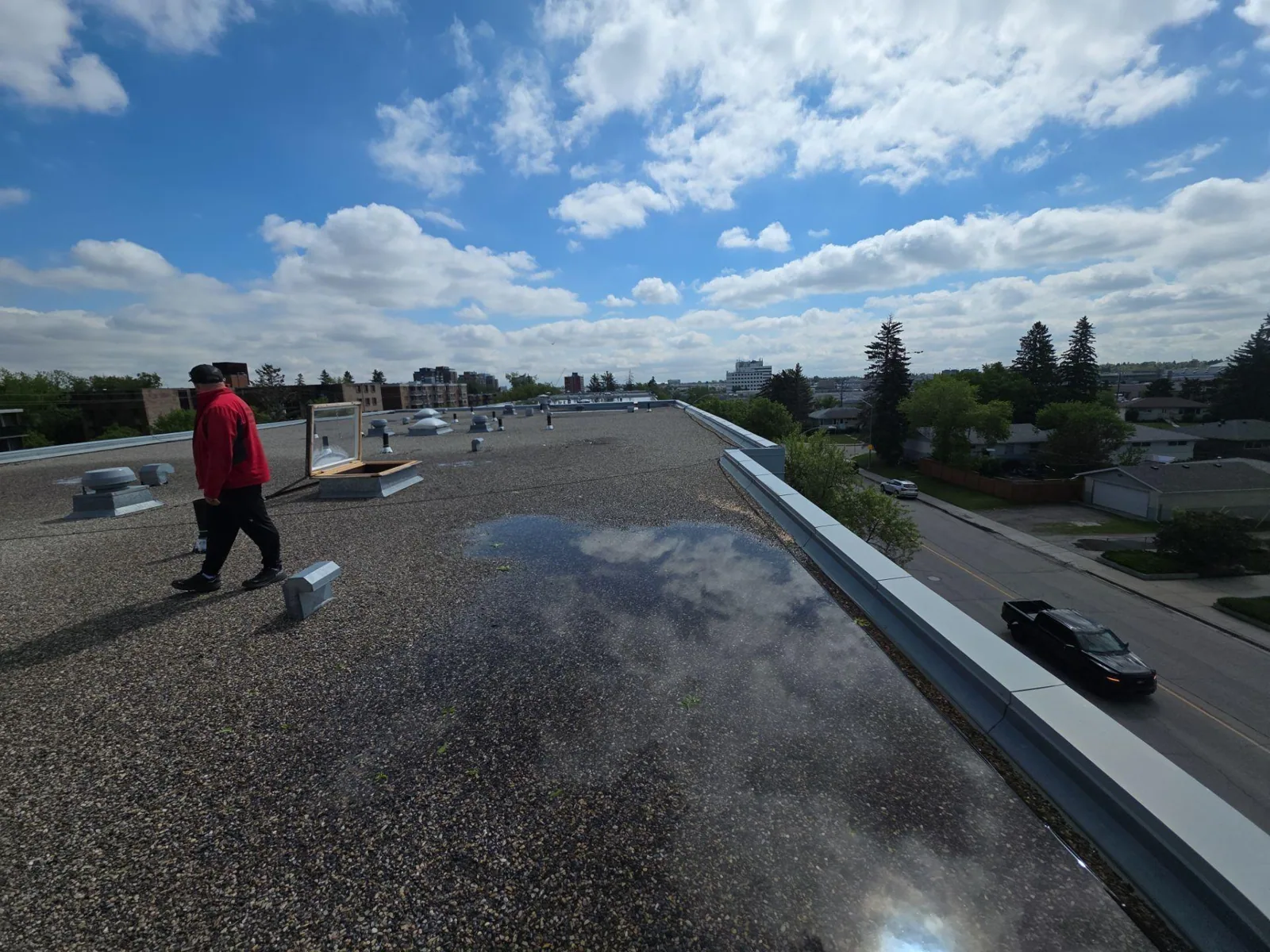
A split membrane lap or loose metal transition needs a repair that reconnects the roof layers, not a bead of sealant laid over a moving joint. We inspect the failure, check the material around it and trace whether water has affected the substrate below. In Cape Coral, intense summer heat, high humidity and seasonal rain put roof details under recurring stress, but the repair still depends on the observed condition. A defined scope records where sound material begins and ends, what preparation is required and how the new work will tie in. If defects extend across multiple areas, compare repair with commercial roof replacement before choosing a patch.
Finding the Failure Before Choosing the Material
Common repair points include open membrane seams, punctures, failed flashing, loose edge metal, deteriorated sealant, curb transitions and damaged drain details. Water can travel beneath the visible defect, so the stain location is a clue rather than a complete map. We inspect the roof surface and interior report separately, check the likely path and identify whether insulation or cover board needs further evaluation. A repair is defined only when the surrounding material is sound enough to accept a new connection.
Material compatibility guides the method. A patch must match the existing assembly or use a suitable transition detail, with the surface prepared as its manufacturer requires. Dirt, oxidation, moisture or an old coating can prevent proper adhesion. Metal repairs also require attention to corrosion, fastener condition and movement at the joint. If the roof system cannot be identified from records and visible details, document that uncertainty and verify it before installing a patch.
At buildings near Pine Island Road or in City Centrum, roof size and adjacent uses can affect access, staging and when a repair area can be isolated. Survey the actual property, rather than infer roof construction from its district or tenant type.
A Repair Boundary With Measurable Work
The work order should name the defect, repair extent, preparation, material, attachment or bonding method, flashing tie-in and closeout evidence. Mark each repair on a roof plan and photograph the area before and after work. If moisture is suspected, state whether it will be tested or whether the repair excludes concealed material. Do not describe a surface patch as a correction to wet insulation or deck damage that the crew has not examined.
Drainage and edge conditions can affect whether a local repair lasts. Remove debris only where authorized, note standing water and identify obstructed drains or damaged scuppers for separate correction. At a wall, curb or parapet, check termination height and the condition of the substrate before sealing the detail. A repair should not direct water toward an open seam or block a designed flow path. When the defect cannot be restored within a small, stable area, expand the inspection and revise the scope instead of extending a patch without a defined limit.
Where a leak remains active, a commercial roof leak repair begins with locating water entry and protecting the occupied area. For severe exposure, emergency roof repair can establish temporary protection while permanent materials and access are arranged.
Preparing a Lasting Tie-In
Before repair, confirm safe roof access, weather conditions, existing system and substrate. Remove only material within the authorized work area, expose a clean and dry bonding surface, and replace unsound sections where the scope allows. Follow the system details for primer, seam width, fasteners or welded connection. Do not bridge an unstable transition or use a coating to disguise a loose edge. Each stage should leave the area protected if work pauses.
Cape Coral’s warm-season rain calls for a clear end-of-shift check. Confirm drains remain open, materials are secured and any incomplete work is closed against water entry. For repairs near Del Prado Boulevard, access and rooftop equipment may affect staging, while a waterfront building can require additional attention to exposed metal. The inspection should establish the conditions at that roof, not presume damage from proximity or regional storm history.
After completion, record repair locations, products used, photographs, observed moisture or deck conditions and any adjacent defects left outside the authorization. This file helps the facility manager monitor whether the repaired connection remains stable and gives the next inspection a baseline.
Knowing When a Patch Is Not Enough
Repeated failures in the same area can point to a continuing movement, drainage or substrate problem. If multiple seams are open, wet insulation is extensive or edge metal has lost attachment along a run, spot repairs may not restore a dependable boundary. A hands-on commercial roof inspection can map related defects. A moisture survey may guide sampling when concealed wet material is suspected, but thermal patterns need confirmation.
Where the surrounding assembly remains sound, a repair can preserve serviceable material and address a specific failure. Where conditions are widespread or concealed, compare repair with a recover or full removal based on testing, code eligibility and documented limits. The Florida Building Code, 8th Edition (2023), applies in Cape Coral; confirm requirements for the proposed scope with the project team and permitting authority.
Keep the comparison practical: identify what will be corrected now, what remains, and what observation would trigger another evaluation. This gives the owner a clear choice without promising that one patch will eliminate every leak on a roof whose other areas have not been inspected. Related work may include drain and scupper repair or edge metal and coping repair. At properties near City Centrum or along the Pine Island Road corridor, confirm delivery access, roof entry and staging space before repair work begins.
Commercial Roofing Questions
What information should a commercial roof repair record include?
Mark the defect location, material and repair extent, surface preparation, products used, before and after photographs, and any adjacent condition left out of scope. Note whether concealed moisture or deck material was tested. A clear record helps compare later observations with the same roof detail rather than relying on a general invoice description.
Can you patch a leak if the roof system is unknown?
First identify the existing membrane or determine a compatible repair detail through field inspection and available product records. Different materials need different preparation and attachment methods. If the system remains uncertain, state the limitation and verify compatibility before applying a permanent patch. Temporary protection can be used when immediate water control is needed.
When should a repair become a larger roof scope?
Several failures across a field, widespread wet insulation, loose perimeter attachment or recurring defects over prior patches can indicate a broader condition. Map those findings, test where authorized and compare the repair boundary with recover or replacement options. A single stain or isolated opening by itself does not establish the condition of the whole roof.
How does Cape Coral weather affect scheduling a roof repair?
Heat, humidity and warm-season rainfall affect surface preparation, adhesion and the time available to close an open work area. The crew should confirm that the surface is ready for the selected material, monitor weather and secure unfinished work at the end of each shift. Wind exposure and salt conditions vary by property, so inspect the actual detail before selecting repair materials.
Share leak locations, roof records and access needs. We will inspect the affected details, identify what is known about the assembly and document a repair boundary that fits the observed condition. Call 555-555-5555 or request a roof assessment for Commercial Roof Repair in Cape Coral, FL.