
Assess whether a Cape Coral commercial roof can support coating restoration by checking moisture, adhesion, details and drainage before application.
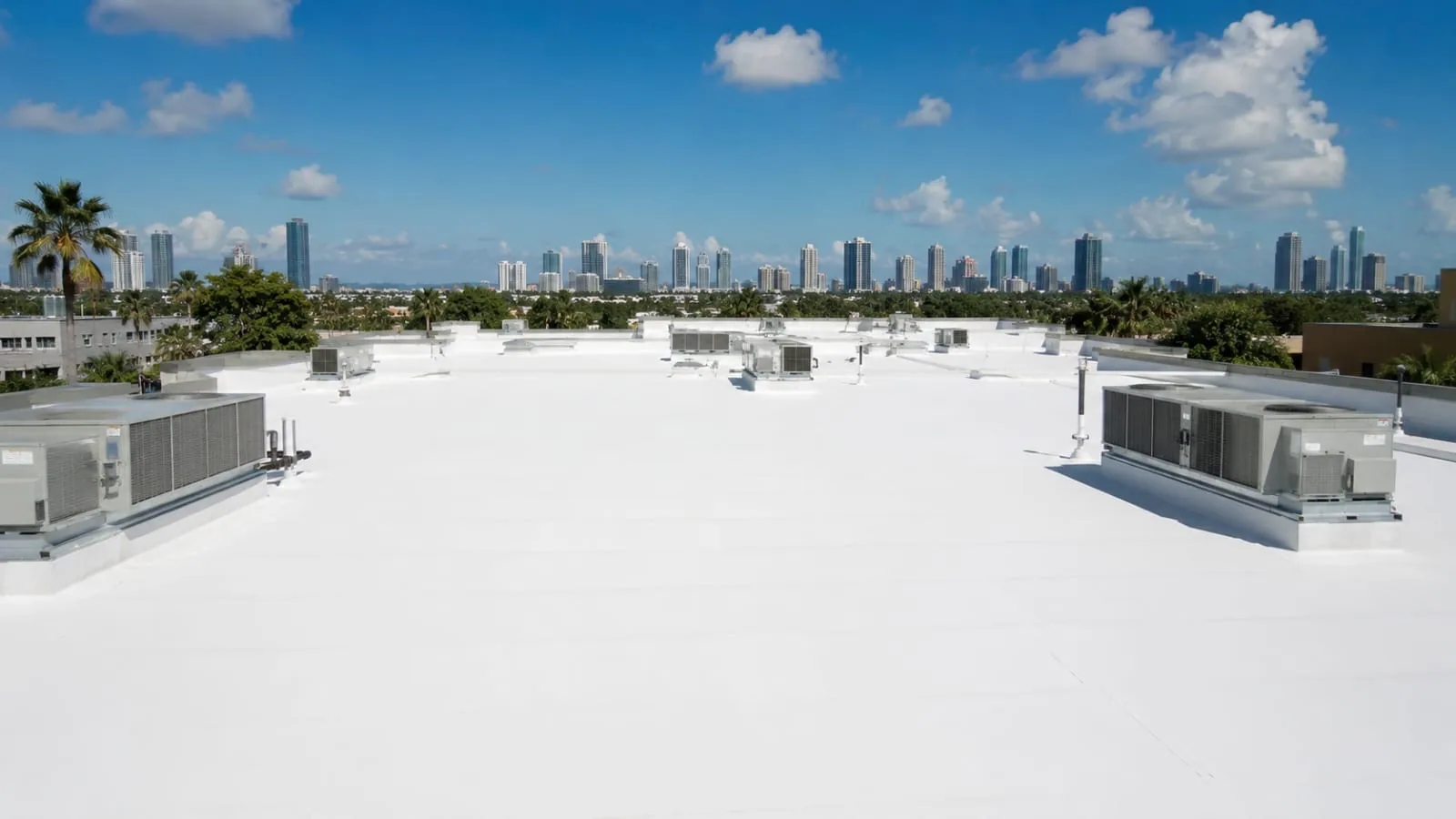
A coating can renew a roof surface only when the membrane and its transitions are stable enough to keep it in place. Blisters, open seams, wet insulation or loose edge metal need investigation before any restoration layer is considered. In Cape Coral, strong sun, humid air and seasonal rain affect the roof and the work window, so preparation and cure conditions matter alongside product selection. We inspect the existing assembly, repair defects within a defined boundary and confirm what the coating system can address. Where the substrate is sound, a coating may provide a maintenance option; where it is not, compare roof replacement before covering the field.
Confirm the Existing Roof Can Be Restored
Start with the membrane, insulation, attachment and metal details. Look for splits, failed seams, punctures, unstable prior patches, wet areas, trapped moisture and coating layers that may not accept another product. A coating is a surface-applied system, not a way to stabilize a loose termination or dry wet insulation. Test the areas that affect the decision, and mark where restoration must stop if the roof changes assembly or condition.
Adhesion depends on a prepared substrate compatible with the selected coating. Dirt, chalking, oils, oxidation, residual moisture or incompatible materials can weaken the bond. Clean and prepare representative surfaces, then complete adhesion checks where required by the system design. If different roof sections have different membranes or prior treatments, evaluate them separately rather than assume one primer and application rate will suit all areas.
For a building near Cape Harbour or along the Caloosahatchee waterfront, inspect exposed metal and transitions for corrosion before setting a coating scope. Coastal exposure varies with shelter and distance from open water, so the property itself determines what needs attention. The waterfront setting does not establish whether the roof surface is suitable for restoration.
Repair Defects Before Coating the Field
Coating preparation begins by correcting the conditions that would remain beneath the new layer. Rebuild open seams with compatible materials, replace failed flashing, secure loose edges and address punctures or wet sections within the approved scope. Reinforcement fabric or liquid flashing may be appropriate at selected details when the system calls for it, but neither should substitute for a stable substrate. Photograph each repaired detail before it is covered.
Water needs a clear route to drains and scuppers. Remove debris where authorized, note remaining ponding and correct outlet problems before application. A coating can follow the shape of a low area without changing its slope. If a drain bowl, gutter or scupper is damaged, include drainage repair in the restoration scope. Check roof-to-wall edges and penetrations because a field coating alone does not complete those transitions.
Moisture testing is important when the existing assembly may contain wet insulation. Infrared patterns can direct sampling, while test cuts confirm conditions at the openings. Map locations and limits before deciding whether affected areas can be removed. A moisture survey can support that investigation, and a hands-on roof inspection records details that imaging cannot verify.
Match the Coating to the Roof and Exposure
Coating chemistry and application detail must match the existing membrane, expected exposure, drainage and manufacturer requirements. Silicone and acrylic systems have different moisture tolerance, surface preparation and maintenance characteristics. Do not choose by color or the word “cool” alone. Confirm compatibility with the existing roof, primer requirements, reinforcement at seams and penetrations, minimum dry-film thickness and how the edges will terminate.
Cape Coral’s summer sun heats exposed roof surfaces, while humid air and rain can constrain preparation and application. Work should proceed only when the substrate and weather fit the product instructions. Coordinate application zones so the crew can protect open work and avoid trapping moisture. The scope should identify the selected system, surface preparation, repair details, application checks, cleanup and the records delivered at closeout. Product data should be retained with the building file.
Where the coating choice is part of a larger system decision, compare silicone roof coating and acrylic roof coating requirements against field conditions. A coating restoration plan should not assume the underlying membrane type from the property’s age or location.
Protect Details During Application
Before work, confirm access, staging, drain protection, weather monitoring and equipment clearances. Mask or protect surfaces that should not receive coating, and keep drains open or temporarily protected in a way that prevents material from entering the outlet. At each shift’s end, secure the work zone and inspect unfinished edges. Humid Cape Coral conditions make surface dryness and cure timing part of the quality check.
Maintain a record of ambient conditions, prepared areas, repairs completed and coating application checks required by the project. Take photographs of seams, penetrations, wall terminations and perimeter details before and after the work. If rain or moisture interrupts the sequence, identify where application stopped and what must be checked before restarting. Do not apply over a surface that is wet or outside the product’s permitted conditions.
When an active leak interrupts a planned restoration, call overnight or on weekends and holidays for urgent protection. We confirm site access, protect the opening and document what must be repaired before coating work resumes.
Compare Restoration With Replacement
Coating can be a reasonable option when the existing roof is sound, dry enough for the specified system and detailed so the new surface can remain continuous. If moisture is widespread, attachment is failing or perimeter transitions cannot be restored, covering the roof can defer a more appropriate removal. Compare documented findings with tear-off and replacement or a bounded repair scope.
The comparison should account for surface preparation, repairs, drainage corrections, edge and penetration work, testing, access, weather protection and future inspection needs. State what the coating includes and what remains untouched. Do not present the restoration as a fixed extension of service life or a substitute for future maintenance. The value is in matching the system to the documented roof assembly and giving the owner a clear record of its limits.
After application, retain product and batch information, preparation and repair photographs, application records, inspections and maintenance recommendations. Mark areas that were excluded or deferred. A future roof maintenance program can check whether the coating and its transitions remain intact as the building operates.
Commercial Roofing Questions
How do you decide whether an existing commercial roof can be coated?
We check the membrane, attachment, moisture, seams, edges, drainage and compatibility with the proposed coating. A surface layer cannot correct wet insulation or an unstable perimeter. Test uncertain areas and document where restoration can proceed, where repair is needed and where removal may be the more reliable scope.
Will a coating fix ponding water on our roof?
A coating follows the roof’s existing shape and does not by itself change slope. Clear blocked outlets and inspect the drainage path first. If water remains after cleaning, determine whether a drain, scupper or low area needs correction, and include that work in the scope before applying the restoration system.
What weather conditions matter during coating work in Cape Coral?
Surface dryness, temperature, humidity, rain and cure time all affect preparation and application. The crew should follow the selected system’s product requirements and protect any area left incomplete when conditions change. Warm-season showers can interrupt work, so define how the roof will be closed and inspected before the next application pass.
What records should we receive after roof coating?
Keep product information, preparation and repair photographs, application records, field checks, marked exclusions and maintenance recommendations. The records should identify the roof sections treated and any underlying conditions left in place. That file gives the next facility manager a baseline for inspection and planned maintenance.
Provide roof records, prior coating information and known leak locations. We will inspect the assembly, test uncertain areas when authorized and define the preparation and restoration boundary supported by the roof condition. Call 555-555-5555 or request a roof assessment for Commercial Roof Coating in Cape Coral, FL.