
Trace a commercial roof leak in Cape Coral from interior evidence to the roof detail, protect operations and document the permanent repair boundary.
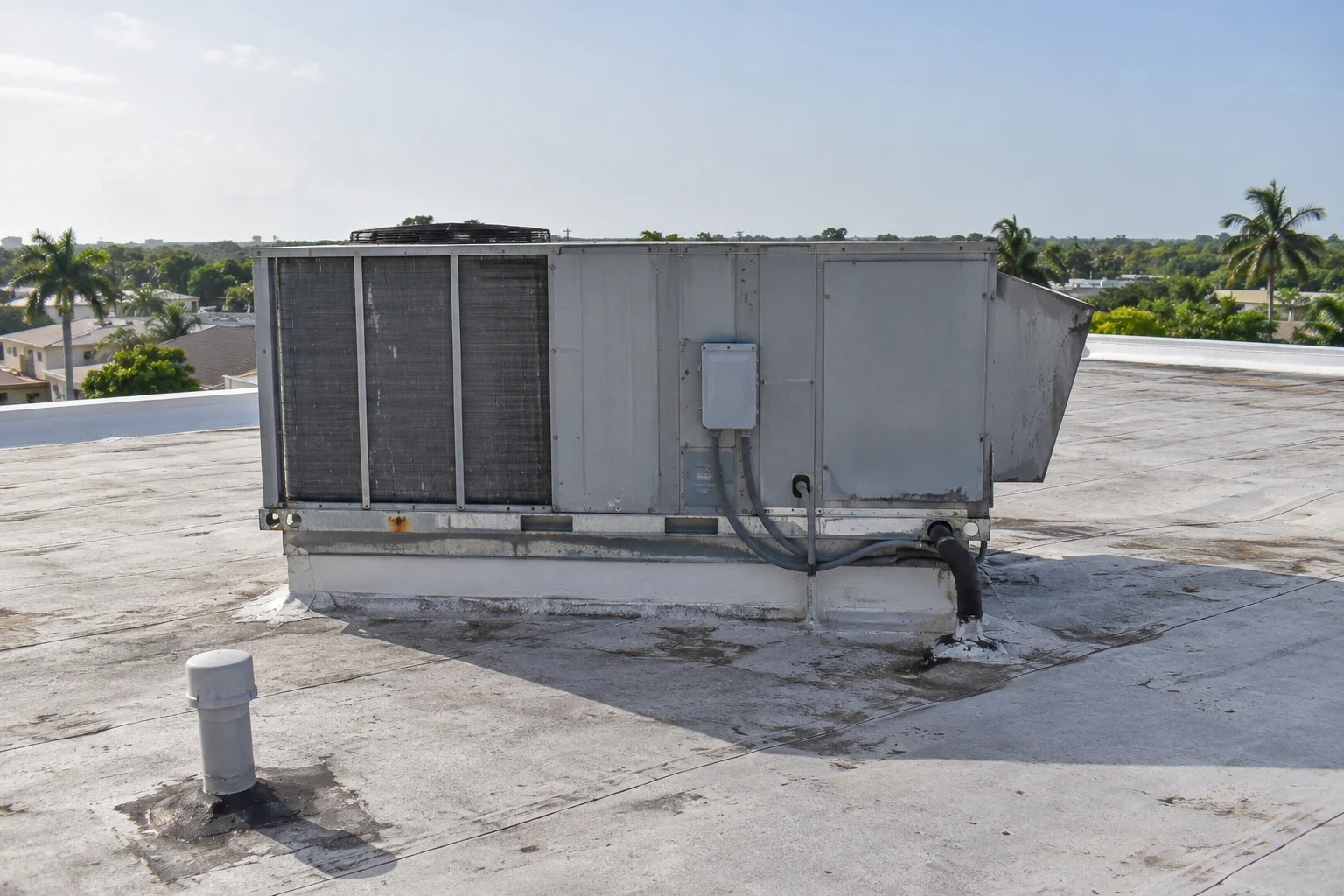
A ceiling drip marks where water became visible, not necessarily where it entered the roof. Water can travel along a deck, insulation joint or framing before it reaches a room, so leak repair begins with tracing clues rather than sealing the nearest penetration. We record interior reports, inspect the roof above and follow drainage toward the likely entry point. Cape Coral’s humid air and warm-season rain can keep roof areas wet, making timing and surface conditions part of diagnosis. Once the route is better understood, we define a repair that reconnects the assembly and protects the occupied space. If water is actively entering, emergency roof repair can establish interim protection while a permanent scope is prepared.
Trace the Water Path From the Room Up
Start with the details above and around the reported stain: membrane seams, wall flashing, curb corners, skylights, fasteners, drains and roof edges. Look for open laps, splits, punctures, failed sealant, displaced metal, debris dams or water tracks. Compare those signs with interior timing and weather reports. A single leak can have more than one entry point, and an exterior defect may be unrelated to the room complaint. We document evidence separately before assigning cause.
Roof drainage matters because water can collect at a low point, follow a slope beneath the membrane or back up at an obstructed drain. Check scuppers, gutters and downspouts where accessible, and note whether the standing water appears tied to a blockage, deflection or detail failure. Do not treat ponding alone as proof of a leak. The survey should connect the reported interior location with a plausible route and identify what remains unconfirmed.
At Cape Coral Hospital on Del Prado Boulevard, occupied clinical functions make a timely response and clear access coordination important. At properties in the South Cape CRA, tenant arrangements and shared spaces may affect how investigators reach the roof or interior. Coordinate access with facility staff, then tie the leak report to roof observations at the property.
Protect the Interior While Diagnosis Continues
When water is entering, protect people, equipment and finishes first. Move contents from the drip area when safe, use suitable containment and alert the facility contact if electrical systems or critical operations may be affected. Set roof access controls before anyone climbs, and do not walk on a roof that is unsafe, unstable or under active lightning conditions. Interior protection reduces immediate impact but does not repair the roof entry point.
Temporary roof measures should match the observed exposure and be secured for the expected weather. A tarp or temporary seal may limit additional water while a compatible permanent repair is arranged, but it must not obstruct drainage or create a hazard. Record what was installed, where it is attached and how it will be inspected or removed. Cape Coral’s summer storms can change quickly, so set a clear responsibility for checking temporary work and communicating when conditions change.
For a repair beyond the immediate leak, document suspected wet insulation separately. A stain can dry while material above remains damp. Infrared patterns may help select test points, and a core cut can verify conditions at its location. Use a commercial moisture survey when broader mapping is warranted, and a hands-on roof inspection to examine transitions and access limits.
Repairing the Detail That Admits Water
Once the entry point is identified, confirm the existing roof material and repair method. The work may involve rebuilding a membrane lap, replacing damaged flashing, correcting a curb corner, securing metal or clearing a restricted drain. Preparation is as important as the patch: the surface needs to be clean, compatible and dry enough for the chosen bond or weld. If wet or deteriorated material extends beyond the first opening, revise the repair boundary before closing the roof.
A written scope should locate the leak, list the material and preparation, describe tie-in dimensions and clarify whether insulation, cover board or deck work is included. Photograph conditions before and after repair, mark the area on the roof plan and note any adjacent defects outside the authorization. Avoid describing a repair as complete if a concealed area was not tested or a related drainage concern remains unresolved.
For buildings near Pine Island Road or Hancock Creek Commerce Park, crews may need to coordinate roof access with warehouse, flex or retail operations. Confirm delivery routes, equipment clearances and areas that must stay open. The building’s actual use and roof geometry determine the sequence. If widespread seams or multiple failures are found, compare a larger commercial roof repair scope with replacement.
Close the Loop With a Condition Record
After the repair, revisit the reported interior location and roof detail under safe conditions. Record whether fresh water is present, what the repair addressed and whether monitoring remains appropriate. A dry ceiling immediately after work does not prove that every part of a moisture path has dried; note what was actually checked. If another leak appears, compare its location and timing with the prior record instead of assuming the first repair failed.
Keep the leak log with dated photographs, weather notes, roof plan marks, repair materials, temporary measures and decisions about testing. The record gives facility staff a way to see recurrence patterns and distinguish new conditions from old staining. In Cape Coral, high humidity makes ventilation and interior drying relevant after water entry, but it does not identify how moisture reached the room. Maintain separate notes for roof observations and interior restoration.
Related work may include drain and scupper service or flashing failure repair. At the Cape Coral Hospital campus or Hancock Creek Commerce Park, map each leak to the building’s roof zone and coordinate access with facility staff.
Commercial Roofing Questions
What can put a leak stain away from its actual entry?
Water can move along the deck, insulation joints, framing or other concealed paths before it reaches an interior surface. The ceiling mark is a useful location clue, while roof seams, curbs, drains and wall transitions help trace entry. We compare these observations and state what testing is needed before treating a suspected defect as the entry point.
What should staff do while water is entering the building?
Protect people and contents, set a safe containment area and alert the facility contact. If electrical equipment, ceiling materials or critical operations may be affected, follow the building’s emergency procedures. Roof access should be controlled and left to qualified personnel under safe conditions. Temporary interior protection limits impact while the roof entry point is investigated.
Can a leak be repaired during a rainy period?
Some temporary measures may be possible, but permanent materials require suitable surface and weather conditions. The repair plan should describe protection during interruptions, how water will drain and who checks an incomplete area. Warm-season rain in Cape Coral can change the work window, so avoid closing wet surfaces beneath a permanent patch.
How do you know whether wet insulation must be replaced?
A roof opening or other approved test can confirm material at a specific location. Infrared patterns can guide sampling but do not prove moisture on their own. Map test points, note limits and connect results to the repair boundary. If only a small area is affected and surrounding layers are sound, selective removal may be considered; broader findings call for a larger scope review.
Share the interior location, timing, weather observations and known roof records. We will investigate the likely water path, protect the building as needed and document the permanent repair scope and remaining questions. Call 555-555-5555 or request a roof assessment for Commercial Roof Leak Repair in Cape Coral, FL.