
Repair failed commercial roof flashing in Cape Coral by tracing the leak, checking adjacent materials and rebuilding the transition for lasting water control.
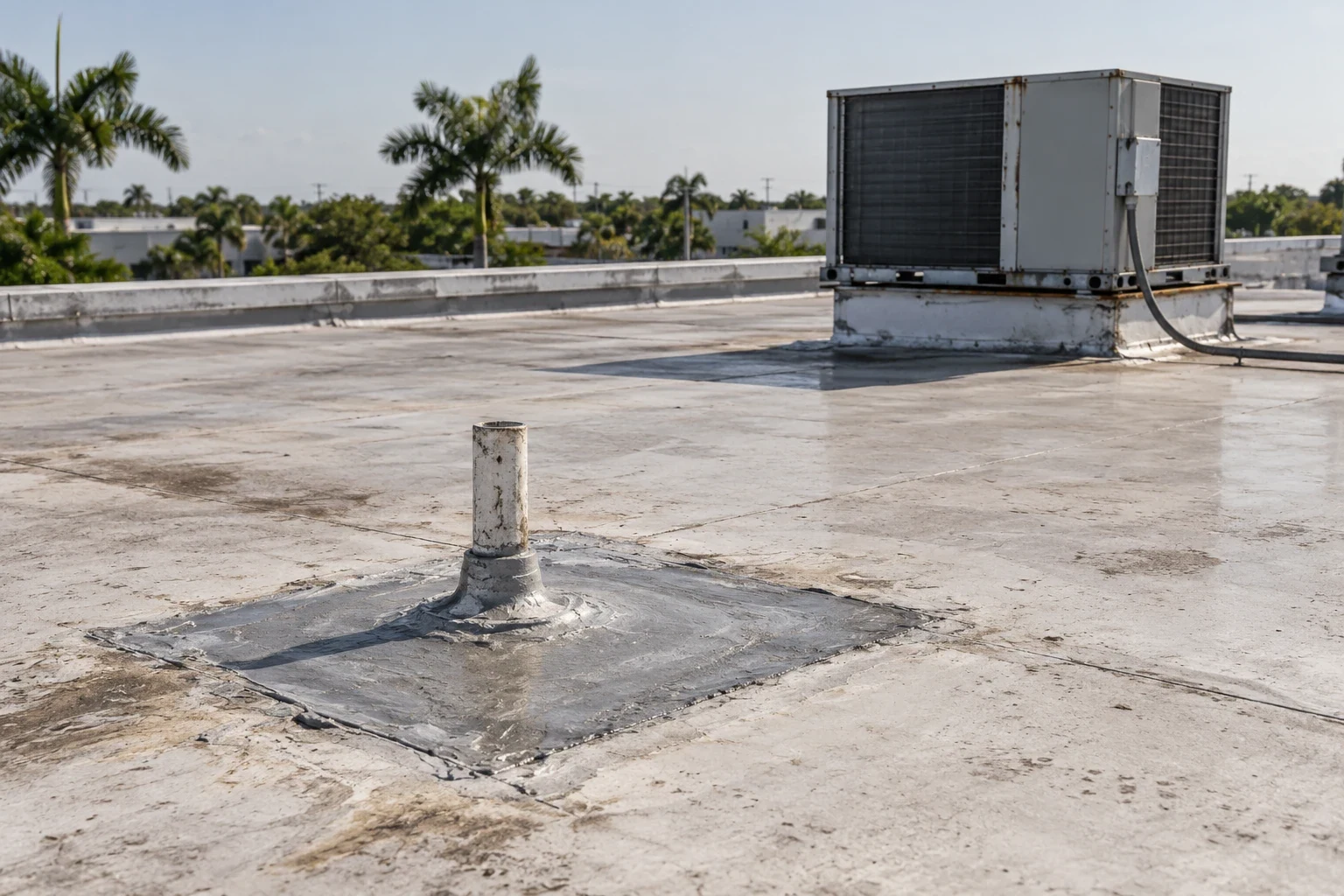
A split at the top of a curb flashing can let water enter at the point where the roof changes plane. The repair boundary follows the membrane, metal and substrate that hold that transition together, not only the visible sealant line. Cape Coral’s humid coastal conditions and warm-season rain keep flashing details under repeated moisture exposure. We inspect the connection, identify how it is attached and document any wet layers before selecting a repair material or broader replacement scope.
Follow the Transition From Membrane to Metal
Inspect the full perimeter of a curb, wall, pipe, skylight or equipment support. Check flashing height, corners, termination bars, fasteners, counterflashing and the membrane lap that ties the detail into the field. Look for open seams, cracked sealant, corrosion, movement, wrinkles or a gap where water can pass behind the metal. Sealant condition may be part of the finding, but adding sealant alone does not restore a loose or poorly connected flashing assembly.
Compare the roof side with the interior report and trace the route upslope. Water can travel along the deck before appearing below a wall or curb. Note nearby drains, seams and penetrations that could feed the same leak. If insulation is wet, map its extent before closing the roof. A controlled opening can confirm the deck and insulation layers; photograph them and record the limits of access before repair proceeds.
A commercial roof inspection can document the transition and adjoining field. For a perimeter detail, edge metal and coping repair may address the metal connection, while penetration flashing work applies to the curb, vent or skylight detail itself.
Identify Why the Detail Opened
Flashing can fail after movement, corrosion, poor drainage, loose fasteners or a repair that bridged incompatible materials. Check whether the equipment base shifted, whether metal expansion pulled at the termination and whether water remains against the detail. A repair should address the cause that can be observed. If the substrate is deteriorated or the curb cannot hold new fastening, rebuilding the flashing without correcting that base may leave the connection weak.
At a metal-to-membrane transition, confirm the installed roof system and surface before choosing primer, flashing material or fasteners. Remove loose or unsound material to a prepared substrate, then connect the new work to sound membrane and secure metal. Match the repair to the system details and provide sufficient lap and termination. Avoid a patch that covers a moving joint or blocks a drainage path needed by the roof assembly.
Water entering at failed flashing can be reported outside standard work hours, including weekends and holidays. We protect the area below, establish safe roof access and mark where temporary closure ends before specifying the permanent tie-in.
Keep Drainage Clear of the Repair
Water that collects beside a curb or wall can expose a weak flashing for longer and make the leak path harder to trace. Check the nearest drain, overflow, scupper and slope before rebuilding the detail. If an outlet is blocked, restore its flow and inspect the area again. If water remains with the drain clear, evaluate the roof plane separately instead of increasing the height or width of flashing to compensate for a low deck.
Fort Myers summer dew points can remain above 75 degrees for consecutive days, reflecting the humid conditions near Cape Coral. During warm-season rain, keep the detail and nearby laps dry enough for proper preparation and material bonding. Drain and scupper service can address outlet conditions. Any slope correction or wet-insulation removal should be stated separately so the owner can see which work restores flow and which work rebuilds the flashing.
For a post-storm inspection, check perimeter metal, wall terminations, parapet coping and rooftop penetrations after access is safe. A flashing scope should show the failed termination, adjacent wall or curb detail, water path and materials needed to rebuild the transition.
Choose a Local Repair or Broader Renewal
One failed curb or wall termination may be a local repair when the surrounding membrane and substrate remain sound. Multiple open transitions, recurring leaks or widespread wet insulation can point to a larger scope. Mark each detail on the roof plan, show photographs and describe what testing confirmed. If replacement is being considered, include the flashing tie-ins, equipment transitions and drainage changes in the replacement sequence rather than treating them as separate afterthoughts.
A defined roof repair can restore one connection; replacement planning should address the full system when defects cross multiple sections. For related open seam repairs or wind-damaged edges, document each mechanism and connection so the scope does not collapse distinct conditions into a generic patch allowance.
For a property along City Centrum or Pine Island Road, roof access and material staging will depend on the individual building and its operating contact. City Centrum and the Pine Island Road corridor are Cape Coral investment districts. For a property in either area, confirm the installed roof system, access route and repair boundary from the building plan and field inspection.
Record the Completed Connection
Photograph the detail before removal, after substrate preparation and after the new flashing is complete. Keep the images with the roof plan and label the curb, wall or penetration so a future technician can compare the same location. Record material compatibility, fasteners or termination method, adjacent seam condition and any areas that remain concealed. If access was limited, arrange a return inspection rather than marking the transition complete.
Include the interior leak location and dates of prior repairs. That history can show whether the same detail is opening again or whether water has shifted from a new source. If the repair involved drainage, keep before-and-after images of the outlet and the water path. Good records help the facility team set the next maintenance visit and distinguish a completed repair from a follow-up item.
At a flashing transition, give the site contact the observed opening, adjoining materials and proposed repair limit before scheduling the work.
Commercial Roofing Questions
Can failed flashing be repaired with sealant?
Sealant can be one component when the metal, membrane and substrate are secure and the system detail calls for it. We check the full connection, movement, corrosion and water path before choosing a repair. If the termination is loose or the base is unsound, rebuild that connection rather than covering it with another bead.
Why does a flashing leak appear away from the curb?
Water can move through insulation or along the deck before it reaches an interior ceiling. We trace the report upslope, inspect adjacent seams and drains, and use testing or a controlled opening if needed. The repair boundary follows the confirmed path and the layers that need restoration.
What details should a flashing repair report include?
Identify the roof section, type of transition, membrane and metal condition, photos, test results and the proposed repair boundary. Note any concealed or inaccessible areas and the method used to tie the new work into sound material. That record lets facilities staff compare the connection at a later inspection.
When should several flashing repairs lead to replacement planning?
Repeated failures across different curbs, wall transitions or roof zones may indicate broader movement, aging or attachment concerns. We map each detail, review the underlying assembly and separate local repair from system-wide findings. Replacement planning is useful when defects and wet material extend beyond isolated connections.
Share the building address, recent leak locations and any prior flashing repairs. We will inspect the membrane, metal and substrate together, then define a repair boundary and document the finished connection. Call 555-555-5555 or request a roof assessment for Flashing Failure Roof Repair in Cape Coral, FL.