
Inspect Cape Coral commercial roofs for wind-lifted edges, loose flashing and membrane damage. Get a documented repair scope after severe weather.
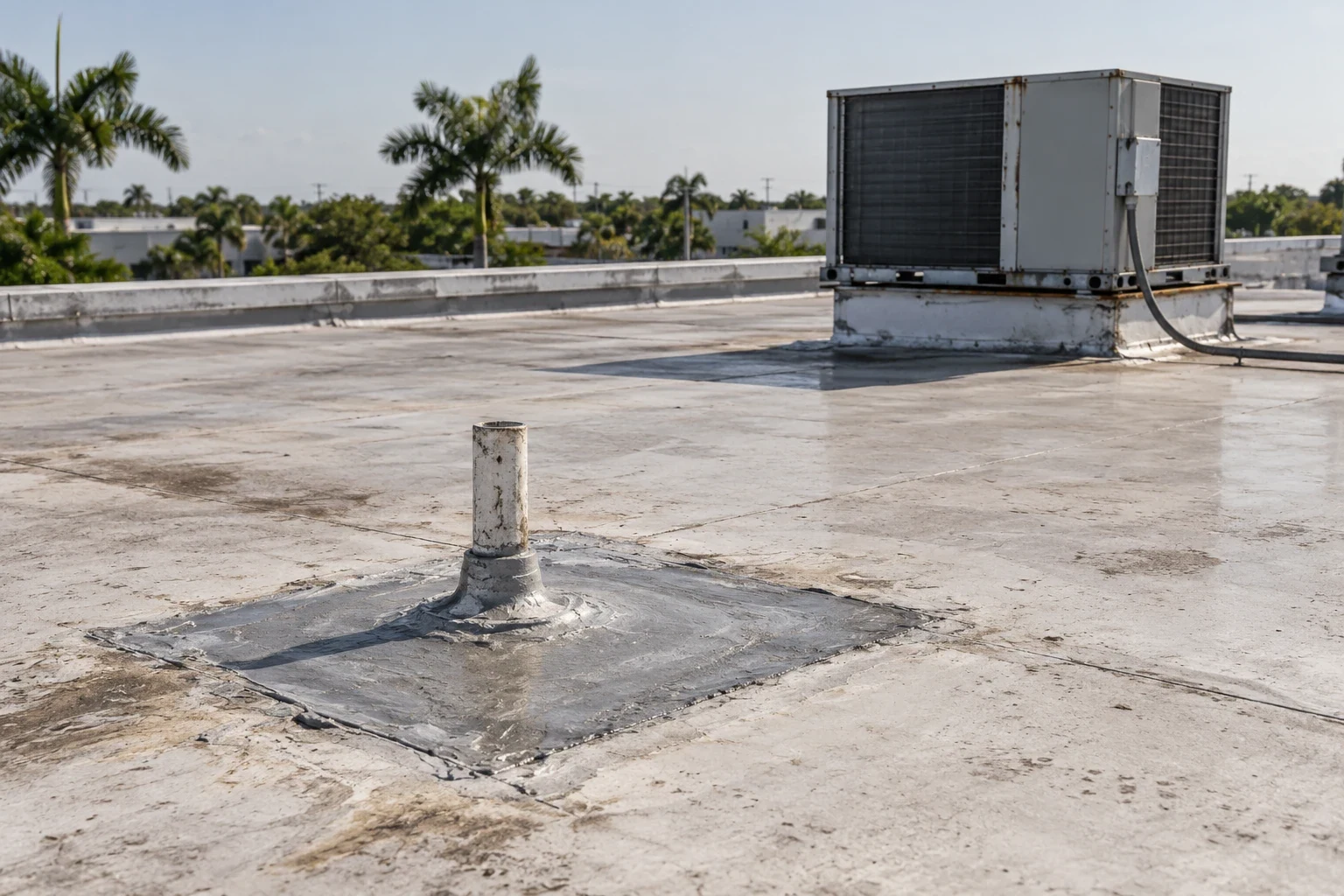
A lifted edge-metal cleat or a membrane corner that no longer lies flat gives wind a place to keep working. The repair boundary begins at that connection, then follows the roof field, adjoining laps and any wet insulation below. We inspect the roof surface and interior reports, photograph each condition and separate temporary protection from permanent repair. A wind inspection should follow the attachment path from the perimeter and corners into the field, recording any displaced detail before temporary cover is placed.
Read the Edge Before Patching the Field
Start at corners, perimeters, parapets, coping and transitions where membrane turns up a wall. Check whether the metal remains fastened, whether the termination is continuous and whether the substrate can hold a new connection. A lifted edge can let wind-driven rain enter beneath the membrane, while a loose coping joint may move without a membrane failure. Mark each observation by roof zone instead of treating every loose component as one broad problem.
Move inward from the windward edges and look for displaced ballast, scuffed or folded membrane, split laps, open pitch pans and damaged equipment flashing. Photograph the full detail and a close view with a location reference. Inspect the roof deck from inside where access is available, looking for new staining or movement that corresponds to the roof condition. One visible fold does not show how far a membrane has separated; test or open only where the result can set the repair limit.
At an exposed connection, secure the area first and keep water out while the permanent scope is prepared. Edge metal and coping repair can address a failed perimeter detail, while a commercial roof inspection can record adjoining seams, penetrations and drainage that may have moved during the same event.
Separate Wind Effects From Water Entry
A ceiling leak after a wind event can begin at an edge, curb, vent, skylight or open seam. Water may travel along the deck before appearing in a room, so compare the indoor report with the roof slope and nearby transitions. Note the time the leak began, whether it recurred after rain and any prior repair at that location. Those details help distinguish fresh movement from an older condition that became visible during the storm.
Check drains and overflows for debris that could have arrived with windblown material. A blocked outlet can leave water against seams and perimeter joints long after the gusts pass. Drain and scupper service can restore a clear path; if ponding persists after outlets are open, evaluate the slope and assembly as a separate corrective scope. Fort Myers Page Field's long-term annual precipitation normal is about 57 inches. Leave drainage working before the next heavy rain after a wind repair.
Where moisture is suspected beneath the membrane, map the test area and use a controlled opening to confirm layers before removal. Record the insulation and deck condition, then close the opening with materials compatible with the roof system. An infrared survey can identify areas for further testing, but the readings should be tied to the assembly and verified by the method selected for the repair.
Check Rooftop Equipment and Attachments
Wind can stress rooftop curbs, pipe supports, exhausts and equipment screens as well as the field membrane. Look for movement at fasteners, metal fatigue, open flashing corners and a changed equipment position. If the unit itself moved, review its support and attachment with the facility’s equipment contractor before setting the roof repair. A new membrane patch cannot correct an unstable base or a loose support.
Inspect the roof where technicians travel to reach equipment. A displaced walkway pad or tool impact may appear near a wind-damaged curb, and repeated movement can open the surrounding lap. Keep those causes distinct in the work notes so the owner can approve each repair item. Equipment curb and support repair can be coordinated with the membrane work when the connection requires rebuilding.
Along the Pine Island Road corridor, commercial, office, flex and industrial properties call for a delivery route and roof-access plan before wind repairs begin. Confirm where a lift can set up, how material reaches the roof and which business entrances must stay clear. The site route and roof condition determine the actual staging plan.
Set a Defensible Repair Boundary
A local repair can be appropriate when the defect is visible, nearby membrane remains secure and the substrate is dry and sound. If multiple edges are loose, laps are opening across sections or moisture extends beyond one detail, map those findings before choosing between distributed repairs and broader renewal. The report should label each roof area, show photos, state which tests were performed and list any portions that could not be inspected.
Do not cover a wet or unstable layer with a surface patch. Remove material only to the agreed boundary, prepare the substrate and tie the new work into sound membrane or metal. A flashing failure repair or open-seam repair may be part of the response when those details are separately confirmed. If failures repeat across the roof, compare repair with replacement planning after the assembly and attachment have been reviewed.
Temporary protection should be stable, compatible with the roof and checked after the next weather change. Keep the facility contact informed about exposed openings, follow-up testing and any area that remains out of service. This creates a clear handoff from the first response to the permanent repair.
Keep the Event Record With the Roof Plan
Save the inspection date, weather report, photographs, leak locations, test areas and completed repairs with the roof plan. Note whether a condition was present before the event, discovered afterward or left inaccessible. If a claim is being documented, keep field observations factual and separate damage photographs from repair recommendations. The roof condition and the policy decision are different matters.
At commercial sites in Cape Coral and nearby Fort Myers, inspect attachment from the perimeter and corners into the field. Record displaced details before temporary cover is placed, and set the repair sequence from safe access and observed conditions.
For related hurricane roof damage or membrane punctures, keep separate observations tied to the roof section and likely mechanism. A wind repair proposal should name the documented edge or attachment defect and note any adjoining section that remains outside the confirmed scope.
Commercial Roofing Questions
What should we inspect first after strong wind?
Begin with corners, roof edges, coping, curbs and other connections that can move. Photograph lifted metal, open seams, displaced membrane and visible debris, then note any interior leaks. We can inspect accessible sections, protect exposed areas and test suspected wet insulation before setting the permanent repair boundary.
Could a wind-lifted edge be repaired without a full reroof?
A single failed termination can be repaired when the surrounding membrane and substrate remain sound. We check fastening, metal condition, membrane tie-in and nearby moisture before defining the work. Multiple loose edges or repeated failures may call for a wider attachment review or replacement assessment.
How soon should a wind-damaged roof be inspected?
Arrange inspection as soon as roof access is safe, especially where membrane or flashing is exposed. Temporary protection can limit additional water entry while the permanent scope is assessed. Record the date, interior locations and roof areas that could not be reached during the first visit.
Will an inspection confirm which damage came from the storm?
A field report can describe visible conditions, moisture, testing and repair needs. Earlier photographs and maintenance records help establish whether a condition changed, but an inspection cannot determine an insurance decision. We document the observed roof and keep the repair recommendation tied to that evidence.
Provide the facility address, roof plan, reported leak locations and any prior photographs. We will inspect accessible edges and field areas, document the findings and define temporary protection or permanent repair needs. Call 555-555-5555 or request a roof assessment for Wind Damage Roof Repair in Cape Coral, FL.