
Inspect Cape Coral commercial roofs after hurricanes for lifted edges, open seams, debris impacts and water entry. Get a documented recovery scope.
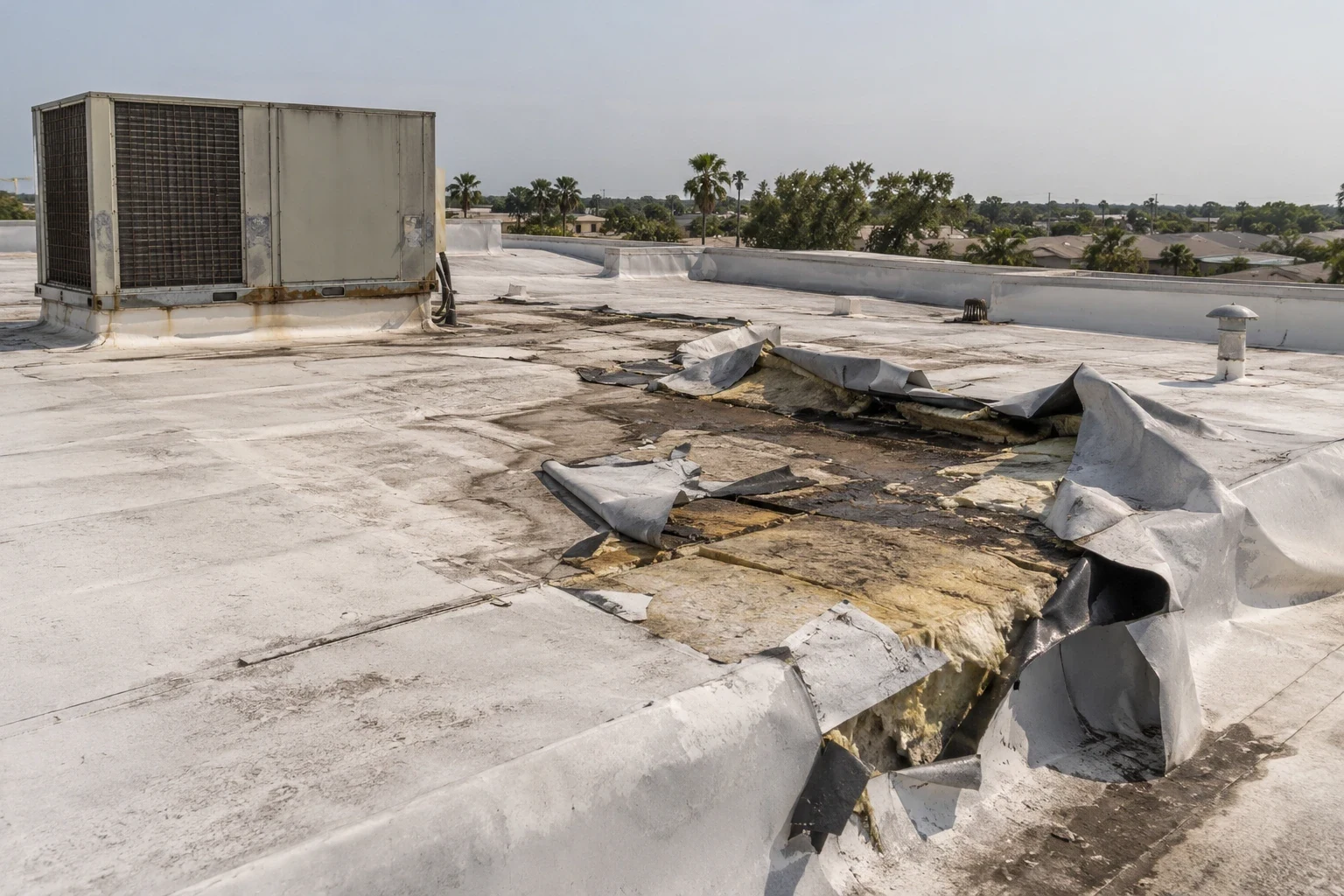
A loose coping cap or exposed membrane after a hurricane needs a safe inspection before anyone decides how much roof to remove. Start with the perimeter, curbs, seams and drains, then trace any interior water report to the roof section that could have admitted it. Hurricane Ian made landfall in Lee County as a Category 4 storm in 2022 and brought severe surge impacts to low-lying parts of the Gulf coast. We document building-specific conditions and separate immediate dry-in from permanent repair.
Make Access Safe and Limit Further Exposure
Do not enter a roof until access conditions are safe. Once cleared, identify loose metal, debris, punctures, open laps, displaced equipment and areas where the membrane has folded or lifted. Photograph the condition before moving material, then mark the roof zone and any area blocked from inspection. If a roof opening or loose edge allows water entry, install temporary protection that will remain secure without damaging the surrounding system.
Check the building interior at the same time. Record ceiling stains, active drips, wet insulation indicators and rooms or equipment needing protection. Water may travel away from the actual entry point, so compare the interior report with roof slopes, curbs and drains. If material must be opened, define a controlled test area and note how each layer will be restored.
For urgent conditions, emergency roof response is available at all hours, including weekends and holidays. Emergency roof repair can secure an exposed area, while storm damage roof service can document the broader inspection and repair needs. Temporary protection is tracked as its own work item until permanent closure is complete.
Inspect Edges, Flashings and Rooftop Equipment
Wind pressure can stress corners, perimeters, wall transitions and rooftop equipment attachments. Check coping, edge metal, termination bars, fasteners and the membrane beneath the metal. At curbs and penetrations, inspect flashing height, corners and sealant condition, and look for movement at supports. If a unit shifted, have its support and operating condition reviewed before the roof connection is rebuilt.
Walk the roof in zones and note displaced ballast or walkway pads, cracked metal, open seams and punctures from debris. Do not assume that a loose component means the entire roof has failed. Test the surrounding membrane and substrate, compare damage across the roof and define the limits that need removal. Wind damage repair can address a confirmed edge or field condition, while a separate flashing repair restores a failed roof transition.
Check drains, overflow outlets and discharge routes after windblown material is cleared. A blocked drain can leave water standing against a seam that also moved during the storm. Drain and scupper work can restore the outlet; if water remains with the path open, inspect roof slope and insulation before assigning a ponding correction.
Tie the Repair to the Conditions Found
Storm repair begins with an inspection record: roof section, observed damage, test locations, photographs and any inaccessible areas. If moisture testing is used, state which areas were scanned and where a test opening confirmed the layers. Distinguish direct physical conditions from questions that need additional investigation. This gives the facility and its insurer usable observations without turning a roof inspection into a coverage decision.
A local patch can be appropriate when one puncture or seam is open and the surrounding roof remains secure. Repeated edge movement, widespread wet insulation, loose attachment or several failures may call for a broader repair or replacement assessment. Review the current assembly, moisture and deck condition before considering recover. A commercial roof inspection records the roof; claim documentation support can organize photos and scope details for the owner’s claim process.
Repairs should identify substrate preparation, compatible material, tie-in limits and final checks. If replacement is required, include equipment transitions, perimeter metal, drainage and temporary dry-in in the plan. A contractor should not close concealed conditions without recording them; photograph each opened layer before the new assembly covers it.
Plan Around Cape Coral and Island Access
Hurricane recovery in Cape Coral may involve a commercial property on the mainland or along the route to island communities. Matlacha and Pine Island Center are reached through the Pine Island Road corridor, which the city identifies as the access route serving island communities west of Cape Coral. Confirm current access, staging and delivery constraints with the facility contact before mobilizing, then keep roof material secured for the conditions on site.
The Lee County Gulf coast experienced severe storm surge during Ian, especially in low-lying areas and canals. A roof inspection should still identify roof-specific conditions such as displaced edge metal, membrane openings, wet insulation or damaged penetrations. Check the interior and roof separately, then coordinate any broader building restoration with the appropriate teams. Coastal exposure varies by site; do not transfer a regional storm observation to a particular roof without field evidence.
For facilities near Matlacha, a staged visit may need to account for access along Pine Island Road and conditions at the property entrance. Cape Coral’s north-side commercial corridors and Fort Myers also remain part of the regional service route, but each building needs its own access and safety plan.
Close the Work With a Recovery Record
Retain dated photographs, temporary protection details, repair materials, test results and the location of every completed item. Label roof zones and identify any area that remains inaccessible or awaiting equipment service. If work follows more than one visit, keep each stage of the recovery record so the next crew can tell what is protected, what has been permanently repaired and what still needs inspection.
After permanent repair, inspect the tie-in, probe finished welds where the system requires it and confirm outlets remain open. Recheck interior areas for new water reports after the next rain. If a return visit is needed, list the reason and the condition that will be checked. That makes closeout useful to facilities staff managing several buildings or vendors.
Share the facility address, roof records, reported damage and site contact. We will inspect accessible sections, document the field conditions and prepare a repair sequence that protects the building while the work is completed.
Commercial Roofing Questions
What should be checked on a commercial roof after a hurricane?
After access is safe, inspect perimeter metal, curbs, seams, drains, rooftop equipment and debris impacts. Record interior leaks and map each roof finding to a section. We identify exposed areas for temporary protection, then test concealed layers when results could change the repair boundary.
Can a roof be temporarily covered before permanent repair?
Temporary dry-in can limit water entry when a permanent repair is not yet practical. It must be secured for the roof and checked after weather changes. We record the protected area, remaining openings and conditions needed for permanent closure so temporary work is not mistaken for a completed repair.
Does Hurricane Ian establish that a Cape Coral roof was damaged?
No. The storm’s regional impacts are relevant to preparation, but the condition of each building comes from its inspection. We document visible damage, moisture, test results and inaccessible sections, and keep those observations separate from an insurer’s coverage determination.
What records should we keep for storm-related roof work?
Keep dated roof and interior photographs, inspection notes, temporary work, test locations, repair materials and final closeout images. Include prior maintenance records when available. A location-based file helps the facility compare the repaired detail with later inspections and communicate the work performed.
Send the building address, available roof plans, reported leaks and site-access contact. We will inspect safely accessible areas, protect exposed sections and document permanent repair needs by roof zone. Call 555-555-5555 or request a roof assessment for Hurricane Damage Roof Repair in Cape Coral, FL.