
Respond to a commercial roof emergency in Cape Coral with safe containment, temporary dry-in and a documented path to permanent repair.
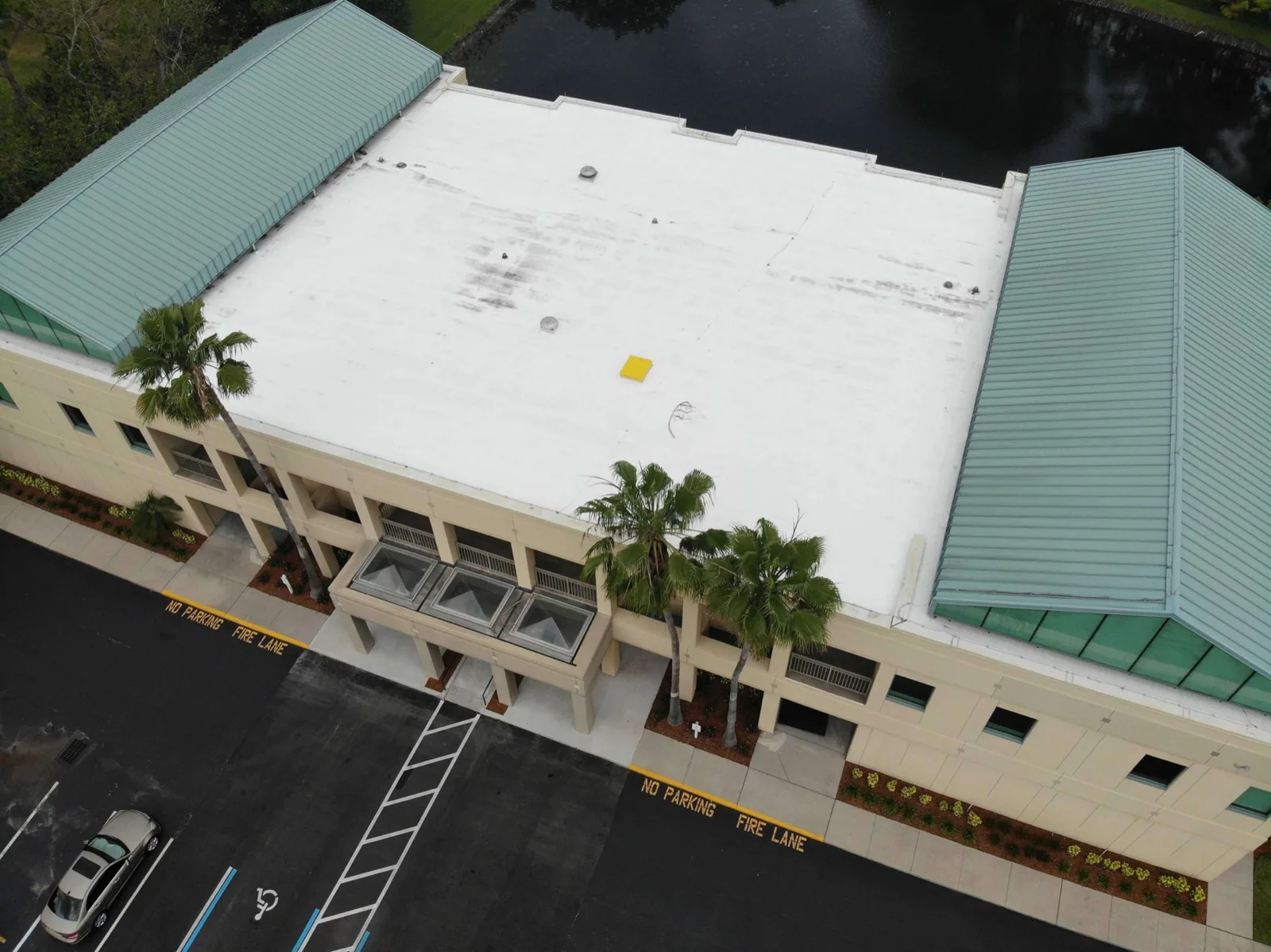
Water crossing a roof edge or entering an occupied room calls for safe control before a permanent repair is designed. The immediate sequence is to protect people, limit interior damage, assess roof access and close exposed areas without blocking drainage. In Cape Coral, warm-season rain and hurricane exposure can make temporary protection urgent, but each response still depends on wind, lightning, roof stability and the observed opening. We respond around the clock, seven days a week, including holidays, and document the affected area, secure a dry-in where conditions allow and identify what must be inspected after weather or access constraints pass. For a leak already reaching the building, commercial leak repair provides the follow-up investigation and permanent repair boundary.
Protect People and Building Operations
Notify the person responsible for the facility and establish a safe zone beneath active water. Move contents only when it can be done without entering an unsafe area. If water is near electrical equipment, ceiling systems or critical building functions, follow the facility’s emergency procedures and contact the appropriate trades. Record the time, room, visible water path and any conditions that could affect access. Interior containment is a short-term control, not proof that the roof is dry or that the entry point is known.
Roof access requires a separate safety decision. Do not send staff onto a roof during lightning, unsafe winds, poor visibility or when the surface or structure may be unstable. Confirm ladders, hatches, fall protection, roof load limits and communication before anyone goes up. A secure observation from a safe location may be the only appropriate step until conditions improve. The emergency log should identify who authorized access and what was visible.
At a property in the South Cape CRA, shared entrances, restaurants or residential uses can complicate interior isolation. At a warehouse near Hancock Creek Commerce Park, loading and material access may affect staging. The response lead should coordinate with the actual site contact and keep required exits and operations clear.
Temporary Dry-In Without Creating Another Problem
A temporary covering needs to stay secured under the expected weather and must not send water toward another opening. Identify attachment points, drain paths, roof edges and exposed equipment before placing a tarp or membrane. Avoid covering unstable materials, open drains or a wet assembly without understanding how trapped water could affect the roof. Where safe conditions do not permit roof work, control water from inside and wait for a qualified inspection.
Record the dimensions and location of the damaged area, the temporary materials used, how they were fastened and who will check them. Set a follow-up time and give the building contact instructions for reporting movement, renewed leakage or changed weather. Temporary protection can limit further entry; it is not a permanent repair, warranty or assurance that concealed materials are sound.
Lee County was the landfall area for Category 4 Hurricane Ian in 2022. The storm’s surge ranged from significant to devastating along the Gulf coast, low-lying areas and canals. After severe weather, inspect the roof, compare dated records and set the response around safe access and confirmed conditions. During a storm warning, do not expose workers to unsafe conditions to reach a roof.
Turn the Emergency Visit Into a Defined Repair
Once access is safe, trace the likely entry point and inspect adjoining seams, walls, curbs, penetrations, edges and drainage. Water may travel before appearing indoors, so compare the room report with roof-level evidence. If the entry point is uncertain, state what has been checked and what remains uncertain. Infrared imaging may help direct sampling, while a core cut verifies only the spot opened. A broader commercial roof inspection can document related conditions after the immediate threat is controlled.
The written repair scope should distinguish temporary work from permanent materials, describe preparation and tie-ins, and identify any insulation or deck replacement authorized. Photograph concealed conditions before closing them and record exclusions such as inaccessible roof areas or drainage issues beyond the emergency area. If the initial defect is isolated, a bounded commercial roof repair may be appropriate. Extensive wet material, repeated failures or loose perimeter details call for a larger review.
Where the building must remain open, coordinate noisy work, roof access, equipment protection and any shutdown with the facility representative. For hospital or public-service spaces along Del Prado Boulevard, plan around the actual functions affected and preserve agreed access routes. Do not assume one sequence fits every Cape Coral property.
Close the Response With Records and Next Steps
Before the emergency file closes, confirm whether temporary materials remain, who owns the follow-up and what event triggers another inspection. Provide a concise report with the complaint, access and weather conditions, roof observations, immediate protection, repair performed and unresolved questions. Include dated photographs from safe viewpoints and a marked roof plan. State clearly whether the visit located the entry point, limited water entry temporarily or completed a permanent repair.
After severe weather, a drone roof inspection can help review broad areas that are difficult to access, subject to safe flight conditions and a suitable view. Hands-on inspection remains necessary where material compatibility, attachment or moisture needs confirmation. A storm damage roof repair scope should separate observed defects from regional storm history and document the area actually evaluated.
Emergency planning can also include routine roof inspection and drain maintenance so access, contacts and drainage routes are known before a leak begins. At a property in the South Cape CRA or Del Prado Gateway, confirm entrances, public routes and staging space before setting emergency roof access.
Commercial Roofing Questions
What should our staff do first when water enters a commercial building?
Protect people and establish a safe containment area, then contact the facility representative and follow emergency procedures for electrical or critical systems. Record the room, timing and visible path without assuming that the ceiling stain marks the roof opening. Leave roof access to qualified personnel after they evaluate weather, structure and fall hazards.
Can a tarp protect the roof until a permanent repair is ready?
A temporary covering may limit entry if it can be safely installed and secured without blocking drainage or directing water toward another detail. Its attachment, condition and inspection responsibility should be recorded. In unsafe wind or lightning, do not send a crew onto the roof; use safe interior controls and return when conditions allow.
Does an emergency visit include the permanent repair?
The response may first focus on containment and temporary dry-in, especially when weather or access prevents a complete inspection. The report should say what was done, what remains temporary and what investigation or materials are needed for permanent work. If the entry point is located and conditions permit, define the lasting repair as a separate, documented scope.
How does Hurricane Ian affect emergency roof work in Cape Coral?
Ian’s Lee County landfall and coastal surge make post-event roof inspection part of storm readiness. Current roof observations, safe access, weather conditions and facility needs guide the response. Document the roof area actually examined and avoid assigning a cause that the evidence does not support.
When water is entering, share the building location, affected area, safe access details and facility contact. We will assess conditions, document available temporary protection and identify the next steps for permanent repair. Call 555-555-5555 or request a roof assessment for Emergency Commercial Roof Repair in Cape Coral, FL.