
Plan a Cape Coral reroof around tenants, patient access, deliveries, weather closure and daily roof sections without losing track of the repair boundary.
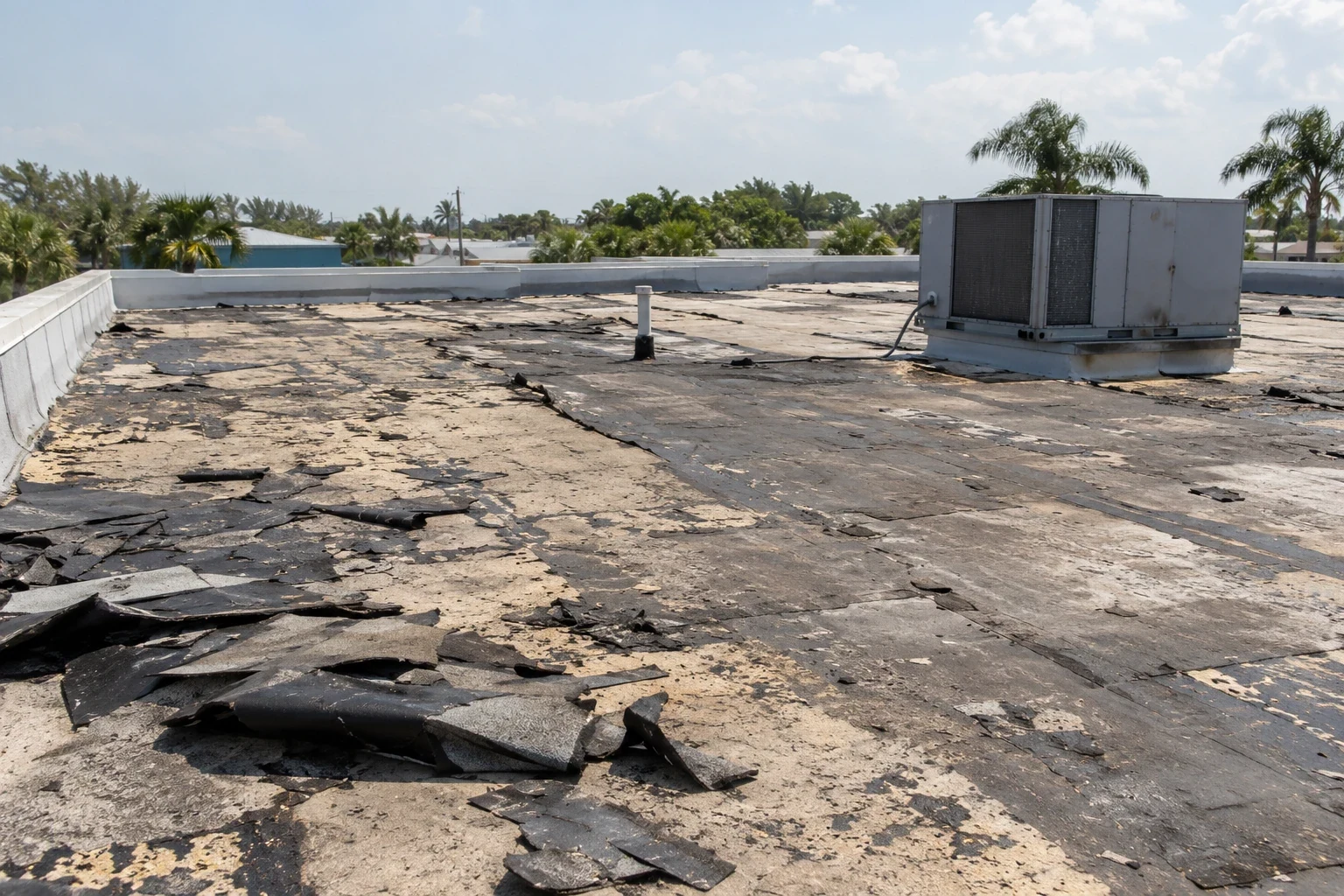
Before setting a temporary canopy, map the loading door, delivery windows and pedestrian detours with the building operator, then keep the protected route open throughout each work shift. Occupied-building reroofing begins with the roof sections, access paths and operating hours the facility cannot lose. We map tear-off limits, drainage, staging and daily dry-in before work starts, then coordinate each phase with the people responsible for the building. In Cape Coral, summer heat and warm-season rain add limits to how much roof can be opened. The sequence needs to protect the occupied space and leave a secure roof at every shift change.
Divide the Work Into Watertight Sections
We identify roof areas that can be removed, inspected and closed during one work period. The size of each section depends on weather exposure, crew access, assembly details and the time needed to install a permanent tie-in. A daily boundary should end at material that can accept a secure temporary or finished connection. We keep drains, scuppers and overflow routes open while moving across the roof, and we do not let staging cover the only way water leaves the work area.
Before tear-off, we mark the roof plan with the day's work zone, delivery route, access point and temporary protection. The facility contact confirms which rooms, entrances, loading bays or equipment remain in service. If removal exposes wet insulation or a damaged deck, the crew documents it and follows the agreed approval path before expanding the work. A replacement scope should identify concealed-condition allowances and who can authorize them so a field discovery does not leave the building open while approvals are sought.
Keep Entrances and Essential Functions Available
Noise, odors, vibration, deliveries and roof access can affect different parts of a facility at different hours. We coordinate work windows with the owner, protect entrances and confirm whether indoor areas need temporary barriers. A retail property along Pine Island Road may need customer routes kept clear, while a mixed-use building in South Cape may share access between commercial and residential occupants. Those are different operating patterns; the site contact sets the actual restrictions for the building.
Cape Coral Hospital on Del Prado Boulevard includes emergency, inpatient, imaging, surgery and maternity services. A reroof near clinical functions requires close coordination with facility staff, careful route control and attention to noise or service interruptions. We do not assume which access route or hours a facility can release. The sequence records responsible contacts, areas to avoid and work that requires a separate shutdown. For healthcare projects, a hospital roof plan should connect each roof area to building operations, not just the drawing grid.
Control Dust, Water and Rooftop Activity
Removal can expose insulation and deck, while cutting or fastening can create vibration and debris. We protect air intakes, sensitive equipment, finished areas and stored property as the scope requires. Before a section opens, the site team confirms whether equipment must remain running, be covered or be shut down. Roof debris and materials stay clear of drains, exits and service routes. Any temporary protection should be secured to the assembly and checked before crews leave the roof.
If a roof opening develops after the day's phase has closed, an after-hours response can be arranged any day of the week, subject to safe access. We protect the space below and document the temporary boundary before the next scheduled roofing shift.
Use Weather Holds Without Losing the Roof Boundary
Fort Myers Page Field's June-through-September normal highs range from 91 to 92 degrees, with annual precipitation around 57 inches. Plan for surface heat, showers, humid drying conditions and afternoon storms. We check the forecast, limit open areas and set a stop point where the roof can be secured before weather arrives. A delayed shift should not turn an unfinished section into an uncontrolled water path.
After rain or a wind event, inspect temporary protection, seams and drains before resuming tear-off. If the substrate is wet, the next layer should wait until the system requirements allow installation. When severe weather interrupts a reroof, inspect temporary protection, active seams and adjoining roof zones before reopening the site or resuming tear-off. Inspect the building for impact marks, displaced components, open seams, wet insulation and drainage changes before covering affected details. We inspect current conditions and document any exposed or displaced details before covering them. A roof inspection after a weather delay can confirm the active work boundary and the condition of adjoining sections.
Set Contacts, Decisions and Inspection Holds
A multi-phase reroof needs a named facility contact for access, occupant notices, shutdowns and change approvals. We set daily start and stop points, identify inspection holds before details are concealed and establish how concealed damage will be photographed and measured. The project schedule should show when each roof section is opened, dried in and released for the next trade. Give tenants a practical notice of noise, staging, restricted access and expected work hours, while the property manager handles roof findings and scope decisions.
On the Pine Island Road corridor, Cape Coral commercial uses include retail, office, light-industrial and mixed-use properties. South Cape is a compact commercial and mixed-use district with its own access conditions. Each site plan should use its building's actual entrances, loading routes and shared areas. For a recover option, we verify the existing base before scheduling a new layer; occupied operations do not make a poor assembly suitable for an overlay. A condition record can keep the schedule, photos and open decisions together for ownership.
Release Each Phase With a Clear Record
At the end of a phase, the owner receives a record of roof area completed, materials installed, details inspected, temporary protection removed and any work left open. We photograph seams, drains, curbs, edges and transitions with location references. If part of a roof is deferred, mark it separately and identify whether it remains watertight, needs monitoring or needs another scope. The building should not be treated as fully complete just because the main field membrane is installed.
Provide the property address, roof plan, access rules, work hours, tenant or patient constraints, equipment schedule and approval contact. We will walk the sequence with the facility team, mark protection zones and set the work boundary. In Cape Coral, heat and rain can change the pace; the daily closeout keeps the roof secure even when a phase shifts. A consistent multi-site program can help ownership track separate building schedules without blending their operating needs or roof findings.
Commercial Roofing Questions
How do you keep a building watertight during reroofing?
We work in defined areas that can be closed or secured at the end of a shift, keep drainage paths open and inspect temporary protection before leaving. Weather, assembly and crew access determine the section size. The schedule includes a safe stopping point if rain delays permanent closure.
Can tenants stay in the building during tear-off?
Occupancy can continue when access, protection and work controls are planned for the property. We coordinate entrances, noise windows, deliveries, sensitive rooms and any shutdown with the facility contact. The owner identifies operational limits before the sequence is set.
What happens if tear-off finds wet insulation or damaged decking?
The crew photographs and measures the exposed condition, protects the area and follows the agreed approval process. The proposal should state who can authorize concealed work and how added scope is priced before removal begins.
How do you plan reroofing around a hospital or active clinic?
We coordinate roof access, noise, staging and service interruptions with facility operations, and set restricted zones before work. The sequence should protect emergency routes and active functions, with contact names and notice requirements tied to each phase.
What weather conditions can pause the reroof?
Rain, lightning, wind, wet substrate or unsafe heat conditions can change the day's work. We check conditions, limit exposure and secure the open area before stopping. The site contact receives the revised phase and any follow-up inspection needs.
Send the Cape Coral address, roof plan, operating hours, access limits and facility contact. We will map roof phases, protection needs, weather holds and approval points. Call 555-555-5555 or request a roof assessment for Occupied-Building Reroofing in Cape Coral, FL.