
Inspect Bimini Square roofing by building and occupied use, with careful planning for waterfront exposure, drainage, access and repair closeout in Cape Coral.
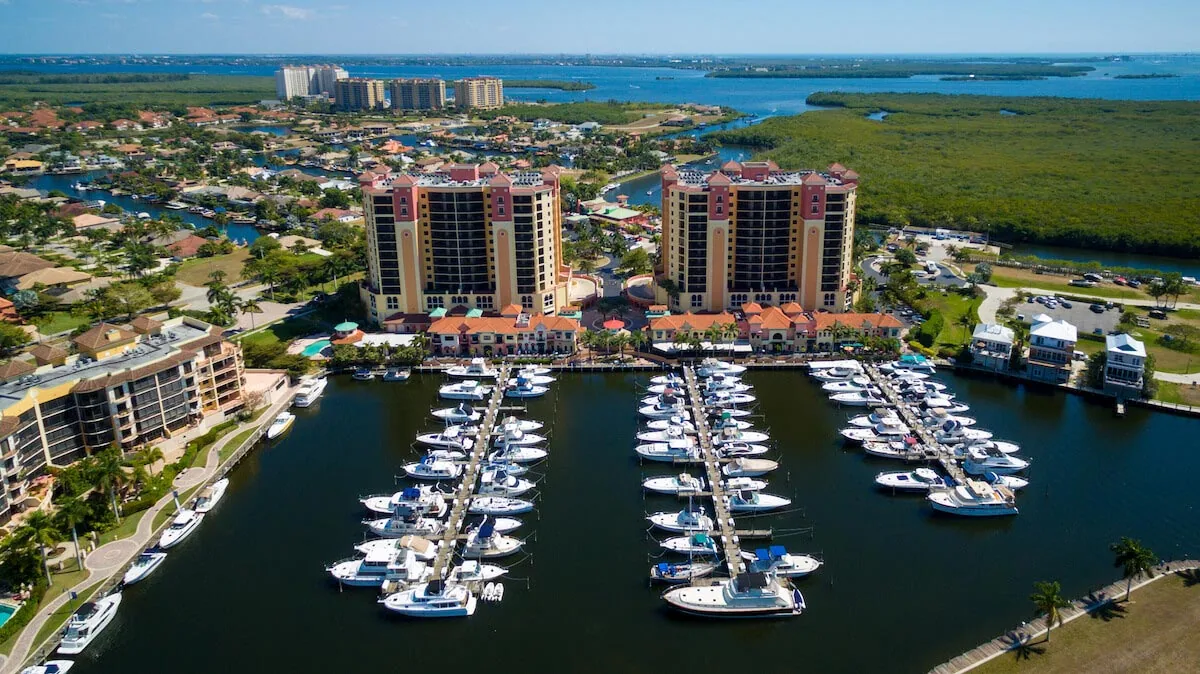
A split flashing where a roof meets a vertical wall can direct water behind the finish even when the field membrane looks intact. At Bimini Square, a completed mixed-use waterfront development at 440 Cape Coral Parkway East, roof work must be scoped by the actual building and affected area. The site includes residences, a two-story Lee Health outpatient facility, restaurants, marina slips and a parking garage, so access, interior protection and tenant coordination can vary across the property. We inspect the assembly before assigning a repair limit.
Bimini Square sits west of Four Freedoms Park in the original South Cape corridor along the Caloosahatchee River. Cape Coral’s heat, humid air and warm-season rain increase the value of a detailed drainage and edge review, while the waterfront setting calls for attention to visible corrosion and material transitions where present. No property name tells us which membrane, metal panel or deck is installed. We confirm those conditions at the roof and coordinate work around the use taking place below.
Map Roof Findings to the Building in Use
Begin with roof plans, prior repairs, leak reports and a route for safe access. Label each roof zone, then identify seams, edge termination, drains, curbs, pipes, screens and transitions before interpreting an interior stain. Water can move beneath the surface and appear away from the opening, so the repair should follow evidence at the assembly. A commercial roof inspection records what is visible, where access was limited and what testing may be needed to determine whether insulation is wet.
Different uses call for distinct coordination. Work over a healthcare area may require notice, protected entry paths and control of noise or odor. Restaurant operations can depend on exhaust equipment and delivery access. Residential sections need clear communication about entry, balconies or shared paths if those areas are affected. We ask the property contact to identify hours, access restrictions and who can release each work zone. A phased occupied-building plan divides the work into areas that can be protected and closed safely.
On a parking garage or roof deck, confirm the assembly before bringing loads or cutting. A waterproofing layer, traffic-bearing surface and roof membrane have different repair details. We verify penetrations and drainage points from available plans, then check field conditions without assuming the garage's construction from its use. If a seam or flashing needs correction, the scope should name compatible materials, substrate preparation, tie-in dimensions and any required cure or traffic restriction.
Check Edges and Metals for Coastal Exposure
Waterfront conditions can accelerate corrosion on exposed fasteners, edge metal, rooftop supports and equipment curbs, but exposure varies by orientation, shelter and material. We photograph what is present and check whether corrosion reaches the fastening surface or only the finish. At a metal transition, confirm the adjoining membrane, sealant and movement allowance. At a parapet, inspect coping joints, cleats, corners and wall terminations for a path behind the exterior surface. Repair should restore the connection, not merely cover the visible mark.
For Cape Coral conditions, 30-year normals at Page Field place average summer highs in the low 90s and yearly rain near 57 inches. We look for blocked drains, loose rings, split flashing and low spots before recommending any surface work. An isolated obstruction may be maintenance; repeated ponding or a failed drain connection may call for a broader correction. The drain and scupper review traces runoff to the outlet and confirms overflow routes, including where water discharges beside walls or occupied entrances.
Humid air affects preparation for adhesives, sealants and coatings. Before repair, confirm the substrate is dry and sound enough for the selected product. If removal opens wet insulation or deteriorated deck, photograph the location, secure the area and get direction before expanding the repair. A moisture survey can help map areas for further investigation when conditions and the roof assembly are suitable for that method. It complements a hands-on check, but the owner should review the limits and confirmation steps for any indicated anomaly.
Sequence Repairs Around Residents and Care
Before mobilization, confirm loading space, lift access, pedestrian routes, tenant notices, rooftop equipment and daily start and stop times. Keep tools and debris controlled, protect surfaces below, and maintain a clear route to entrances. If roof sections adjoin active rooms, coordinate temporary protection and any interior monitoring with the building contact. Work can be divided around the facility schedule, but each exposed section still needs a secure closure before rain or the end of the day.
Hurricane Ian made landfall in Lee County in 2022, keeping wind and water-control details in view. We inspect current attachment, perimeter metal, flashings and prior repairs at the address, then compare findings with the building records. Florida Building Code, 8th Edition (2023), governs applicable work with design and permit requirements dependent on the specific scope. A storm-related inspection can document present conditions and define any confirmed repair work.
Repair, restoration and replacement each need a defined boundary. If surrounding material remains serviceable, a compatible patch may be reasonable. Repeated openings, widespread moisture or compromised attachment can support evaluating broader work. The repair proposal should show preparation, material, flashing, testing and the limits of the work; a replacement option should identify removal, insulation, edge details, equipment transitions and access protection. State concealed conditions as an approval item rather than burying them in an open-ended scope.
Keep Closeout Useful Across Mixed Uses
Closeout should identify the building, roof zone, installed repair material, photographs, drainage observations and any area excluded from work. Tie an interior report to a roof opening only if the inspection supports that connection. Record follow-up testing and the person responsible for scheduling access. A photo condition report gives the property team a reference for later maintenance without blending findings from residences, the healthcare facility, restaurants or parking areas.
Maintain separate roof records by assembly and date. Note changes in rooftop equipment, new penetrations, coating application, repairs and drain cleaning. That history helps the next inspection look at the right seam or transition and makes it easier to judge whether a local repair held. For a portfolio in the South Cape CRA, record each address separately; The Cove at 47th has its own roof plans and access arrangements.
For service at Bimini Square, provide the affected building and roof location, current leak or maintenance report, plans, prior repair details and operating restrictions. We will inspect the area, mark the repair boundary and prepare options that fit the building’s schedule and the verified assembly.
Commercial Roofing Questions
Can one roofing scope cover the residences, outpatient facility and restaurants?
A property-wide agreement can coordinate scheduling, but the inspection and work limits should identify each building and roof zone. We confirm the materials, access, equipment and operating contact for each area, then group work only where the assemblies and timing support the same method.
What should be checked first after water appears inside a mixed-use building?
Map the report to the roof area above and inspect the nearest seams, walls, drains and penetrations, while allowing for water travel beneath the surface. We photograph the finding and separate a confirmed opening from the area that needs moisture testing or another access point.
How do you plan a repair over an operating healthcare or residential space?
The property contact sets access hours, notice requirements, entry protection and the person who can approve a temporary interruption. We phase the roof work, control the area below and close each section securely before leaving. Any odor, noise or equipment restriction should be resolved before materials arrive.
Does a waterfront address mean the roof needs replacement sooner?
The address alone cannot answer that. We inspect visible corrosion, edge attachment, seams, flashing and drainage, then evaluate the installed assembly and repair history. Replacement is compared when confirmed conditions extend beyond a local repair, not from the property's waterfront label.
Share the building address, roof zone, leak report, repair history and access contact. We will inspect the assembly, document findings and prepare a repair or renewal scope around operations. Call 555-555-5555 or request a roof assessment for Bimini Square in Cape Coral, FL.