
Coordinate college and university roof work in Cape Coral with attention to campus access, occupied spaces, drainage and storm-season exposure.
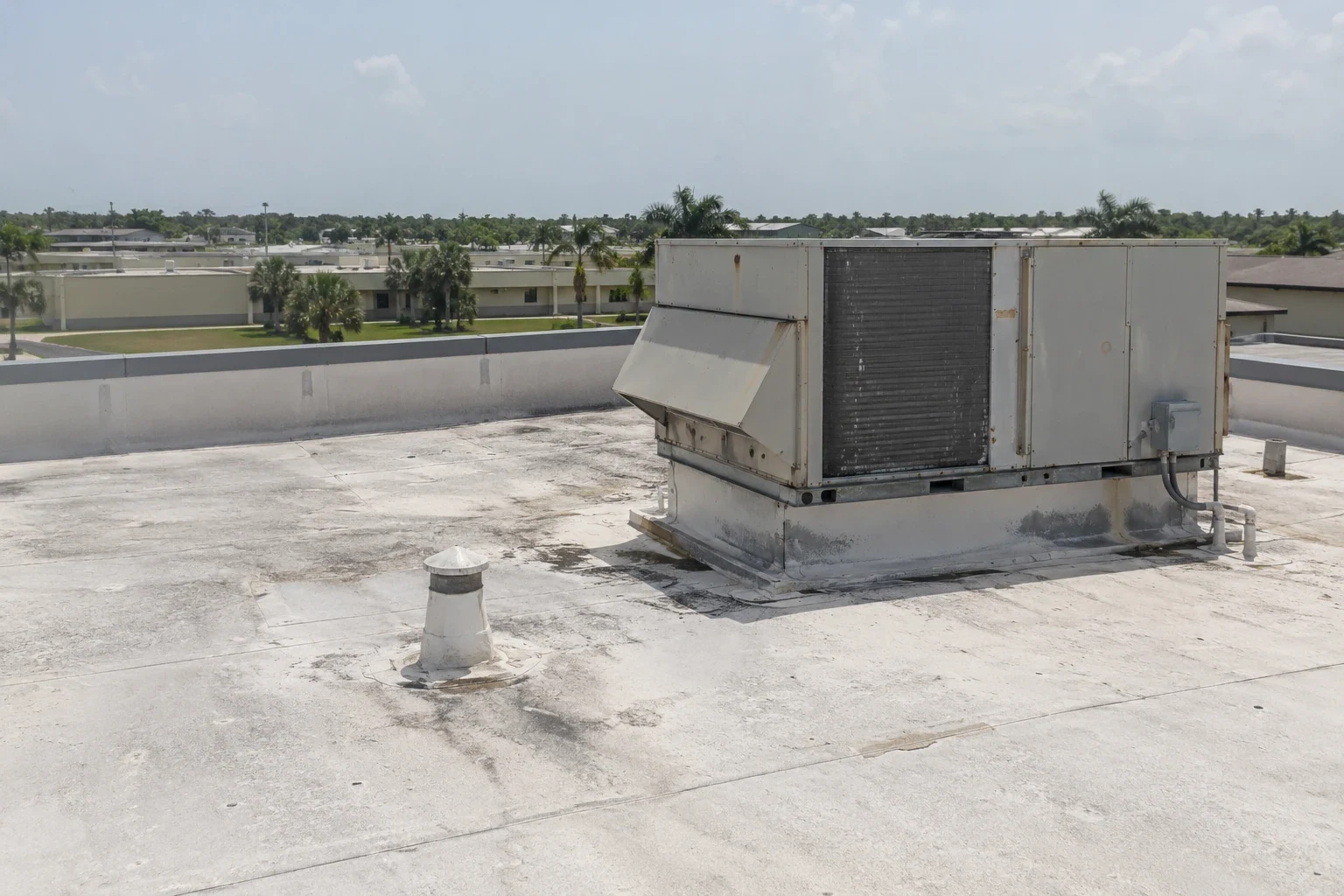
A membrane seam that opens beside a rooftop exhaust fan can affect a lab, office or occupied common area long before the failure is visible from the ground. We trace the seam into the curb flashing and adjacent field, then define which roof section can be repaired without disturbing dry, attached material. For college and university facilities in Cape Coral, the scope must also fit the building’s operating calendar, equipment access and the staff member authorized to release each area. Local education is part of the employment base, and the city’s Burnt Store and Academic Village planning area includes proposed mixed-use and commercial centers. For each project, we confirm the building assembly from its roof records and a field inspection. Emergency roof response is available around the clock when water entry cannot wait for a regular work window.
Map the Assembly Across Each Building
A campus can include different roof generations, additions, mechanical zones and repair histories. A walk begins with a roof plan that labels each building and elevation, then records membrane type, edge termination, drains, penetrations and visible repairs. The result is a reliable boundary for action: patch the isolated seam, investigate moisture beyond it, or compare larger corrective work. We do not treat an office wing and a high-use common building as interchangeable simply because they share a campus address.
Where the roof has several layers or the surface conceals the insulation, a visual check alone may not answer whether a recover is appropriate. Infrared patterns can identify areas for authorized sampling; a core cut verifies only the material at its opening. Record the test method, point and limits before using results to set a removal scope. A targeted infrared moisture survey can support that decision, while a roof condition report with photographs gives facility staff a building-by-building record. If the immediate concern is a room leak, leak investigation connects the interior report to roof evidence.
Sequence Work Around Campus Use
Roof work may intersect with class sessions, examinations, dining, research equipment, deliveries, events and summer programs. We confirm the release time for each work area with the facility contact, including when noise begins, when access is restricted and how rooftop units will be protected. A shutdown is not assumed from the roof plan alone. Each affected unit needs an identified operator and approval path so the crew does not cover an intake, interrupt cooling or leave a service route blocked.
For occupied structures, divide the scope into sections that can be made watertight before the day ends. Keep staging and crane paths away from entrances and service areas named by campus staff. If a building must remain available through the work, our occupied reroofing plan ties the sequence to safe access, temporary protection and daily closeout. Administrative spaces may follow the constraints of an office building roof, while a classroom facility may need shorter noisy-work windows. A K-12 school roof plan shares the same need for schedule coordination, but campus contacts set the actual boundaries for this property.
Keep the Weather Boundary Small
At nearby Fort Myers Page Field, normal summer highs reach the low 90s, while annual rainfall totals roughly 57 inches. These regional figures help frame heat and rain planning, though they do not predict a construction day. High temperature affects crew exposure and product application limits; humid conditions make a dry substrate especially important before adhesive or membrane closes an area. We check field conditions against the system requirements and stop where the exposed assembly can be protected.
Lee County was Ian’s Category 4 landfall area in 2022, and surge affected the Gulf coast, low-lying ground and canals. After high winds or heavy rain, inspect accessible campus edges, metal transitions, penetrations and drains, then compare findings with the maintenance record. Local salt exposure also varies with shelter and proximity to open water, so corrosion should be documented at the actual fastener or metal detail rather than assumed across the campus. When urgent water entry occurs, emergency roof service can address safe containment and temporary protection at any hour.
Compare the Repair Boundary With the Capital Choice
A repair is appropriate when the membrane around a defect remains sound, dry and able to accept a compatible patch. If the same type of failure appears at several transitions, look for a shared condition such as movement, poor drainage or a recurring curb detail before repeating isolated patches. Recover can be considered when existing layers and attachment support another assembly, roof height and drainage remain workable, and code requirements are met. Replacement allows direct review of the deck and insulation but creates more noise, debris and access coordination.
Cape Coral follows Florida’s 2023 eighth edition building and energy codes, effective statewide on December 31 of that year. Confirm applicable design criteria, permits and scope for the actual work rather than assuming a prior repair establishes compliance. A replacement comparison should state what is removed, what remains, how edges and curbs are rebuilt, and how wet insulation is handled. Where a stable roof may support a coating, evaluate adhesion, moisture, slope and transitions first; coating does not correct a saturated assembly or failed edge by itself. Separate testing, repair and capital work in the estimate so facility leadership can make decisions against evidence instead of a single undifferentiated allowance.
Make the Closeout Useful to Facilities
At completion, mark the repaired limits on the roof plan and pair each area with photographs, materials, inspection notes and any concealed conditions found during removal. Record remaining concerns, roof sections that were inaccessible, and any follow-up test that was not included. A useful closeout also identifies drains and overflow paths, new metal transitions and equipment clearances that maintenance staff will see during future service. If a warranty document governs the existing assembly, review the relevant terms before cutting, coating or changing an attachment detail.
Buildings in City Centrum and near the Burnt Store and Academic Village area sit within different city planning contexts, but neither location alone identifies the roof system or its condition. Give us the facility address, available plans, repair records, room reports and operating contact. We can inspect the accessible assembly, distinguish confirmed findings from unresolved questions, and set a repair boundary or replacement comparison for the decision at hand. Follow-up maintenance should reuse the same roof labels so future observations can be compared without transferring one building’s condition to another.
Commercial Roofing Questions
Can roof repairs fit between semesters or scheduled programs?
A calendar can create a useful work window, but the release still depends on access, noisy operations, ventilation, deliveries and the status of each building. We can divide work by roof section, provided each opening can be protected and closed safely. Confirm the window with campus facilities and any operator responsible for rooftop equipment before materials are staged.
How do you determine if moisture extends beyond a visible leak?
The ceiling report is a starting location, not a map of concealed wet material. We compare it with seams, curbs, wall transitions and drainage above, then recommend sampling when the assembly cannot be assessed visually. Infrared patterns can guide test locations, while an authorized core opening confirms only the material removed at that point.
What belongs in a multi-building roof assessment?
Label each building and elevation, record the assembly and visible defects, and distinguish urgent entry from maintenance or capital needs. Photographs, roof plans and prior repair records help facilities staff compare sections without treating the campus as uniform. The report should also state what could not be accessed and where further testing would change the recommendation.
Does a Gulf-coastal location mean every campus roof has salt damage?
No. Salt exposure changes with distance from open water, prevailing conditions and site shelter. Inspect actual metal edges, fasteners and equipment supports for corrosion, then document the affected locations. A coastal setting informs what to examine, but it does not replace evidence from the building.
Provide the building address, available roof plan, repair history, reported leak locations and the campus contact who can arrange access. We will document the assembly and define repairs, testing or replacement options supported by the field conditions. Call 555-555-5555 or request a roof assessment for College and University Roofing in Cape Coral, FL.