Inspect Duro-Last commercial roofs in Cape Coral by custom-fabricated sheets, field welds, flashing, attachment and drainage before repair or renewal.
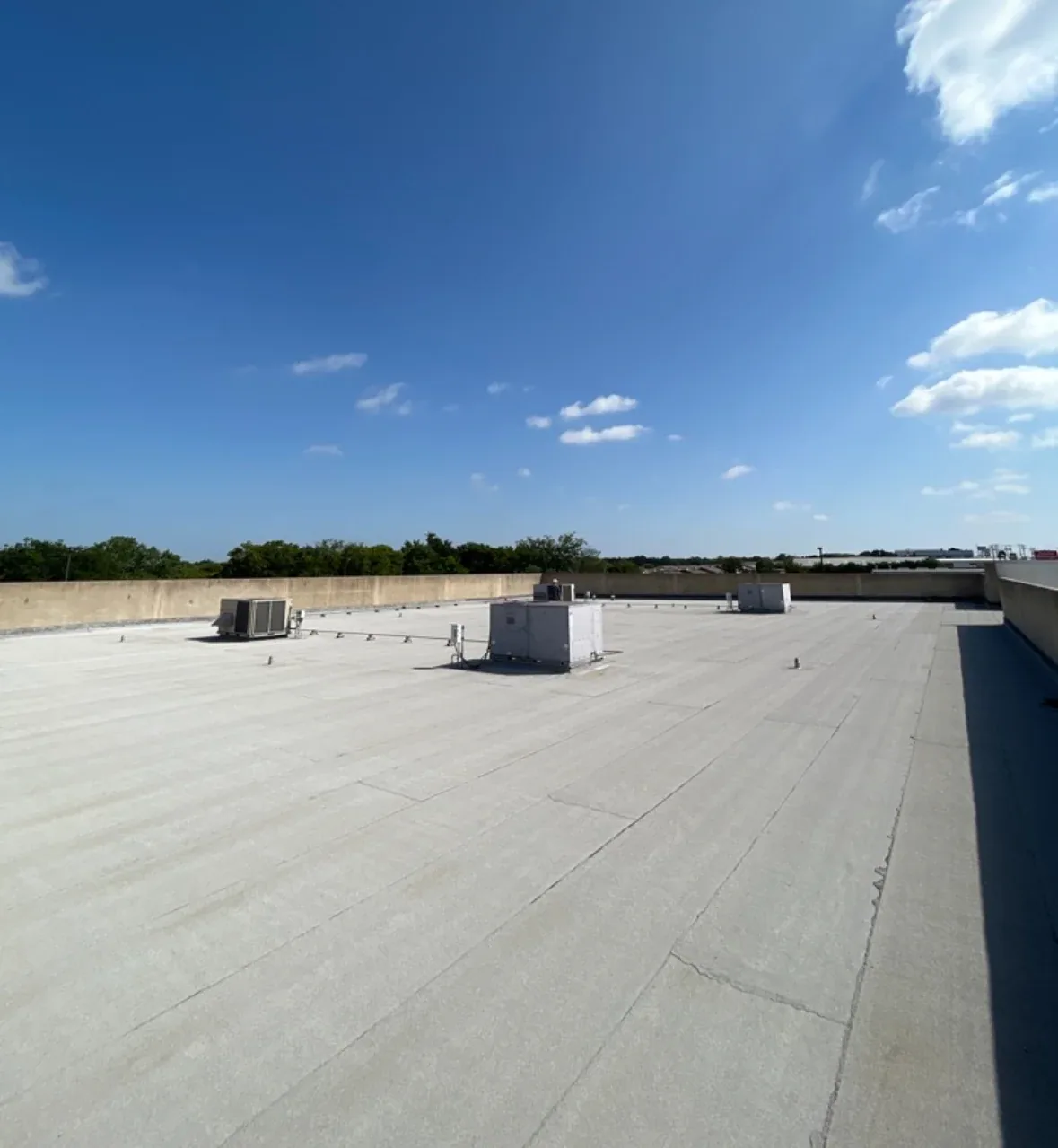
A factory-fabricated roof sheet still depends on the field welds and transitions that join it to the building. Duro-Last’s PVC system uses custom-fabricated sections and accessories, which can reduce on-roof fabrication but does not eliminate the need to inspect seams, drains and perimeter details. Cape Coral’s summer heat and heavy rain make those connections worth checking together. We identify the membrane, attachment and field repairs before deciding where a compatible patch or broader renewal should begin.
Read the Custom-Fabricated Layout
Duro-Last is a PVC roofing manufacturer whose custom-fabricated system can include deck sheets, flashings and transition accessories made to building dimensions. The company states that many seams are completed in a factory-controlled setting before delivery. Review the roof plan, fabrication drawings and installation records, then compare them with the sheets and details in place. A factory seam and an on-site weld may appear at different locations in the assembly.
Inspect sheet edges, field welds, curb corners, penetrations, perimeter metal and any areas changed after installation. Confirm how the membrane is attached, whether insulation or cover board was replaced and where previous repairs intersect factory-fabricated sections. Mark each location on a plan. If a field detail does not match the drawing, record the difference rather than assuming the fabrication layout remains unchanged.
A commercial roof inspection can map the installed membrane and its transitions. For a verified PVC assembly, a scoped roof repair should tie into sound material and identify whether the affected portion is custom-fabricated sheet, roll goods or a field detail.
Check Welds, Accessories and Roof Openings
Inspect the field weld where fabricated sections meet, and follow it into corners, pipes, drains and equipment curbs. Look for a skipped weld, contamination, wrinkles, a lifted edge or movement at the substrate. Probe the finished seam after cleaning where appropriate. Around a penetration, check whether the accessory skirt remains connected to the field membrane and whether equipment service disturbed the flashing.
Duro-Last’s product line includes custom-fabricated accessories for transition areas as well as membrane roll goods. Their use depends on the roof layout and the part required. If an accessory is damaged, compare its geometry and weld to the fabrication record, then specify the replacement or field repair. A generic boot or patch may not fit a custom corner or curb detail.
A confirmed open seam repair should describe the weld limits and test. A distinct cut from foot traffic or dropped material needs puncture repair. Do not merge separate defects just because they appear on the same prefabricated sheet.
Review Attachment, Insulation and Drainage
Custom membrane sections can be installed by mechanical attachment, adhesion or induction welding over approved assemblies. Check the actual fastening or adhesive pattern, substrate, insulation and cover board before a repair or re-cover. If a membrane edge has moved, verify whether the attachment and edge metal hold the load. Repairing the sheet without addressing a loose substrate or termination can leave the same connection exposed.
Water can enter at a field weld, then travel beneath the sheet toward a low point. Inspect drains, overflows, scuppers and nearby flashing, and note standing water after rain. Fort Myers Page Field normals, the nearest long-running official climate record used for Cape Coral, show about 57 inches of annual precipitation. Drain and scupper service can correct a blocked outlet; when water remains with the outlet open, investigate the roof plane and insulation slope as a separate scope.
If test openings show wet insulation, mark the measured removal boundary and photograph the deck before closure. Do not cover wet material with a new Duro-Last sheet. Restore the underlying layers, then connect the new membrane to sound existing material and inspect the finished tie-in.
Choose a Repair or New Fabrication Plan
A localized weld failure or damaged accessory can be repaired when the surrounding sheet, attachment and insulation remain sound. Repeated seam openings, widespread moisture or numerous altered penetrations may justify a broader assessment. Compare the fabrication drawings with field measurements and identify what can remain, what needs testing and what should be replaced. If new sections are fabricated, verify curb, drain and perimeter dimensions before production.
Replacement planning should include insulation, attachment, metal, drains, equipment curbs and sheet layout, not only membrane square footage. A replacement plan can set removal limits, delivery sequence, daily dry-in and the location of field welds. For a separate flashing failure, include the transition accessory or field detail that closes the roof edge.
Compare other manufacturers’ systems only after the existing assembly and project needs are known. GAF commercial systems and Holcim Elevate products use their own accessories and installation requirements. A system comparison should consider the roof plan, substrate, attachment and building operations.
Tie the Work to Cape Coral’s Site Conditions
Cape Coral’s industrial inventory includes light manufacturing, processing, warehousing and distribution. At a facility near the North Cape Industrial Park, confirm delivery access, staging and rooftop routes with the building contact. Equipment service paths and production schedules can affect when the fabrication sheets or repair materials reach the work area.
Fort Myers records show repeated summer days with dew points above 75 degrees, a sign of the humid coastal conditions around Cape Coral. Check whether the membrane and substrate are dry enough for the chosen adhesive, weld or accessory detail. Hurricane Ian brought severe surge to low-lying areas of Lee County in 2022; use dated roof records and a safe field inspection to plan post-storm repairs at each facility.
Save Duro-Last shop drawings, membrane identification, attachment notes, repair photographs and test results with the facility roof plan. Note any field change from the custom layout and label the finished weld. Share the address, fabrication records and reported condition; we will inspect the roof and prepare repair or renewal work around its actual details.
Commercial Roofing Questions
What does custom fabrication change on a Duro-Last roof?
Duro-Last can fabricate membrane sections and transition accessories to building dimensions, with many seams completed before delivery. The roof still has field welds, tie-ins and drainage details that need inspection. We compare fabrication drawings with the installed sheets before setting a repair boundary.
Can a Duro-Last roof be repaired with a generic PVC patch?
The membrane, thickness, attachment and detail determine which repair material and method fit. We confirm the installed sheet and use compatible material that can weld or tie into sound membrane. A custom curb or corner accessory may need to be rebuilt to match its geometry.
How should a leak near a factory seam be investigated?
Trace the seam to its field tie-in, inspect the nearby flashing and drain, and compare the leak report with the roof plan. Moisture testing or a controlled opening can establish whether insulation is wet. The repair scope should show whether the factory sheet, field weld or underlying layer needs work.
When should a Duro-Last roof be refabricated or replaced?
Widespread membrane wear, repeated failed welds, wet insulation or multiple changed penetrations can support a broader replacement assessment. We map the roof and compare fabrication drawings with field dimensions. Any new sheet layout should account for current curbs, drains, edges and service routes.
Provide the roof plan, Duro-Last fabrication drawings, prior repair photos and leak locations. We will compare the layout with the installed roof, inspect field welds and drainage, and define compatible repair or replacement work. Call 555-555-5555 or request a roof assessment for Duro-Last Commercial Roofing in Cape Coral, FL.