Explore GAF commercial roofing options in Cape Coral, from EverGuard single-ply systems to compatible repairs, drainage details and replacement planning.
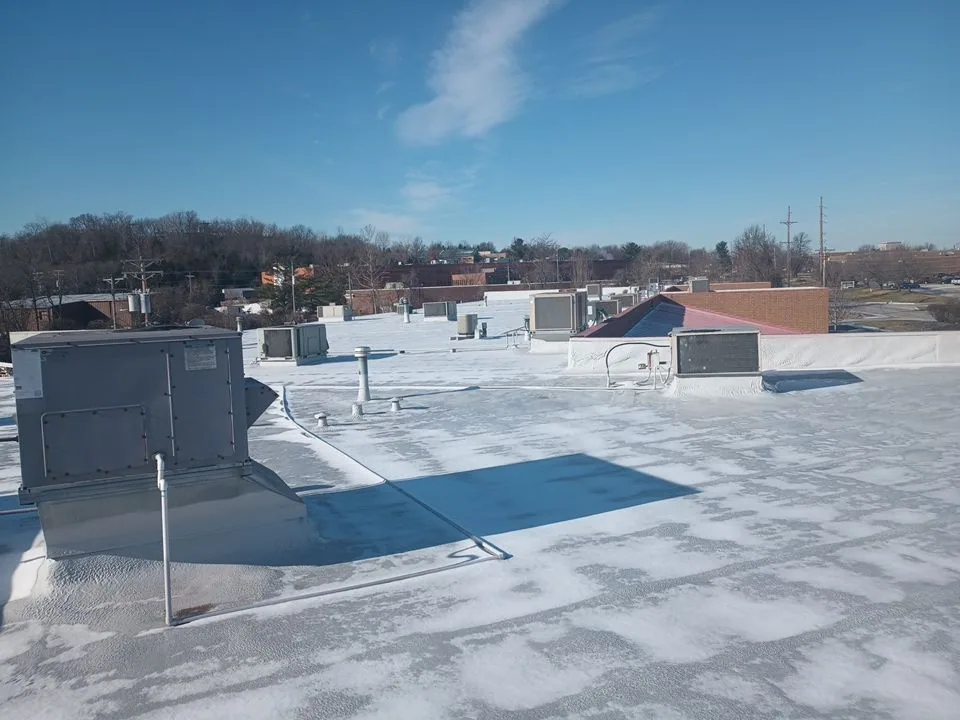
A GAF membrane label is only the start of a roof inspection. The installed EverGuard system, attachment, seams, flashing and insulation all determine which repair materials and details will fit. Fort Myers Page Field’s Cape Coral reference normals reach average highs of 91 to 92 degrees in midsummer, with annual rainfall near 57 inches; we inspect drainage alongside membrane condition. We identify the system on the roof, compare it with available records and define the repair boundary from the field condition.
Identify the GAF System Before Specifying Work
GAF’s commercial line includes EverGuard TPO and PVC single-ply membranes along with accessories and other low-slope roofing components. EverGuard TPO systems can be mechanically attached, adhered or induction welded, and thermoplastic seams are heat welded. Those options do not make every detail interchangeable. We inspect the membrane markings, attachment pattern, existing flashing and adjoining roof layers before planning a patch, re-cover or replacement.
Check the roof plan and closeout records for the installed product and system. Then compare them with field conditions: membrane thickness if documented, reinforcement, seam type, cover board, fastener rows, adhesive and edge termination. If records are missing, identify the assembly through a careful field inspection rather than guessing from color. The details around drains, curbs and parapets often show how the system was built.
When TPO is confirmed, TPO system repairs can use matching seam and flashing methods. For PVC, PVC system details require their own compatible products and preparation. A commercial roof inspection can document the membrane, seams and transitions before material is selected.
Read Seams and Flashings as One Assembly
A split weld or lifted lap deserves a check along its full length. Probe the seam after cleaning and inspect for contamination, wrinkles, movement or moisture under the sheet. At a curb, look for a sound tie-in from the field membrane through the flashing and termination. A patch that covers the opening but leaves a loose base or wet insulation will not restore the full connection.
GAF’s EverGuard TPO and PVC systems have prefabricated accessories and system-specific details. We match a repair to the membrane, accessory and substrate rather than substituting one thermoplastic material for another. Prepare sound material, follow the selected system’s installation requirements and verify the finished seam or flashing. If a roof has several kinds of repair, mark each one separately so an owner can see where membrane work ends and metal or drainage work begins.
For a confirmed open lap, seam failure repair describes the issue and its repair boundary. A curb, edge or wall connection may need a distinct flashing repair. If the defect is limited, commercial roof repair can restore the affected area without treating the whole assembly as failed.
Check Drainage and Moisture Beneath the Membrane
Warm-season rain exposes a weak drain or a low area beside a seam. Map each outlet, overflow and flow path, then note ponding after the roof is clear. Pine Island Road has office, flex, industrial and mixed-use activity; read roof drainage from the actual site plan and field conditions. Verify whether the drain is blocked, the bowl has moved or the roof plane directs water away from it.
Moisture below the membrane changes the repair. Use non-destructive testing to guide openings when appropriate, then confirm with a test cut if the result will determine material removal. Photograph the insulation and deck before closing. Do not cover wet layers with a new membrane or coating. Drain and scupper service can restore a restricted outlet, while an infrared moisture survey can help map areas for field confirmation.
After a major storm, inspect GAF roof seams, perimeter metal, drains and rooftop penetrations once access is safe. After a major storm, inspect each building and document observed roof conditions by section. For GAF projects, keep the approved assembly, material submittals and installation records with photos of concealed work and the final roof condition.
Compare Repair, Recover and Replacement
A localized seam or flashing repair may suit a roof whose adjoining membrane and insulation remain sound. If defects repeat across roof sections, test results show widespread moisture or the attachment has failed, compare broader rehabilitation with replacement. For a recover, review the existing materials, attachment and applicable requirements before placing another system above them. Make the scope clear about tear-off, substrate repair, insulation, edge metal, drainage and equipment transitions.
GAF offers several commercial single-ply configurations, but the system selection still depends on deck, roof geometry, attachment needs, project conditions and the details that can be properly closed. Compare options by assembly rather than brand name alone. Carlisle single-ply systems and Johns Manville commercial roofing provide other product families for that comparison. A replacement plan should show tie-ins, work zones and secure closure points. Where heat wear is localized, heat-related membrane repair can be assessed separately from replacement.
Keep photographs, membrane identification, moisture results and repair dates with the roof plan. For a property in City Centrum or along Pine Island Road, connect the manufacturer record to the assembly confirmed at the address.
Plan GAF Roof Work Around the Building
Confirm roof access, operating hours, delivery area and any tenant or equipment restrictions before work begins. A mechanically attached system may require a different staging sequence from an adhered or induction-welded assembly. Plan where membrane rolls, plates, adhesives or weld equipment will be stored, and keep roof openings secured between shifts. If the building stays occupied, coordinate noise, interior protection and any test opening with the facility contact.
Before closing work, inspect new seams, flashings, drains and metal terminations. Photograph the completed repair and identify what remains to be monitored. If a replacement is underway, record each work zone and its temporary closure status so the owner can see what is complete and what awaits the next phase.
We work on GAF commercial roofing systems as part of our broader low-slope roofing work. Share the facility address, roof records and reported condition. We will identify the installed assembly and prepare a repair or replacement scope that matches its actual components.
Commercial Roofing Questions
How do I confirm whether my roof is GAF TPO or PVC?
Look for membrane markings and closeout records, then compare them with seam construction, flashing and accessories on the roof. A color alone is not enough to identify the system. We document the assembly and use compatible materials for the repair method selected.
Can a GAF TPO seam be repaired with PVC material?
TPO and PVC are separate membrane systems with their own compatible materials and welding details. We identify the roof first, prepare sound membrane and make the repair with the correct system components. The new seam is checked along its full length before closeout.
Does a GAF roof need replacement if one seam is open?
One open seam may be a localized repair if nearby membrane, insulation and attachment remain sound. We check the adjoining field and test concealed layers where needed. Repeated failures or widespread moisture can change the scope, so the roof plan should show each finding before replacement is recommended.
What records help plan a GAF roof repair in Cape Coral?
Provide the system submittal, roof plan, prior repairs, leak locations and any equipment work orders. We compare those records with the membrane and details in the field, then document tests, repair limits and remaining access restrictions. The file should distinguish confirmed conditions from areas still needing inspection.
Send the facility address, roof plan, available GAF system records and reported condition. We will inspect accessible seams, flashings and drainage, then prepare a repair or replacement scope for the actual roof assembly. Call 555-555-5555 or request a roof assessment for GAF Commercial Roofing in Cape Coral, FL.