
Inspect Johns Manville commercial roofs in Cape Coral by membrane, attachment, insulation and roof detail before choosing repair, coating or replacement.
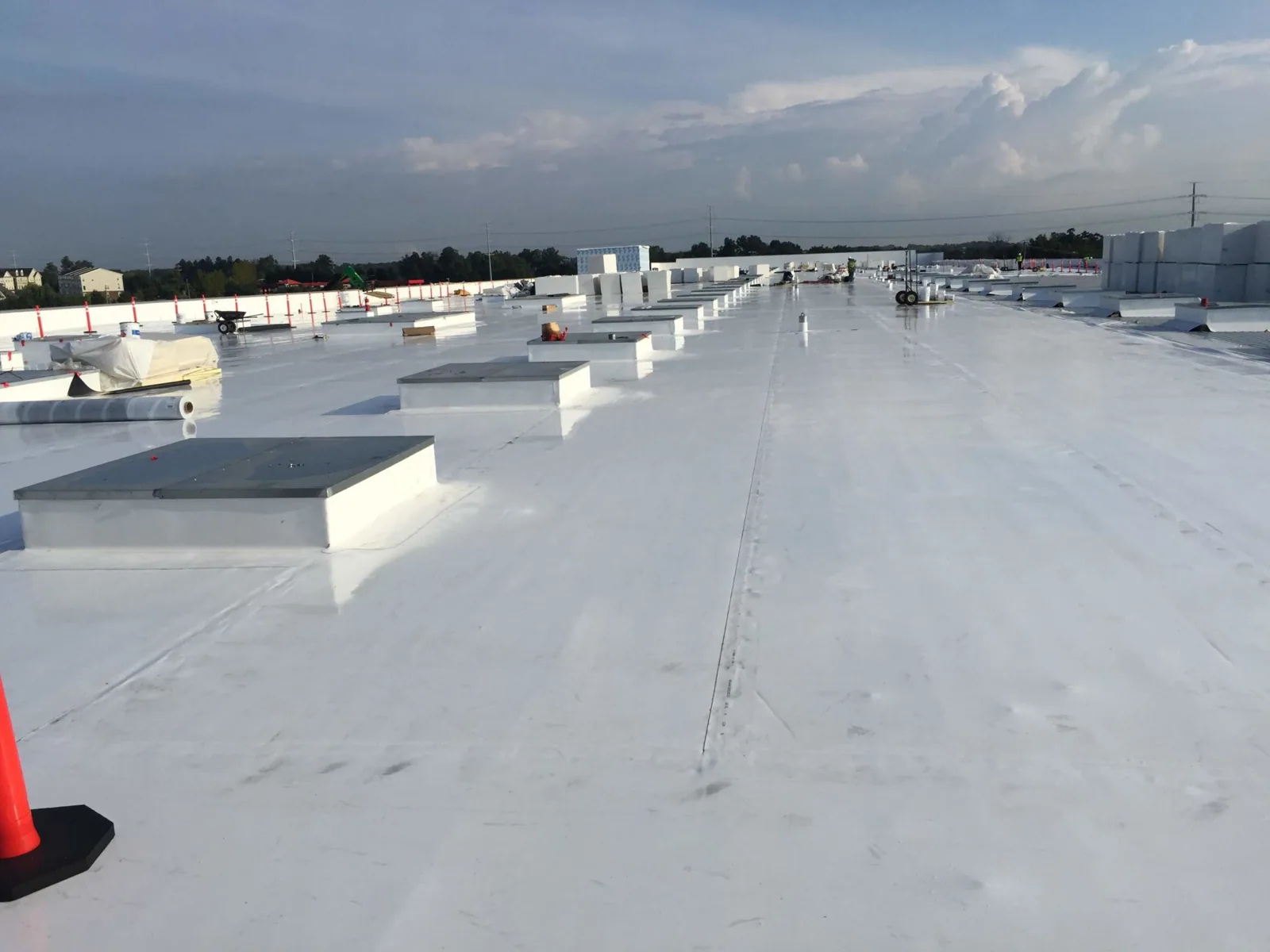
The JM roof submittal lists a product family, but the installed layers show how the assembly performs at a seam, drain or curb. Johns Manville offers single-ply membranes and bituminous systems, so identifying the actual material is the first step in planning a repair. The Fort Myers Page Field 1991 to 2020 record puts June through September highs in the 91 to 92-degree range; its annual precipitation normal is about 57 inches. We inspect the roof system, drainage and transitions together before setting the work boundary.
Read the System Schedule and Roof Surface
Johns Manville’s commercial portfolio includes TPO, PVC and EPDM single-ply systems, plus APP, SBS and built-up roofing, insulation and cover boards. Check the original submittal, closeout documents and roof plan, then compare them with the membrane or cap sheet in the field. A product designation without attachment, substrate and flashing details may not be enough to select repair materials.
Look for membrane markings, lap construction, fastener rows, adhesives, surfacing and transitions. A thermoplastic seam is repaired differently from an EPDM splice or a multi-ply bituminous surface. If prior coatings or recover work are present, record them before introducing another material. Verify the deck and cover board where accessible, especially near recurring leaks or ponding.
For JM TPO, the TPO system detail depends on compatible membrane, flashing and heat-welded seams. A modified-bitumen assembly uses its own plies and application methods. A commercial roof inspection can map these details and document areas requiring testing.
Match the Repair to Membrane and Reinforcement
JM TPO membranes use a polyester reinforcement and a thermoplastic formulation designed for flexibility and weldability. Before repairing a seam, confirm that the surface is clean and dry, the sheet is not stretched or brittle, and the adjacent flashing remains attached. Prepare the membrane using the system requirements and verify the completed weld or tie-in across its length.
JM SBS roofing offers different reinforcement types and installation methods. A modified-bitumen repair may involve a heat-welded, self-adhered or applied sheet depending on the installed system and approved detail. Do not select a torch or adhesive from the brand alone. Check the substrate, surrounding materials, fire-safety requirements and existing layers before opening or heating the roof.
Where the defect is at an edge, curb or penetration, repair the transition as part of the membrane assembly. A patch across a loose termination may leave the water path open. Insulation and cover-board work can be included where testing finds damaged material; a defined roof repair should describe the preparation, material, lap and final inspection for each item.
Check Drainage Before Coating or Recover
A low spot can keep water against a seam or flashing and complicate restoration. Trace the route from each roof section to the drain, overflow or scupper. Clear an obstructed outlet, then see whether ponding remains. If water does not move with a clear drain, inspect the slope, deck and insulation rather than applying a coating to conceal the depression.
Cape Coral’s warm-season rainfall makes outlet condition part of a JM roof assessment. Drain and scupper service can address blocked or damaged outlets. If moisture testing or a test cut shows wet insulation, map its extent and replace material to a set boundary before placing a new membrane or coating. Recover should be considered only after attachment, moisture and code requirements are checked.
At a mixed roof with bituminous and single-ply areas, note where one assembly ends and another begins. Compatible transition details, perimeter metal and drainage changes should be included in the same roof plan, even if separate crews perform the work. That prevents one repaired surface from leaving a weak joint to its neighbor.
Use Cape Coral’s Project Context Carefully
City Centrum and the Pine Island Road corridor are among Cape Coral’s commercial investment areas. Their building uses vary, so a manufacturer selection cannot be made from the district name. Along Pine Island Road, confirm roof access, staging and the equipment layout at the actual property. In City Centrum, include tenant, delivery or parking conditions that can affect the repair window.
At a property in City Centrum or along Pine Island Road, confirm the roof access, staging area and operating window with the facility contact. Use the roof plan and field inspection to identify the installed JM system and any prior recover or coating.
After major weather, inspect seams, edge metal, drains and rooftop attachments when access is safe. Document the condition at the building rather than assigning regional storm impacts to a specific roof. A Johns Manville closeout should identify the installed product, approved detail, preparation steps and evidence recorded before concealment.
Choose Repair, Restoration or Replacement
A localized seam, flashing or membrane failure may be repaired when adjoining layers remain sound. Widespread wet insulation, repeated leaks or multiple failed details may call for a broader assessment. We map each condition and compare the actual cost drivers: removal limits, substrate work, insulation, transition details, drainage and access. A JM coating product may suit certain substrates, but surface adhesion and assembly condition need to be established first.
When replacement is appropriate, consider whether the project will retain a bituminous assembly or move to single-ply, and plan the tie-ins to walls, curbs and existing sections. Replacement planning should state daily closure points and how occupied areas are protected. For a separate flashing failure, record the transition repair independently from the field membrane.
Keep product submittals, moisture findings, repair photos and maintenance dates together. The record helps the next facility manager identify what JM assembly is present and where future inspections need to focus. Compare it with GAF commercial systems and Carlisle SynTec systems only after identifying the actual roof layers.
Commercial Roofing Questions
Which Johns Manville systems are used on commercial roofs?
The JM commercial portfolio includes TPO, PVC and EPDM single-ply systems and APP, SBS and built-up roofing, along with insulation and cover boards. The roof plan and field identification establish which one is installed at your building. We inspect those details before recommending repair materials.
Can JM TPO be repaired with the same method as JM EPDM?
No. TPO seams are heat welded, while EPDM uses compatible splice and flashing methods. We verify the membrane and its surface condition, then prepare and close the repair using the correct material. A past coating or recover can also affect compatibility.
When is a coating appropriate for an existing JM roof?
The substrate, membrane, attachment, moisture and prior coating determine whether a coating can bond and perform as intended. We inspect and test uncertain areas, repair open details and confirm surface preparation before considering restoration. A coating does not correct a low deck or wet insulation.
What should I provide for a Johns Manville roof assessment?
Send system submittals, roof drawings, prior repairs, leak locations and any recent equipment changes. We compare the records with the installed membrane and drainage path, then document test areas, repair limits and inaccessible sections. This helps keep future work tied to the actual system.
Share the facility address, JM submittals, roof plan and reported condition. We will identify the installed system, inspect seams and drainage, and prepare a repair or renewal scope matched to the assembly. Call 555-555-5555 or request a roof assessment for Johns Manville Commercial Roofing in Cape Coral, FL.