
Repair commercial roof punctures in Cape Coral by tracing the entry point, checking wet insulation and restoring a compatible membrane patch.
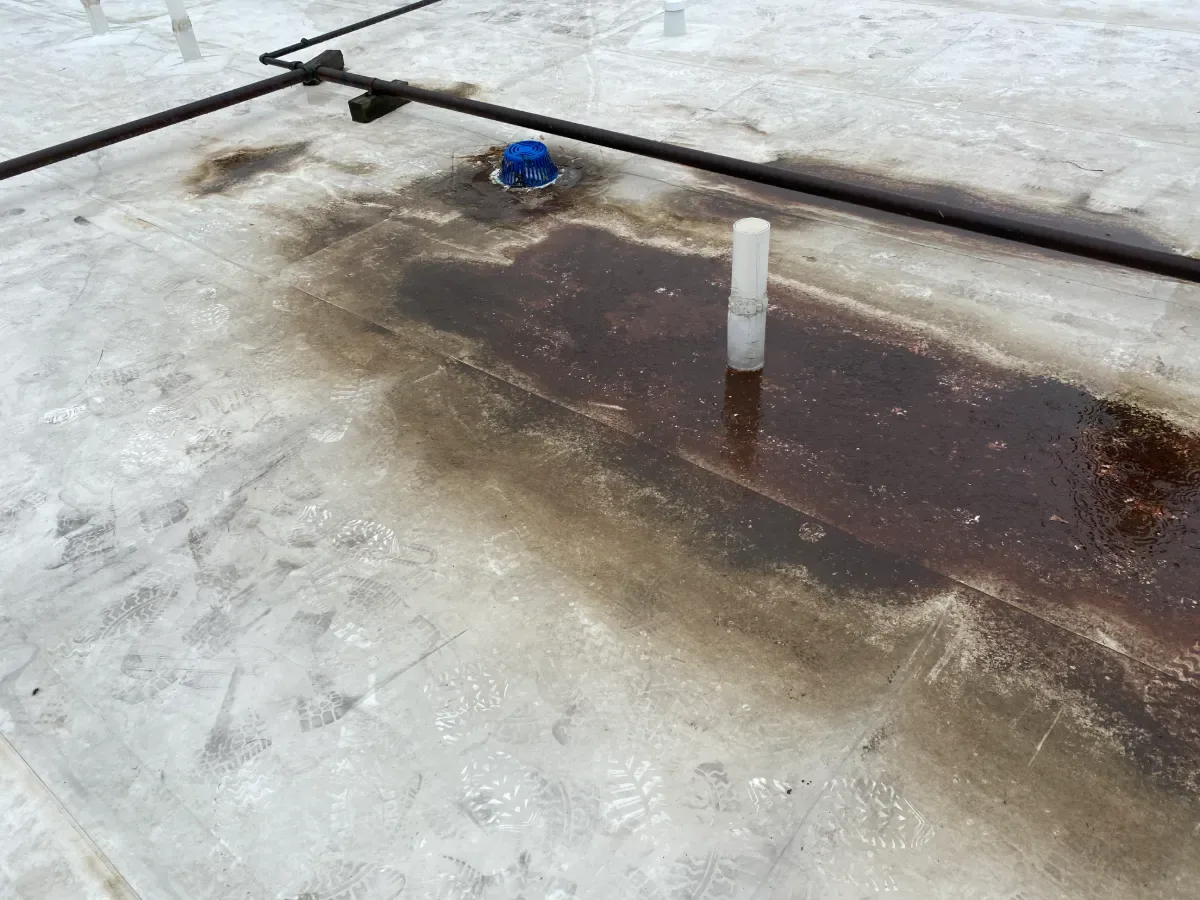
A small cut beside a rooftop service path can send water into insulation long before the puncture is easy to spot from the room below. The repair boundary includes the opening, the prepared membrane around it and any layer that has taken on moisture. For puncture calls at North Cape Industrial Park or along the Pine Island Road corridor, record the address and affected room before tracing the membrane opening. Cape Coral’s hot roof surfaces and rainy season make prompt inspection useful after maintenance work, dropped tools or debris impact. We locate the damage, identify the system and document the surrounding layers before installing a compatible patch.
Locate the Opening and Its Water Path
Inspect around the reported leak, rooftop equipment and routes used by maintenance crews. Look for cuts, punctures, abrasion, dragged material, loose fasteners or a mark where a tool or sharp edge contacted the membrane. Small openings can be hidden by dirt, walkway pads or equipment supports. Note the roof section and compare the location with the interior stain, but do not assume they line up vertically; water can move through insulation or along the deck.
Document the puncture with a close photograph and a wider view that shows nearby seams, curbs and drains. Check the membrane around the opening for tears or a weakened surface that could prevent a patch from bonding. If moisture is suspected, use testing or a small controlled opening to confirm whether insulation or cover board is wet. The test area should be labeled, photographed and closed before expanding the repair boundary.
A commercial roof inspection can map the puncture and adjacent details. If wet layers are confirmed, insulation and cover-board repair can be scoped with the membrane patch. This separates a surface opening from a larger assembly repair and makes the reason for any material removal clear.
Prepare a Patch That Matches the Roof
Identify the membrane type and attachment before selecting a patch. Clean the repair area using a method compatible with the system, remove loose or deteriorated material and prepare enough sound surface for the patch to hold. A thermoplastic membrane may require a heat-welded patch; other systems use compatible adhered materials. The patch must close the opening and tie into the prepared membrane without leaving a corner or edge that can lift under foot traffic.
Do not cover wet insulation with a surface patch. If test results show moisture below, determine the affected area and replace material to a defined limit before restoring the membrane. Photograph the exposed layers and record the tie-in before closure. If the deck is damaged or the opening reaches through the assembly, include that repair rather than treating the membrane as the only affected material.
After the patch is complete, inspect the full perimeter, seam and nearby transitions. Probe a heat-welded edge after cooling and check that the patch is not blocking a drain, walk path or equipment clearance. A defined roof repair should include preparation, materials, tie-in and final inspection so the owner can compare the completed work with the original defect.
Prevent a Repeat at Service Routes
Repeated punctures may come from a tool path, unsecured material, loose fastener or equipment work rather than a broad membrane failure. Walk the area with the facility contact and note where technicians step, where materials are carried and whether existing pads still protect the roof. Add or reposition protection only where the system permits, keeping drains and required access clear.
Cape Coral’s North Cape Industrial Park includes fabrication, boatbuilding, construction services, assembly and equipment-related businesses. For a roof serving an industrial operation, coordinate service access and material handling with the maintenance team before work. At a building in the North Cape Industrial Park, label the service route and roof zone before repairing the puncture, then add protection where the assembly allows it.
An active puncture can be reported at any hour, including nights, weekends and holidays. We protect the interior, verify safe access and temporarily close the opening when conditions prevent a permanent membrane tie-in that day.
Check Drainage and Adjacent Damage
Water entering through a puncture may be carried toward a low point, so inspect the surrounding drainage path and outlets. Note standing water, a blocked strainer or a seam that remains wet after the rain ends. Restore an obstructed drain as its own task; if water persists with the outlet clear, check slope and insulation. Drain and scupper maintenance can address a restricted path before it repeatedly exposes the repaired area.
Warm-season rain and intense roof heat in Cape Coral can change how the puncture area performs after repair. Inspect the patch again after the first significant rainfall and keep a dated photo with the roof plan. If the same section shows another opening, look for a continuing traffic or attachment issue instead of adding a second patch without checking the cause.
Following a major storm, clear debris only when the roof is safe to access, then inspect for sharp impacts, displaced equipment and new membrane cuts. Keep puncture findings distinct from wind damage or open seams so each repair method matches the observed defect. For a puncture repair, map the opening, adjoining seams, nearby equipment supports and moisture findings before setting the patch boundary.
Keep the Repair Record With the Roof Map
Record the opening’s location, membrane type, test method, moisture observations, material used and final patch photographs. Mark any area blocked by equipment or not inspected for safety reasons. If maintenance work caused the puncture, keep the service date and responsible equipment zone with the roof file. The next inspection can then distinguish a repaired opening from a new one and see whether nearby protection remains in place.
More than one puncture in an area may justify a broader roof condition review, particularly where membrane wear, wet insulation or seam failure appears nearby. A seam repair and a heat-degraded membrane repair address different failure conditions, even when they occur on the same section. The report should identify each condition and the limits of testing.
Share the facility address, maintenance history, leak location and available roof records. We will identify the membrane, inspect the surrounding layers and prepare a patch or broader repair scope that fits the field condition.
Commercial Roofing Questions
How can I tell if a roof puncture has wet the insulation?
A visible cut shows the opening but not the moisture extent beneath it. We map the area and use moisture testing or a controlled test opening where the result can change the repair boundary. The exposed layers are photographed and checked before the opening is restored.
Can a patch hold if the puncture is near a roof seam?
It can when the membrane around both details is sound and the patch can tie into the system without bridging movement. We inspect the seam and puncture together, then decide whether one repair or two distinct repairs are needed. A weak lap should not be hidden beneath a puncture patch.
What should be done after a technician cuts the membrane?
Protect the opening from rain, notify the facility contact and record the roof section and equipment work that was underway. We inspect the membrane and substrate, confirm whether insulation is wet and install a compatible repair. If permanent materials cannot be applied immediately, temporary closure should be secured and checked.
When does repeated membrane damage call for more than patching?
Several openings, worn service paths, loose attachment or wet material across a roof section can justify broader condition review. We map each defect and identify whether traffic protection, local repair or replacement is appropriate. The record should separate repeated punctures from seam or flashing failures.
Send the leak location, maintenance history and roof plan. We will inspect the puncture, check for wet layers, install a compatible repair and document the final patch and surrounding conditions. Call 555-555-5555 or request a roof assessment for Commercial Roof Membrane Puncture Repair in Cape Coral, FL.