Address heat and UV wear on Cape Coral commercial roofs with a system-specific inspection, prepared repairs and a clear coating or replacement decision.
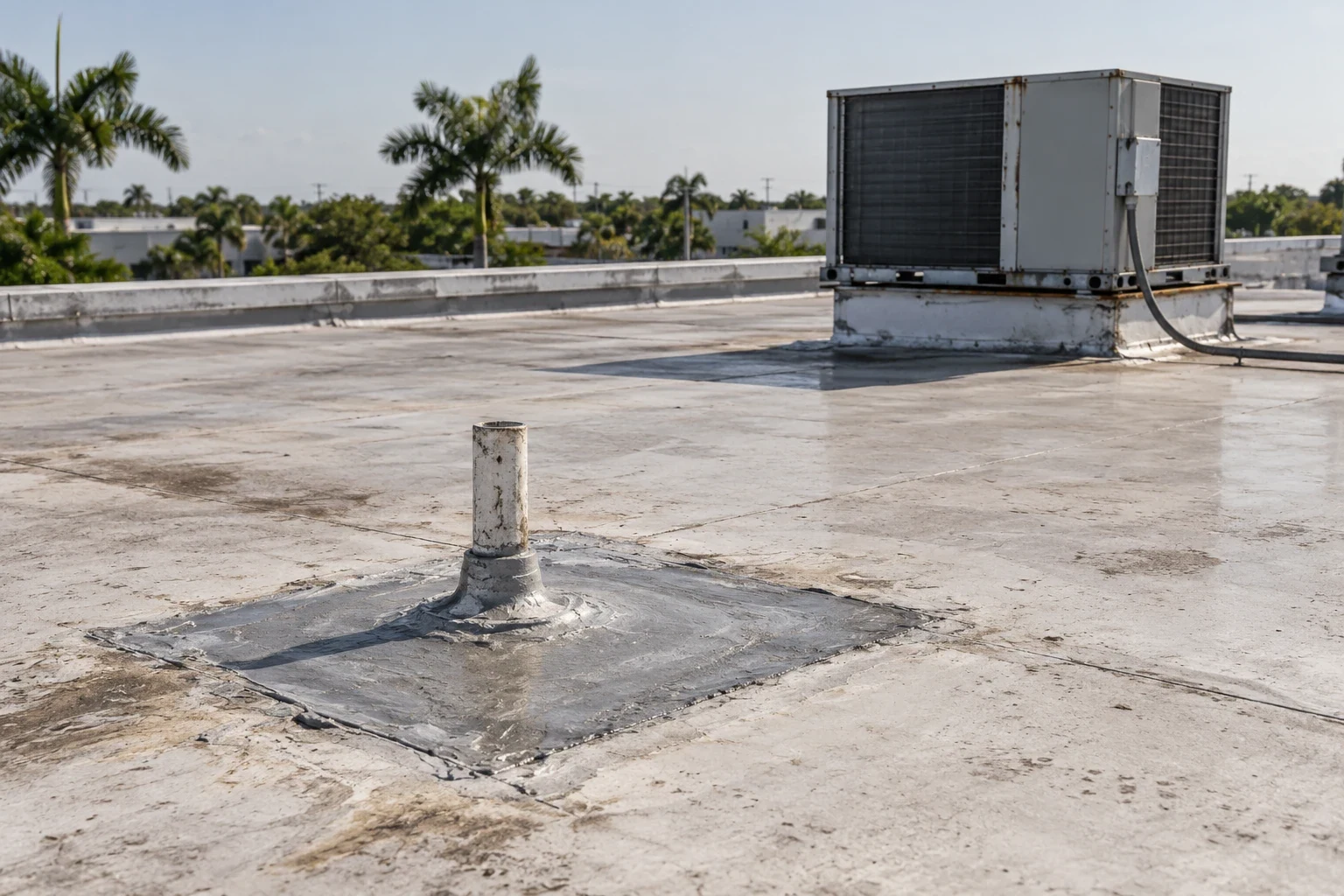
A membrane that has lost flexibility at a drain or curb needs a closer look before anyone recommends a coating. Heat-related surface wear can occur alongside open seams, loose flashing or wet insulation, and each condition changes the repair boundary. Fort Myers climate normals show average highs around 91 to 92 degrees from June through September, with about 57 inches of annual rain. We inspect the installed system, record surface and substrate conditions, and identify which areas can be repaired or restored.
Check the Surface, Seams and Exposed Details
Look for a membrane surface that has become brittle, cracked, chalked, split or worn through. Check laps, corners and flashing where heat exposure meets repeated movement. A chalky surface may need cleaning and preparation before a compatible coating, while a cracked seam may require a separate membrane repair. Photograph the condition by roof zone and include a close view of the material with an adjoining detail for scale.
Confirm the roof system and prior coating history before selecting a product or repair method. Check whether the existing surface is sound, properly attached and dry. A new coating cannot stabilize loose membrane or cover wet insulation. If adhesion is in question, prepare a test area using the specified method and document the result. Open the assembly only where a test can establish the layer condition or change the scope.
A commercial roof inspection can map the surface, seams and transitions. If the roof is suitable for restoration, coating restoration starts with cleaning, substrate preparation and confirmation that the selected system is compatible. Where laps have separated, a seam failure repair should be scoped as its own detail.
Determine Whether Heat Reached the Assembly
Surface wear is only one part of the inspection. Check the insulation and cover board where the membrane is damaged, especially near penetrations and areas that hold water. Moisture testing or a controlled opening can establish whether the materials below remain dry and secure. Record the test location, method and observed layers. If insulation is wet or compressed, include removal and replacement to a defined boundary before restoring the membrane.
Fort Myers records show dew points above 75 degrees on multiple consecutive summer days, reflecting the humid air Cape Coral roofs experience. Heat and moisture can affect repair timing: surfaces need to be dry and within the material’s application conditions before a coating or adhesive is applied. We plan work around weather windows and keep any open area securely closed if conditions change.
Check roof drainage while reviewing surface degradation. Standing water keeps portions of the roof exposed longer and can complicate coating adhesion. Clear outlets and document the water path before deciding whether slope work is needed. A cool-roof system can be considered when the existing assembly and project goals support it, but reflectivity does not replace drainage, sound attachment or system-specific repair.
Match Restoration to the Existing Roof
A coating can extend a serviceable roof only when the membrane, seams, flashing and substrate are suitable for preparation and adhesion. Check coating compatibility, dry-film requirements, terminations and areas that need reinforcement. A roof with widespread cracks, failed laps, trapped moisture or loose attachment may need repairs first or a broader replacement assessment. State which areas are included and how the completed work will be inspected.
Do not treat every roof surface as the same substrate. TPO, PVC, EPDM, modified bitumen, metal and existing coatings each require their own preparation and repair details. Confirm the installed system and review prior applications before specifying primers or materials. Where a puncture has removed membrane, puncture repair restores the opening; a coating may be appropriate for adjacent sound areas only if the assembly supports it.
A localized repair can preserve a sound section when wear is limited. If degradation repeats across the field or wet insulation is widespread, compare it with replacement planning after testing. A roof condition report can list the repairs, test results, remaining questions and areas for later inspection.
Plan Work for Cape Coral’s Commercial Sites
Heat exposure and work logistics vary with the building’s use, roof access and surrounding obstructions. Cape Coral identifies the Pine Island Road corridor, City Centrum and the Downtown CRA as commercial investment districts. An office roof, industrial property or mixed-use building may have different staging and occupied-area restrictions, even when the repair material is similar. Confirm the facility entrance, roof access, drain layout and operating contact before mobilizing.
The City Centrum is part of the central commercial area, while Pine Island Road serves office, flex, light-industrial and mixed-use potential. For each site, mark the roof sections and note shade, equipment and drainage that affect access or the inspection view. A local area designation does not establish the roof system; the field survey does.
Work often needs an early or limited window to keep surfaces within application requirements and leave enough time for inspection before rain. Coordinate lifts, deliveries, tenant notice and any rooftop equipment work. Temporary protection should be removed only after the permanent surface and all transitions are complete.
Track Surface Condition Over Time
Save dated photographs, coating history, seam repairs, moisture readings and maintenance observations with the roof plan. Use fixed references so future inspections compare the same surface and detail. Record where chalking, cracking or loss of adhesion was present and identify any area that could not be tested. The record helps the facility team see whether wear is isolated, progressing or unchanged after maintenance.
Do not rely on color alone to judge coating condition. Check adhesion, coverage, exposed substrate, flashing edges and water movement. If a surface has failed, identify whether the cause was preparation, compatibility, movement, moisture or another observed condition before repeating the same treatment. Pine Island Road properties and those in other Cape Coral business districts still need an assembly-specific maintenance plan.
For adjacent flashing damage or recurring cracks, note the material transition and movement separately from broad surface wear. For heat or coating concerns, send the facility a condition map that distinguishes adhesion loss, exposed substrate and repairs still requiring testing.
Commercial Roofing Questions
Does a chalky roof surface mean it needs a new coating?
Chalking is one observation, not the complete condition. We check adhesion, membrane type, seams, flashing, moisture and previous coating before recommending restoration. The repair plan should include preparation and any membrane work needed before a new coating is applied.
Can a coating fix cracks from heat and sun exposure?
A coating can protect suitable, prepared surfaces, but it does not close every moving seam or replace wet insulation. We identify cracks, open laps and substrate conditions separately, then choose compatible repairs. Testing may be needed to confirm the existing coating will accept another system.
When should heat-related wear lead to roof replacement?
Widespread brittle membrane, recurring seam separation, wet insulation or loose attachment may make replacement more suitable than repeated surface restoration. We map those conditions and test where the results can change the decision. The report compares local repair, restoration and replacement against the existing assembly.
How does Cape Coral’s summer climate affect roof coating work?
Heat and humid air affect surface preparation, drying and application windows. We confirm the substrate is suitable and follow the selected system’s conditions for application and cure. Work is scheduled so the repaired area can be inspected and protected before rain reaches it.
Share the facility address, roof plan, coating history and reported defects. We will identify the roof system, test uncertain areas and define a compatible repair, restoration or replacement scope. Call 555-555-5555 or request a roof assessment for Heat and UV Roof Damage Repair in Cape Coral, FL.