Inspect Holcim Elevate commercial roofs in Cape Coral by RubberGard EPDM or UltraPly TPO system, attachment, seams and drainage before repair or renewal.
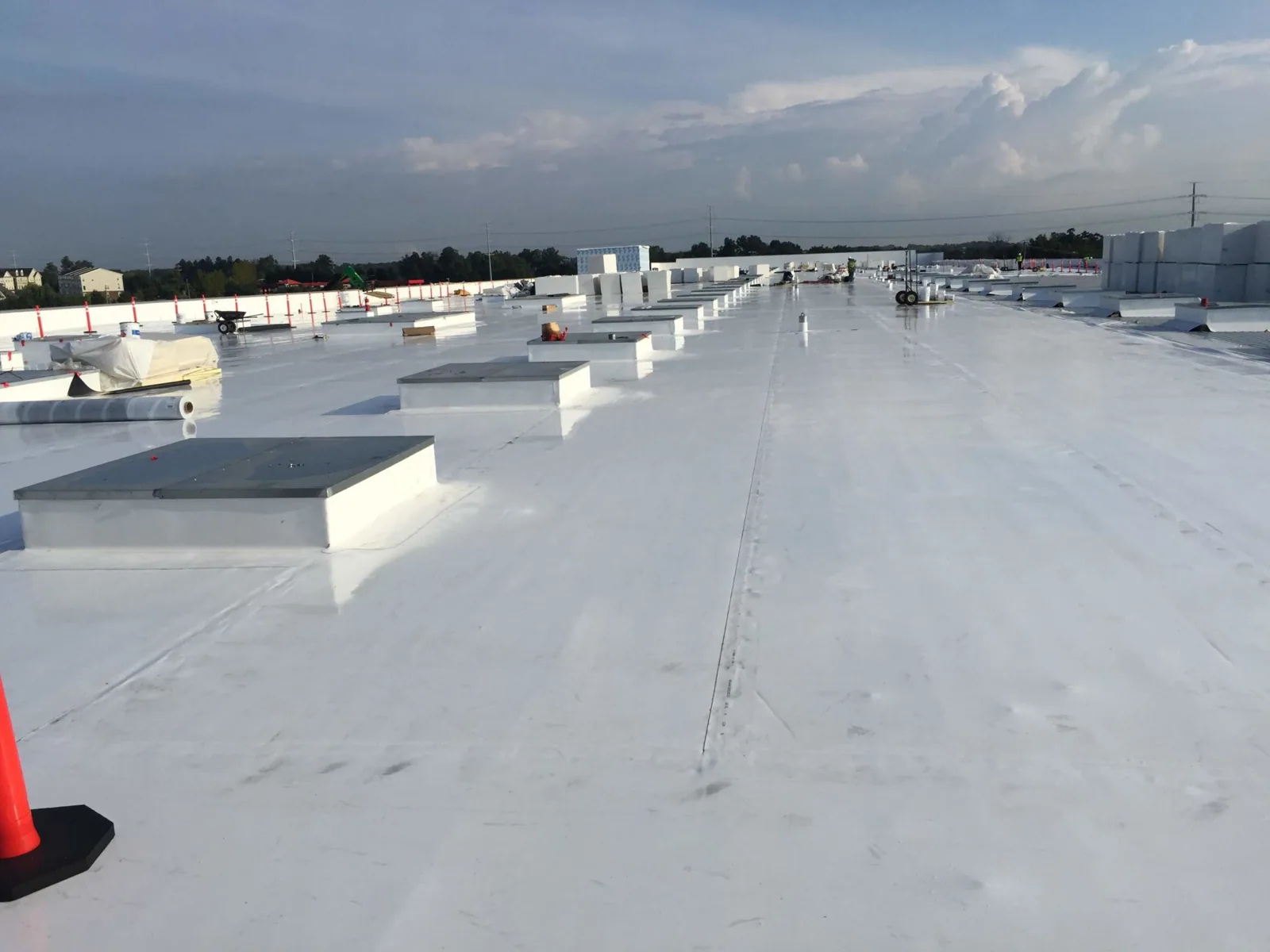
A black EPDM field sheet and a white TPO curb detail may both carry a Holcim Elevate label, yet the repair method changes with the membrane and its attachment. Holcim Elevate is the current brand for roofing systems formerly sold as Firestone Building Products. We identify the installed RubberGard or UltraPly assembly, inspect the seams and flashing, and match the work to the roof in place. Cape Coral’s hot, humid season and heavy rain make the drainage path part of that inspection.
Confirm RubberGard EPDM or UltraPly TPO
Holcim Elevate’s commercial portfolio includes RubberGard EPDM and UltraPly TPO systems, with membrane options, accessories, adhesives and related components. Start with the roof submittal and warranty or maintenance file, then verify the product markings and details in the field. EPDM splices and TPO heat-welded seams use different preparation and repair materials. The color of the roof alone cannot establish which system is present or whether it has a coating.
Record the attachment method, insulation, cover board, vapor-control layer, fasteners and edge terminations. At a curb or parapet, trace the membrane from the field into the flashing and counterflashing. If plans show a different assembly from what is visible, inspect a controlled area before choosing materials. A later recover or equipment project may have changed the original roof without changing the facility’s older records.
For a confirmed EPDM installation, EPDM repair details need compatible splice and flashing components. With UltraPly TPO, TPO seam repair follows the welded system detail. A commercial roof inspection can document the assembly and adjoining areas before work is specified.
Trace Leaks Through Seams and Transitions
A seam or flashing leak can appear at a distance from where water enters. Inspect laps, corners, pipe boots, drains, wall terminations and the roof plane above the interior report. Look for separation, surface contamination, movement, wet insulation or an earlier patch that no longer bonds. Mark the defect and adjoining membrane on the roof plan, then test concealed layers if the results will affect the repair limit.
RubberGard EPDM repair depends on a clean, prepared surface and compatible tape, primer or flashing materials selected for the actual system. UltraPly TPO uses heat-welded membrane and system-specific accessories. Do not place one product over the other because both carry the Holcim Elevate name. After the repair, inspect the full tie-in and document the result before the surface is returned to routine access.
A confirmed open seam or failed flashing transition needs its own repair boundary. For an isolated defect, commercial roof repair may preserve the surrounding roof when the membrane and substrate remain sound. Wet insulation or loose attachment changes that scope.
Review Water, Heat and Coastal Weather
Fort Myers Page Field normals used for Cape Coral show summer highs around 91 to 92 degrees and annual precipitation near 57 inches. Heat and rain make a dry substrate, sound lap and clear drain important when applying membrane repairs or adhesive. Check whether ponding is caused by a blocked outlet or a low roof plane. Clear a drain only if it is obstructed; evaluate slope and insulation when water remains with the outlet open.
After a storm, inspect membrane edges, drains, rooftop equipment, seams and flashing once access is safe. Holcim Elevate project files should preserve the selected system details, substrate preparation, attachment records and inspection results for each roof zone.
At a property along the Pine Island Road corridor, verify the installed roof assembly, access route, material staging area and operating hours before specifying repair or replacement.
Compare Repair With Replacement
A small EPDM splice or TPO seam can be repaired when the adjoining membrane is stable, dry and compatible with the chosen method. Repeated leaks, broad wet insulation, failing attachment or open details across several roof zones can call for a wider assessment. Map findings by section and distinguish immediate water protection from corrective work and longer-term capital needs.
Recover depends on the existing assembly, moisture, attachment and applicable requirements. Replacement may reset insulation and transition details, but the scope should include drains, edge metal, curbs, service paths and daily dry-in. Replacement planning compares those project needs against a localized repair. A roof with surface wear may also require evaluation of heat-related membrane damage separately from seam or flashing failures.
For another single-ply manufacturer, Carlisle SynTec systems and Sika Sarnafil roofing have their own membranes, accessories and installation details. Compare the actual roof assembly and project requirements instead of treating system names as interchangeable.
Carry the Holcim Elevate Record Into Maintenance
Keep the product submittal, roof plan, membrane identification, attachment notes, repair photos and test locations together. Mark any area that could not be inspected and explain why access was limited. If an equipment contractor changes a curb or line, record the date and verify which trade closes the roof transition. The next inspection can then distinguish a new failure from a prior repair.
After repair, check seams and flashing edges, confirm drains remain open and photograph the completed tie-in. If the work used an EPDM primer or TPO weld, note the material and method without assuming that a future patch should repeat it. Surface conditions, age and previous coatings can change how a repair is prepared.
Share the Cape Coral facility address, Holcim Elevate system documents and reported leak locations. We will inspect the membrane and adjoining details, then define repair or renewal work for the actual assembly.
Commercial Roofing Questions
Is Holcim Elevate the new name for Firestone Building Products?
Yes. Firestone Building Products adopted the Holcim Elevate brand under Holcim, and its roofing systems include product families such as RubberGard EPDM and UltraPly TPO. We identify the label and installed material on the roof before choosing a repair method.
Can RubberGard EPDM be patched with an UltraPly TPO detail?
No. EPDM splice and flashing methods differ from TPO heat-welded seams. We confirm the membrane, prepare the surface and use the compatible system components. If a transition joins dissimilar materials, the connection needs its own approved detail.
What should be checked before recovering a Holcim Elevate roof?
Inspect the current membrane, attachment, insulation, deck, moisture and transition details. We identify wet or unstable materials and determine whether another roof system can be installed over the existing assembly. Drainage, edge metal and equipment curbs must be included in the review.
How does a Cape Coral rain event affect a Holcim Elevate roof inspection?
Rain can reveal blocked drainage, open laps and flashing leaks, while the roof surface needs to be dry for some repair methods. We document the outlet path, standing water and any interior reports, then schedule permanent work when preparation and application conditions are suitable.
Provide the facility address, roof plan, product documents and reported condition. We will identify the RubberGard or UltraPly assembly in place and scope compatible repair, drainage or replacement work. Call 555-555-5555 or request a roof assessment for Holcim Elevate Commercial Roofing in Cape Coral, FL.