Inspect Sika Sarnafil and Sikaplan PVC roofs in Cape Coral by reinforcement, attachment, welded seams and flashing before repair or replacement.
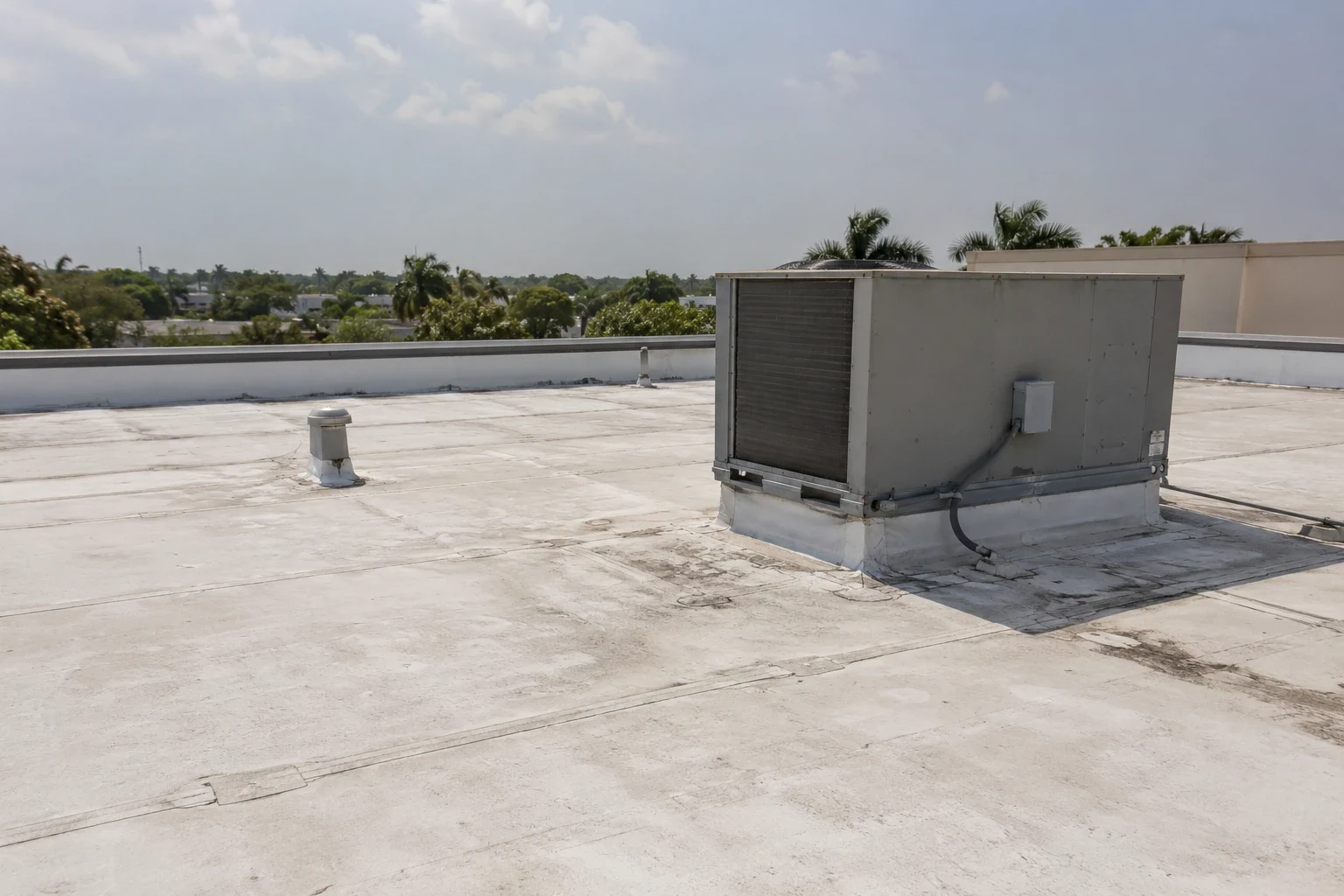
A pale PVC sheet with a heat-welded lap may be a Sarnafil or Sikaplan system, but the product and attachment still need to be identified. Sika Sarnafil offers different PVC membranes and system configurations, and the repair follows the reinforcement, substrate and connection in place. Cape Coral’s humid summers and warm-season rain put seams, drains and flashing transitions under repeated exposure. We inspect the roof assembly before selecting a compatible material or defining replacement limits.
Identify the Membrane and Its Reinforcement
Sika Sarnafil’s commercial roofing portfolio centers on PVC membranes, including Sarnafil and Sikaplan product families. Sarnafil G membranes are fiberglass reinforced and used in adhered or loose-laid systems, while S membranes use polyester reinforcement for mechanically attached systems. Sikaplan products offer their own fastened and adhered configurations. These construction differences affect how the sheet moves, where it is secured and how an edge repair is made.
Check product markings, submittals and the roof plan, then verify seam type, fasteners, adhesive, insulation and cover board in the field. Inspect a termination or penetration where the membrane turns out of the open roof field. If records are unavailable, identify the system through observed construction and test where needed before ordering materials. A generic label of “PVC” is not enough to choose a reinforcement or flashing accessory.
For confirmed PVC, PVC membrane repair needs a compatible hot-air weld and system detail. A roof inspection can record membrane type and attachment, while penetration flashing work addresses a curb or opening that has separated from the field sheet.
Check the Weld From Edge to Edge
Trace an open seam along its full length, checking for a narrow gap, contamination, wrinkles or a weld that failed at a transition. Probe the lap after cleaning and inspect any prior patch before adding material. If the membrane is under tension at a curb or corner, determine whether the attachment pattern or detail contributes to movement. A wider cover strip will not correct an unstable edge or wet insulation beneath the seam.
Prepare the membrane and make a trial weld when required by the system and field conditions. Verify temperature, speed and pressure for the equipment and material combination, then probe the cooled seam. At flashings, inspect the weld at corners, pipe boots and metal terminations. Document the repair location and the seam length completed so future inspections can compare the same area.
A confirmed seam failure repair should be separated from a flashing failure when the cause and work differ. Commercial roof repair can restore a local defect while preserving adjacent material when the surrounding sheet and substrate remain serviceable.
Review Drainage and Wind Attachment
Water that stays beside a seam or curb can expose the weld longer and complicate a leak investigation. Check each drain, overflow and slope before repair. Clear a blocked outlet and recheck the path; a clear drain with standing water may point to the deck or tapered insulation. Record ponding and moisture findings by roof zone so they are not confused with a membrane defect.
Sarnafil system options include mechanically attached and adhered configurations, with fastening and assembly decisions tied to the roof and wind requirements. Inspect fastener rows, perimeter zones and terminations for movement or pull-through. A coastal exposure or a storm report does not prove uplift damage at a particular property. Field marks, open seams and attachment condition establish what needs repair.
Hurricane Ian produced severe surge impacts in low-lying parts of Lee County in 2022. After major weather, inspect drainage, edge metal, welded seams and rooftop attachments when safe access is available. Drain and scupper service can address blocked outlets before considering corrective slope work.
Select Repair or Renewal by Assembly
An isolated PVC weld or flashing defect can be repaired when adjacent material remains sound and the substrate is dry. Multiple open seams, widespread moisture, loose attachment or a roof altered by previous repairs may call for a broader assessment. Map each condition, identify its test result and list any inaccessible area. A recover is considered only after reviewing existing layers, attachment, moisture and applicable requirements.
When a larger project is needed, specify insulation, cover board, attachment, membrane, edge details, drains and equipment transitions together. Replacement planning should state the phased work areas and closure points so exposed PVC is protected from rain. A separate ponding-water repair may change slope or insulation and should not be folded into a seam patch without confirmation.
For other single-ply options, compare Carlisle SynTec roof systems and Versico membranes after the existing assembly and project requirements are known. Product family alone does not establish which system is right for a particular deck or facility.
Plan the Work for Local Access and Weather
Cape Coral’s Pine Island Road corridor and City Centrum represent different commercial settings, with offices, flex properties and other business uses. For a Sika Sarnafil repair, confirm access, lift placement, delivery point, tenant activity and the roof’s working area at the actual address. At the property, verify roof access and staging with the site contact, then inspect the membrane, attachment and repair details before selecting Sika materials.
The 1991 to 2020 Page Field record in Fort Myers places typical June-through-September highs around 91 to 92 degrees; yearly precipitation averages roughly 57 inches. Schedule surface preparation and hot-air welding for a dry work area, and keep the roof closed if weather changes the installation window. Protect materials and completed sections from moisture and foot traffic as the crew moves across the roof.
Keep the system data, photos, weld checks, repair dates and moisture tests with the roof plan. Share the facility address and reported condition; we will inspect the Sika assembly and prepare a compatible repair or renewal scope.
Commercial Roofing Questions
How can I tell whether a roof has Sarnafil G, S or Sikaplan?
Use membrane markings and closeout records, then confirm reinforcement, attachment and seam construction at the roof. Sarnafil G and S are built for different system configurations, and Sikaplan products have their own details. We identify what is installed before specifying a repair.
Can a Sika Sarnafil seam be patched with any PVC membrane?
The repair material, surface preparation and weld conditions must be compatible with the installed sheet and detail. We confirm the product and test the weld when needed, then inspect the finished lap. A transition between different membranes needs a separate approved detail.
What does an open seam mean on a mechanically attached roof?
Inspect the seam and the fastener pattern together. Movement, a missed weld or a displaced fastener row can affect the repair scope. We check adjacent attachment and substrate, then document whether the defect is local or repeated across the roof zone.
When should a Sarnafil PVC roof move from repair to replacement?
Widespread open welds, wet insulation, loose attachment or repeated leakage can justify a broader assessment. We map the roof by section and compare isolated repairs with recover or replacement after checking the existing layers. The scope should include drainage and perimeter details as well as membrane.
Provide the roof plan, Sika submittals, prior repair notes and leak locations. We will identify the membrane and attachment, inspect welds and transitions, and define a repair or replacement scope tied to the field condition. Call 555-555-5555 or request a roof assessment for Sika Sarnafil Commercial Roofing in Cape Coral, FL.