
Find why water remains on a Cape Coral commercial roof. We inspect drains, slope, insulation and deck conditions before defining ponding-water repairs.
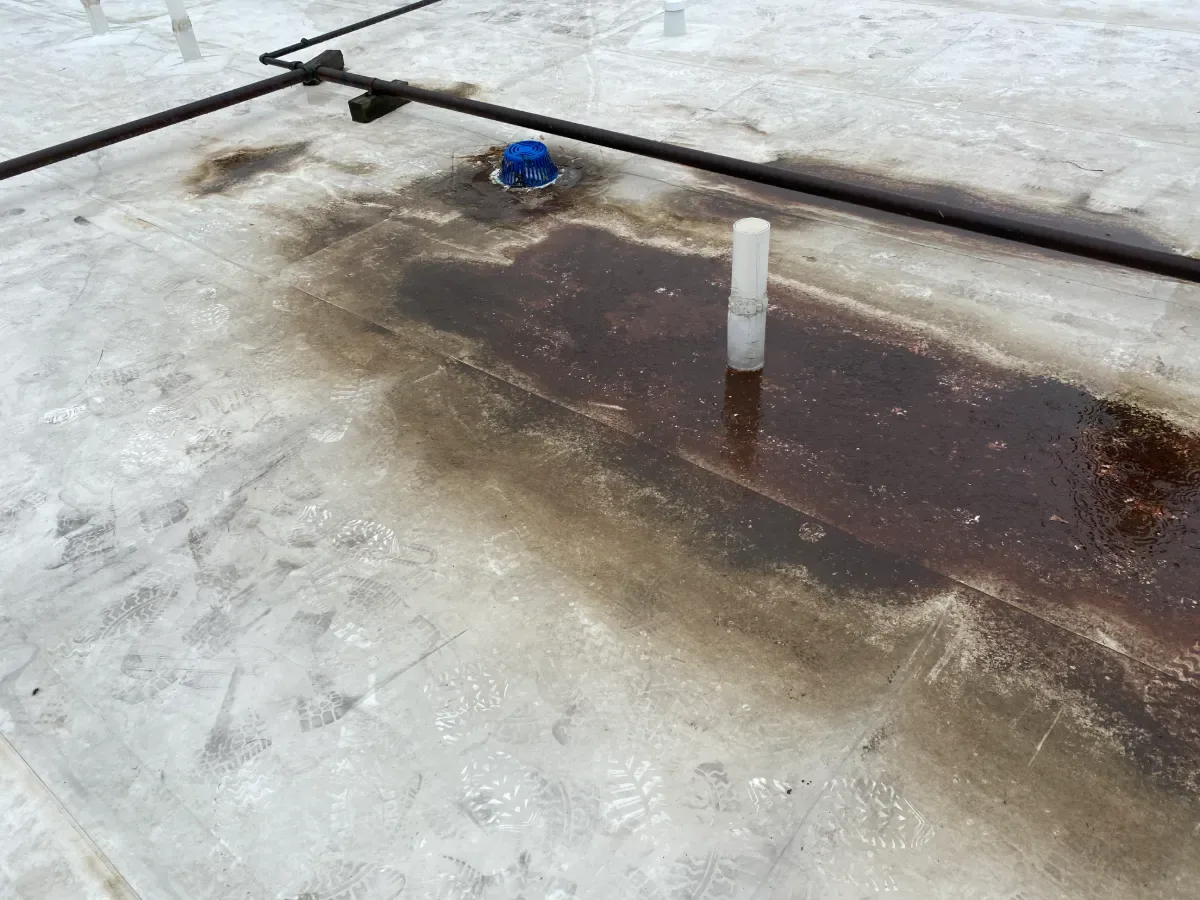
A shallow pool beside a drain tells you where water stopped, not why it stopped there. The repair starts by mapping the low point, checking the outlet and tracing the roof plane back to the surface that should carry water toward it. Fort Myers Page Field normals, used for Cape Coral, show about 57 inches of annual precipitation, so a reliable drainage path matters through the warm rainy season. We document ponding by roof zone and separate a blocked outlet from a slope or assembly problem.
Map the Low Point and Its Outlet
Photograph the standing water with the nearby drain, scupper or gutter in view. Record the time since rain, the approximate boundary and whether debris or a damaged strainer restricts the outlet. Check for water marks, loose seams or softened material around the pool. A single visit can show the depth and location, while repeat observations help determine whether the same low area remains wet after the rest of the roof has drained.
Clear a restricted outlet within the agreed maintenance scope, then check whether water can flow freely toward it. Confirm the overflow is open and the discharge path is not blocked at the wall or grade. Drain and scupper service can correct an obstruction or damaged component. If the outlet works but the pool remains, the next step is to inspect the slope and the roof layers, not to repeat cleaning or add a patch at the waterline.
Cape Coral’s industrial inventory spans manufacturing, processing and warehouse uses. At a facility near the Del Prado and Viscaya industrial area, map ponding by roof section and coordinate access around the building’s loading and equipment areas. The roof plan and field inspection establish the deck, drain locations and system that shape the corrective work.
Distinguish a Drain Block From a Low Deck
A clear drain with persistent water can point to a depressed deck, inadequate slope, a displaced drain bowl or tapered insulation that no longer directs flow. Inspect the surrounding plane with a level or other suitable method and compare the drain elevation with the roof surface. Review plans and prior repairs for changes to the assembly. If decking or insulation is concealed, use test openings at selected locations to establish what is below before recommending a larger correction.
When testing, identify the location on the roof plan, photograph each exposed layer and note whether material is wet, compressed or separated. Wet insulation can extend beyond the visible pool, so determine the removal boundary before closing the roof. Insulation and cover-board repair may be part of the scope where those layers have lost performance. Keep the outlet, slope correction and membrane tie-in as separate items when they solve different parts of the water path.
Water can pond against a curb or seam and keep a weak detail wet for longer. Check membrane laps, flashing corners and metal transitions along the low point. If the leak appears inside, compare its location with the roof path rather than assuming the ceiling stain sits directly below the source. A commercial roof inspection can document the surrounding field and identify related failures before a repair boundary is set.
Correct the Water Path, Not Only the Surface
Once the cause is clear, define what the repair is meant to change. Cleaning restores flow at a blocked drain. Resetting or replacing an outlet corrects a failed drain detail. A tapered insulation or deck correction changes the plane so water can reach the outlet. Membrane replacement restores the weather surface after underlying work. Combining these tasks in one scope is reasonable, but each should have an observable completion point.
Do not bury a low area beneath a coating or membrane overlay without confirming the existing layers, attachment and moisture condition. Recover is considered only when the roof assembly and applicable requirements support it. If ponding occurs across several sections or returns after earlier corrective work, compare a defined repair with commercial roof replacement planning. A localized leak near the pool may still need a bounded repair while broader drainage work is scheduled.
Following a major storm, inspect drains, overflows, perimeter edges and discharge routes once safe access is available. Windblown debris and roof movement can change how water leaves a section, so record new conditions separately from known low spots. For ponding concerns, document the depth and footprint after drainage clears, then compare outlet condition, slope and insulation findings.
Account for Cape Coral Rain and Site Use
Warm-season rain can expose an outlet restriction quickly, but roof access and operations shape the repair window. Cape Coral’s Pine Island Road planning area includes industrial, manufacturing, warehouse, office and flex uses. A roof over loading or production space may require lift scheduling, protected staging and an interior plan for any test cut. Confirm which doors, equipment and tenant areas must stay accessible before opening the assembly.
Hancock Creek Commerce Park is planned for office, flex, manufacturing and warehouse uses near Pine Island Road and Diplomat Parkway. Property teams coordinating multiple uses can keep a separate roof plan for each building, labeling drains, overflows, curbs and repair areas so maintenance crews can locate the same low point again.
For a roof with several recurring ponding areas, a roof capital plan can sequence outlet, slope and membrane work by urgency. Include photos from before and after repair, plus the next inspection date after rain. This gives the facility a way to check whether the correction restored the intended path rather than treating the completed patch as proof of drainage.
Keep the Drainage Record With the Roof
Save the roof plan, drain locations, test cuts, moisture findings and previous drain work in one building record. Note any area blocked by equipment or unsafe to enter and identify who can provide access for a return visit. After correction, take photos that show the outlet, adjoining slope and repaired tie-in. A dated follow-up observation after rainfall gives the next reviewer a useful comparison point.
Do not let repeated standing water turn into an assumed roof-wide condition. Check each pool against the actual drainage plane and deck. If water remains after cleaning, record the slope or substrate finding and set the next test or repair. If the outlet is blocked, restore it and recheck the flow path. This keeps the repair tied to the part of the assembly that failed.
For related wind-related roof damage or an open seam at a ponding area, capture each condition separately before deciding whether one repair affects another. Provide the facility address, roof records and photographs; we will map the low points and give the operations contact a clear scope.
Commercial Roofing Questions
When does standing water call for a closer roof review?
The roof plan and system details help establish how water should drain, while a dated observation shows whether a specific low area is recurring. We check the outlet, slope and surrounding assembly instead of relying on one photograph. Persistent water after a clear outlet can call for slope or deck investigation.
Can drain cleaning fix a ponding area?
Cleaning can restore flow when debris or a blocked bowl is the cause. If water remains with a clear outlet, inspect the drainage plane, drain elevation and insulation or deck below. We define cleaning and corrective slope work separately so the owner can see which condition each task addresses.
Could ponding water cause a roof leak?
Water that remains near a weak seam or flashing can keep that detail exposed longer. We inspect the lap, nearby curb, drain and interior report, then test concealed layers when necessary. A leak path may begin uphill or beside the visible pool, so the repair boundary follows the confirmed condition.
When is a ponding problem large enough for replacement planning?
Several low areas, repeated wet insulation, failed deck slope or recurring leaks after prior repairs may justify a broader assessment. We map the roof by section, check the existing assembly and compare localized correction with recover or replacement. The scope should identify drainage changes separately from membrane renewal.
Send the facility address, recent roof photographs, drainage records and any leak locations. We will check the outlet and roof plane, test concealed layers where useful, and define the corrective repair boundary. Call 555-555-5555 or request a roof assessment for Ponding Water Roof Repair in Cape Coral, FL.