Plan Soprema commercial roof repairs in Cape Coral by system type, including SBS modified bitumen, PVC membrane and liquid-applied assemblies.
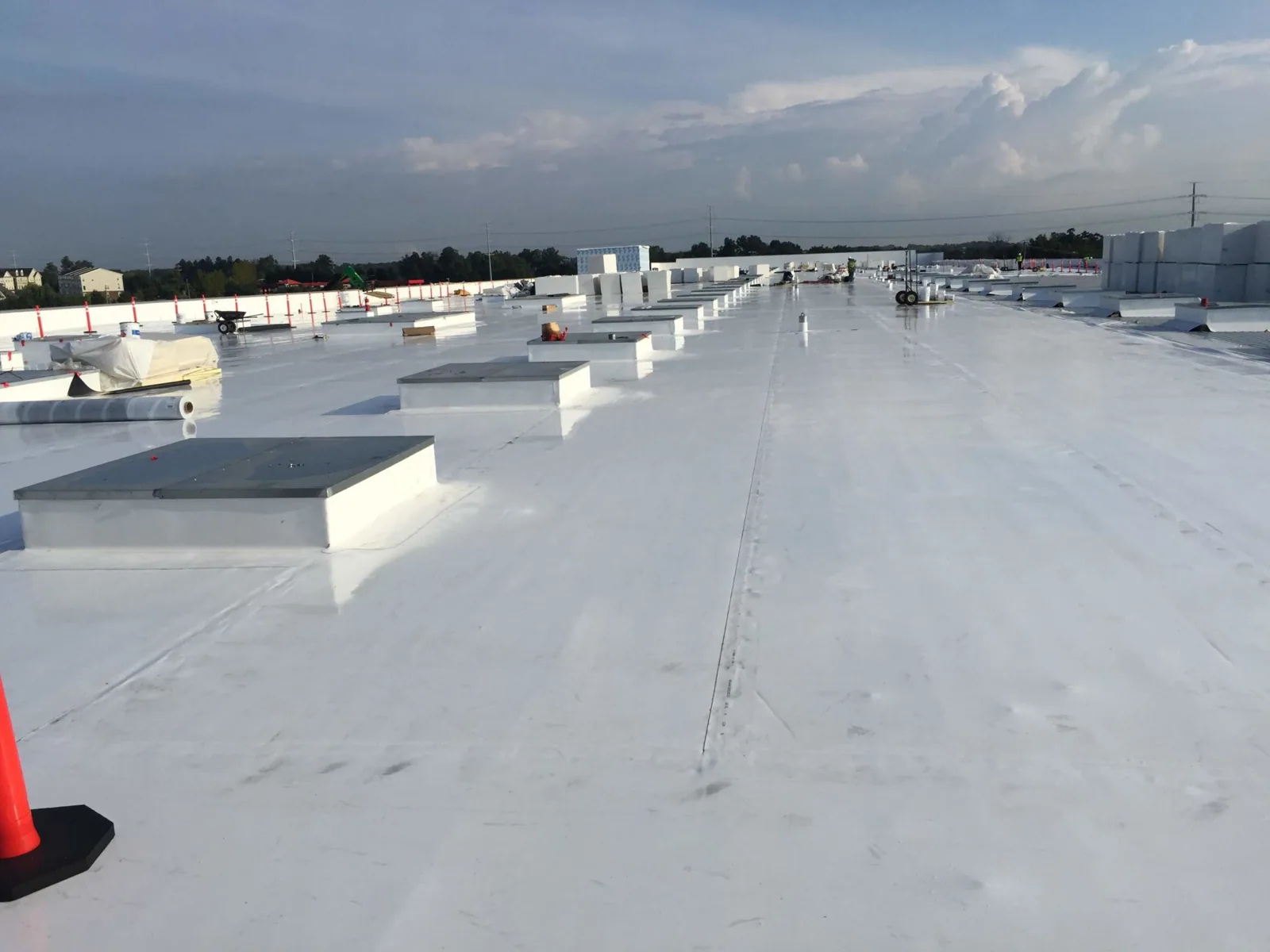
Granules at a roof curb, a membrane lap and a liquid flashing detail point to different materials and repair methods. Soprema’s commercial portfolio includes SBS-modified bitumen, PVC single-ply and polymeric liquid-applied systems, so the installed roof must be identified before a repair is chosen. Cape Coral’s humid summers and warm-season rain place attention on seams, transitions and drainage. We compare roof records with field conditions and set the repair boundary around the assembly that is actually in place.
Identify the Soprema System in the Field
Start with submittals, membrane markings, roof plans and past repair notes. Confirm whether the roof is an SBS multi-ply assembly, a PVC single-ply membrane or a liquid-applied system. Then inspect the surface, reinforcement, attachment, base flashing and drain details. A modified-bitumen cap sheet cannot be repaired as though it were a PVC lap, and a liquid-applied membrane needs a substrate and transition that support its use.
Look for open laps, loss of granules, splits at corners, blisters, exposed reinforcement or areas where an older patch has released. At a PVC roof, inspect heat-welded seams and flashing. For liquid-applied work, check film continuity, reinforcement at transitions and whether the membrane has separated from the prepared substrate. If the roof has more than one system, map each area separately before ordering materials.
Modified-bitumen system repair follows the installed plies and application method. PVC membrane repair requires a compatible weld and detail. A commercial roof inspection can document the system and adjacent conditions before a repair boundary is set.
Match the Repair Material to the Layer
Soprema’s product portfolio includes SBS-modified bitumen membranes, synthetic single-ply PVC membranes and polymeric PMMA or PMA liquid-applied membranes. Their placement in the assembly matters. Check whether the repair reaches a cap sheet, base ply, field membrane, flashing or liquid-applied transition. Confirm the substrate and use compatible materials rather than assuming one product can bridge every roof type.
On a multi-ply roof, inspect whether the cap sheet has opened, whether reinforcement remains sound and whether lower plies are wet. On PVC, clean and prepare the surface before welding and verify the finished lap. On a liquid-applied detail, confirm substrate dryness, reinforcement and continuity at corners before recoating. A test opening can establish hidden layers where results change the removal limit; photograph each layer before closure.
If the roof has an open seam, seam repair should identify its material and lap. A cut or impact needs membrane puncture repair. Roof coating restoration applies only when the existing substrate and system are suitable for preparation and renewed coverage.
Trace Water Along the Cape Coral Roof
Water entering at a curb can travel along the deck before it shows inside. Compare the reported room with nearby flashings, drains, seams and low points. Record the time since rain and whether ponding remains after outlets are cleared. Fort Myers Page Field normals, the nearest long-running station used for Cape Coral, show about 57 inches of annual precipitation. For membrane and bituminous repairs, we trace each drain and discharge path before setting the work boundary.
After a major weather event, inspect roof edges, flashing, drains and membrane details when access is safe. Field photographs and any moisture testing establish the repair needs at the building. For SOPREMA work, document the specified assembly and substrate, then retain application checks, tie-in photos and approved changes with the roof plan.
For properties near Matlacha or Cape Harbour, salt and wind exposure can vary with site orientation and proximity to open water. Cape Harbour is a Gulf-access waterfront development with varied commercial and residential uses. A roof inspection should check actual metal transitions, fasteners and membrane condition, not infer damage from the place name.
Compare Repair With a Rebuilt Assembly
A local patch can work if the material around it is sound and the defect does not extend into wet or loose layers. Several failed laps, repeated moisture or a roof with mixed materials may require a wider assessment. Map the affected areas and identify whether removal reaches the insulation, cover board or deck. If a recover is being considered, review compatibility, attachment, moisture and project requirements before covering the existing roof.
Replacement may simplify a roof with widespread failures, but the scope should include insulation, drainage, edge metal, curbs, temporary dry-in and transition details. Replacement planning should show which assemblies will be removed and how adjoining areas close. For a building with PVC and modified-bitumen sections, keep system boundaries visible and avoid using one generic material description for both.
Other product lines such as Versico single-ply systems or Duro-Last PVC assemblies also have system-specific seam and accessory details. Compare those products against the actual roof, substrate and use rather than treating the manufacturer as a repair method.
Close the Repair With a Clear Roof Record
Retain the product documentation, roof plan, moisture tests, layer photographs and repair materials with the facility file. Label each assembly, seam, flashing and drain, and note any area not reached because of access or safety limits. If a liquid-applied section was used at a transition, document its substrate and reinforcement separately from the adjoining sheet membrane.
After the repair, inspect the full perimeter of each patch, lap or liquid-applied tie-in. Check the drainage path and confirm no fastener, seam or termination remains open. Photograph the finished work and record any follow-up inspection needed after rainfall. These details help the next maintenance crew identify whether a new leak is related to the earlier repair or a separate roof section.
Provide the building address, Soprema system information and reported condition. We will inspect the assembly and prepare repair or renewal work that follows the layers and transitions on the roof.
Commercial Roofing Questions
What commercial roof systems does Soprema make?
Soprema’s commercial portfolio includes SBS-modified bitumen, PVC single-ply and PMMA or PMA liquid-applied membranes. The installed system needs to be confirmed from records and field details before choosing repair materials. We inspect the lap, flashing, substrate and layers that are part of the building’s roof.
Can a liquid-applied Soprema product repair a PVC roof?
That depends on the installed materials, approved details and substrate condition. We confirm whether the liquid-applied product is compatible with the PVC assembly and whether it is intended for the repair location. An incompatible coating can fail to bond or leave a transition unresolved.
How should an SBS modified-bitumen leak be investigated?
Inspect the cap sheet, seams, flashing, drains and any previous patch, then test concealed plies where needed. We mark the opening and photograph each layer before setting the removal limit. Wet lower plies or a damaged deck change the scope beyond a surface repair.
When is replacement more suitable than patching a Soprema roof?
Repeated failures, moisture across multiple sections, loose materials or a roof with incompatible prior repairs may call for broader renewal. We map each system area, document test results and compare local repairs with recover or replacement. The new scope should include each transition between roof types.
Send the facility address, system submittals, roof plan and leak history. We will identify the materials in place, document seams and transitions, and prepare repair or replacement work around the assembly. Call 555-555-5555 or request a roof assessment for Soprema Commercial Roofing in Cape Coral, FL.