Assess Cape Coral commercial roof fire damage for heat, smoke, suppression water and compromised membrane. Get a documented repair and closeout scope.
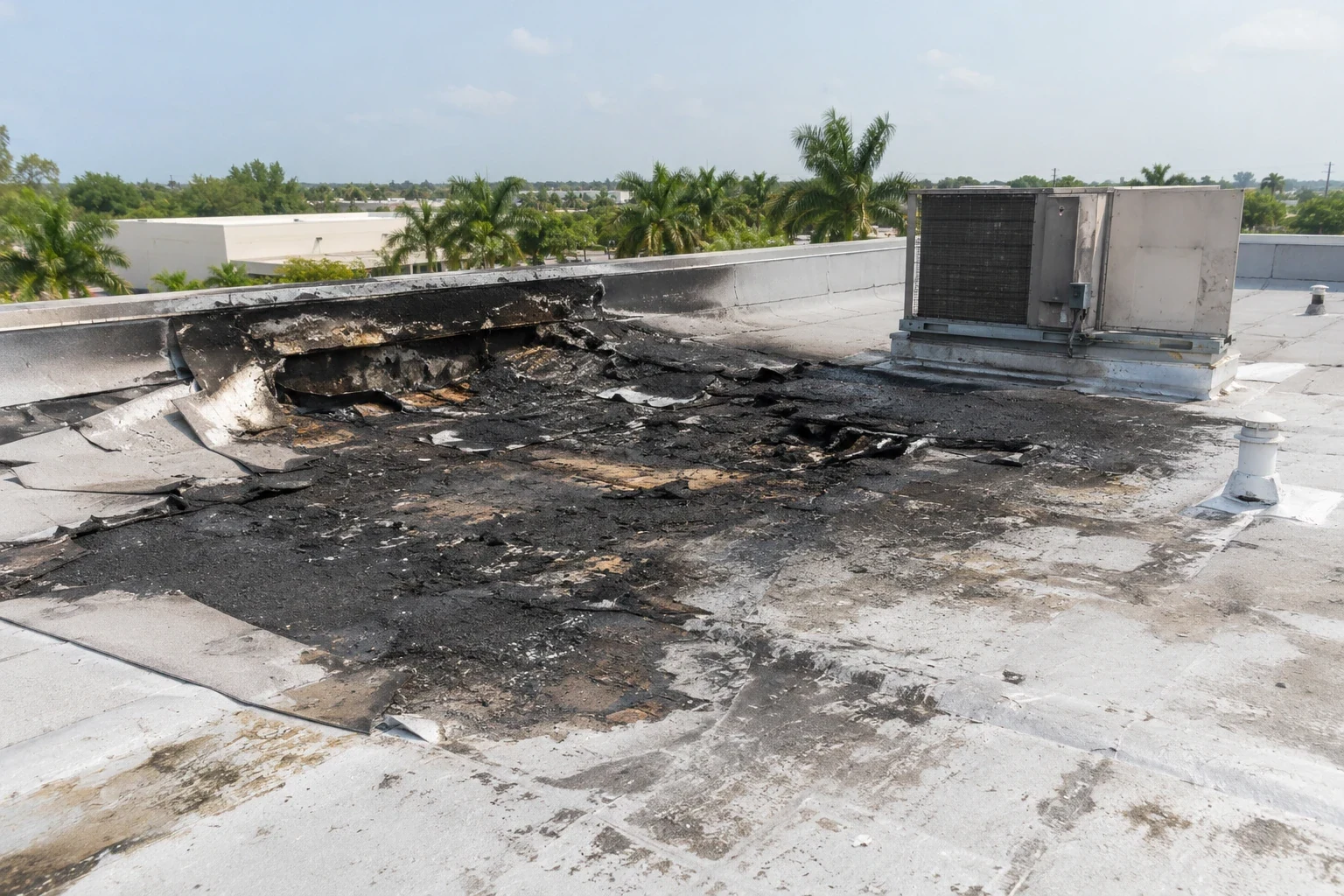
Heat at a roof penetration can deform membrane and flashing beyond the visible burn mark. After a fire, the repair boundary needs to account for direct heat, smoke deposits, firefighting water and any roof layers exposed during the response. Cape Coral’s industrial areas include manufacturing, processing and equipment-related uses, where roof openings and mechanical systems may intersect the affected area. We inspect accessible sections, record what is damaged and coordinate the roof scope with the facility’s safety and restoration plan.
Separate Heat Damage From Surface Residue
Begin with the fire location and path, then identify the roof area above and around it. Look for blistering, shrinkage, char, softened membrane, distorted metal and damaged sealant. Smoke deposits may discolor a surface without showing how much heat reached the roof assembly, so compare them with the material condition and any interior report. Mark the boundary of visible damage and note areas hidden by equipment or unsafe to enter.
Inspect the membrane, flashing, insulation, cover board and deck where access permits. Heat can change a material’s shape or bond; suppression water can enter through an opening and wet concealed layers. Use controlled testing or a test cut where results will affect removal and replacement. Photograph the exposed layers and record their condition before closure. If the deck or support is affected, coordinate that finding with the appropriate building professional before reconstructing the roof surface.
A commercial roof inspection can map accessible conditions and define areas for testing. Insulation and cover-board repair can be included where those materials require replacement. Keep smoke cleanup, roof removal and membrane restoration as distinct work items when they require different methods or approvals.
Protect the Opening During Recovery
When fire leaves the roof exposed, urgent calls can be handled overnight, on weekends or holidays as site safety allows. We secure accessible openings, document temporary work and return to the surrounding assembly for a permanent scope.
Check whether fire suppression or cleanup left standing water near drains and low points. Clear outlets as authorized and inspect the path to the overflow. Water can carry soot or debris into seams and flashings, so record affected areas rather than treating every dark mark as membrane damage. Cape Coral’s warm-season rainfall makes a sound dry-in important while roof testing or interior work is underway.
At North Cape Industrial Park, manufacturing, food and beverage processing, mineral processing, warehousing and distribution shape the range of operating needs. Set access and staging from the affected building layout, incident boundary and confirmed roof assembly. Cape Coral’s Pine Island Road corridor also includes manufacturing and warehouse activity, so confirm the individual property entrance and material route before mobilizing.
Check Equipment Bases and Penetrations
Fire may affect rooftop units, exhausts, conduit, gas lines, curbs and equipment supports as well as the membrane. Inspect each connection for heat distortion, loose metal, cracked flashing, open fasteners and movement. Do not restore the roof around a unit until its service condition and support are understood. Coordinate any equipment removal or testing with the facility’s qualified service team and set who is responsible for sealing the roof transition afterward.
Where a penetration has been removed, close the opening with a detail that matches the roof system and restores insulation, cover board and membrane. If the equipment will return, confirm the new curb or support layout before rebuilding the flashing. Equipment curb and support work can be coordinated with penetration flashing repairs when the fire area includes several roof openings.
Check the surrounding membrane for heat-related shrinkage or seams that have lost adhesion. A visible burn boundary may not match the edge of material that needs removal, so base the repair limit on inspection and testing. Heat-degraded membrane repair addresses material breakdown; puncture repair applies where a distinct opening has been confirmed.
Choose Rebuild, Local Repair or Replacement
After the affected layers are known, compare localized restoration with broader replacement. A small area may be rebuilt when adjacent membrane, insulation and attachment remain sound. If heat or water reached several roof sections, map the conditions before choosing a larger scope. Identify what can remain, what must be removed, what needs independent evaluation and where the new membrane will tie into the existing system.
Recover is considered only when the existing layers, moisture, attachment and applicable requirements allow another system above them. A roof with heat-damaged deck or extensive wet insulation may need removal to a sound substrate. A defined commercial roof repair can restore an isolated area, while replacement planning should include equipment transitions, temporary protection, debris handling and daily closure limits.
Keep scope language tied to observed conditions. If testing is pending, identify the opening and how its results could change the work. Do not mix insurance documentation with assumptions about causation; provide the photos, field observations and repair recommendation as separate records for the building owner’s review.
Document the Work Before Returning the Area
Record the incident area, roof section, access restrictions, inspection findings, material removed and layers rebuilt. Keep photographs from before, during and after the repair with the roof plan. Note where the condition could not be seen and what follow-up inspection remains. If equipment is restored separately, include the responsible trade’s completion information and verify that the roof flashing is closed around the final connection.
Fire and suppression work can leave the building with several open decisions at once. Keep the roof record readable: immediate protection, testing, confirmed damage, completed repair and remaining work should each have a clear status. A written roof condition report can preserve locations and photographs for facility staff who manage the recovery.
Share the address, roof records, incident area and site contact. We will inspect accessible roof sections, document the material condition and prepare a repair or replacement scope that follows the confirmed damage.
Commercial Roofing Questions
When does soot or heat damage require membrane removal?
A dark deposit alone does not establish membrane failure. We check the material for heat distortion, loss of bond, cracking and changes in flashing, then test layers where needed. The repair boundary follows the roof condition, not the color of the residue.
Can fire suppression water damage roof insulation?
Water can enter through a roof opening or damaged transition and reach concealed layers. We inspect and test areas near the incident, mark test locations and photograph exposed material before setting removal limits. Confirmed wet insulation is included in the roof repair rather than covered by a surface patch.
What happens if rooftop equipment was damaged by heat?
Keep the affected unit and roof opening within a coordinated work plan. A qualified equipment service provider should establish the unit’s condition and return layout, while we inspect the curb, support and membrane connection. Rebuild the flashing after the final equipment arrangement is known.
When is fire damage too extensive for a local roof repair?
Heat or water across multiple sections, deck damage, widespread wet insulation or several failed equipment transitions can support a broader replacement assessment. We map each affected area and identify which layers can remain. The resulting scope distinguishes roof restoration from equipment or structural work that needs separate coordination.
Provide the facility address, incident area, roof plan and site contact. We will inspect accessible areas, document heat and water effects, and define temporary protection, testing and permanent roof work. Call 555-555-5555 or request a roof assessment for Commercial Roof Fire Damage Repair in Cape Coral, FL.