
Keep Cape Coral fitness facilities operating with roof inspections, leak response, drainage care and phased repairs coordinated around classes and equipment.
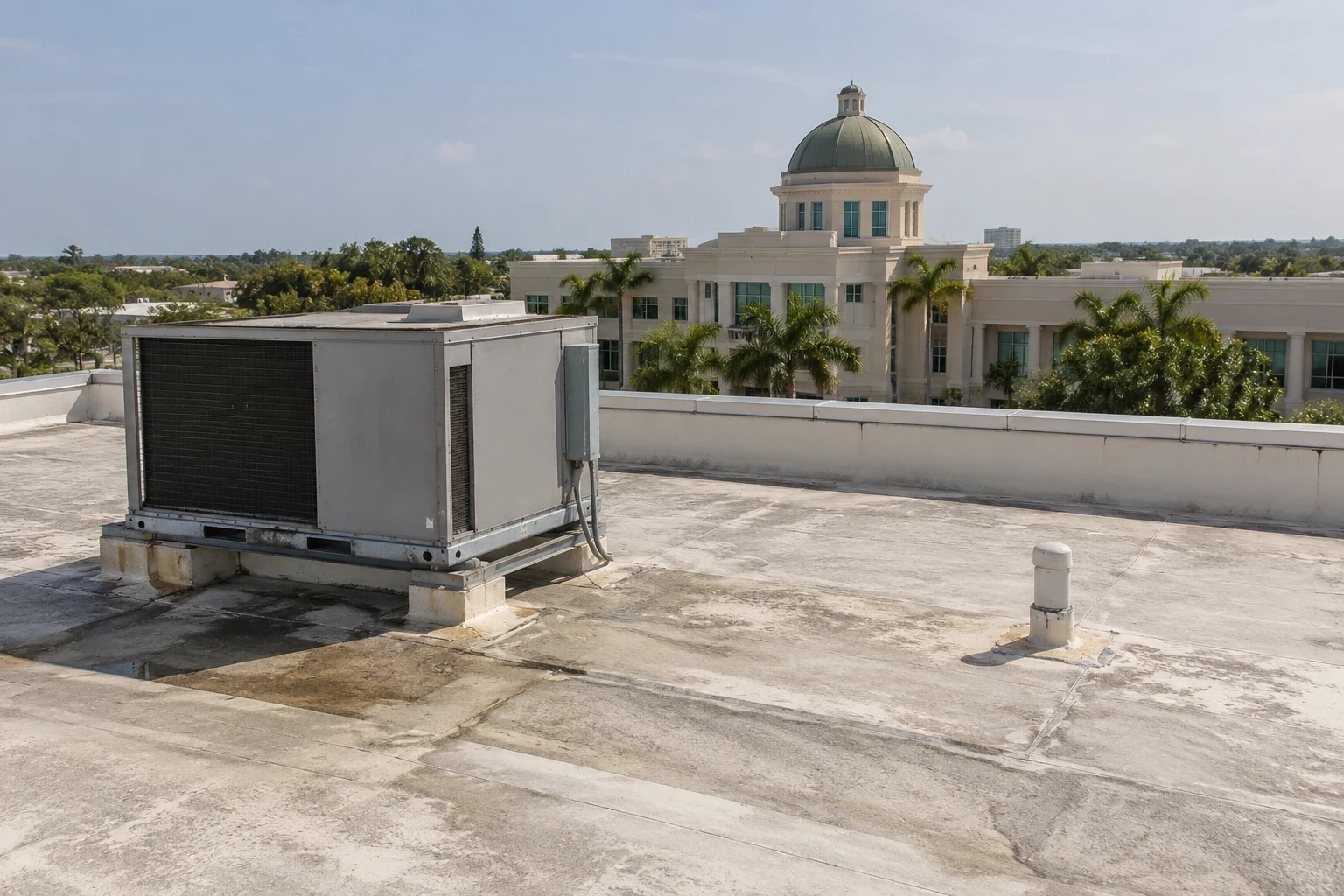
A damp patch over a training floor changes where members can exercise and where equipment can stay. We trace the report to a roof seam, curb, skylight or drain, then mark the repair boundary around the defect and the material that can receive a sound tie-in. In Cape Coral, humidity and warm-season downpours make a dry, secure close each day part of the job. The roof decision must also account for class schedules, showers, locker areas and the equipment below.
The Cove at 47th includes fitness amenities, and Pine Island Road supports commercial uses. At each facility, confirm the roof system, entrance, service route and operating pattern before planning work. We start with the address, building contact and reported condition.
Connect Roof Findings to Occupied Rooms
Start with the room, time and activity affected, then compare that report with the roof above and upslope. Fitness buildings can combine open workout areas, studios, offices, locker rooms and mechanical zones. We inspect membrane laps, penetrations, perimeter metal, skylights, drains and rooftop equipment supports, recording a location for each condition. A ceiling mark alone cannot show how far water moved through insulation or along a deck, so the report distinguishes observation from confirmed entry.
A roof inspection can map accessible surfaces and identify areas that need testing. For an active leak, we protect the room below and inspect the roof detail that aligns with the report. Skylight and penetration flashing work focuses on the connection between the roof and each curb or opening; the surrounding membrane still needs inspection before its repair limit is set.
Mechanical units may serve a studio or locker area on a different schedule from the main exercise floor. Confirm which spaces depend on each unit before any shutdown or protection is planned. A curb and support inspection considers the flashing and attachment around the equipment without treating the unit's operation as a roofing scope.
Phase Work Around Classes and Member Routes
Mark reception, accessible entrances, class rooms, showers, fire exits and delivery access before staging. Agree on work hours and any class blocks that should remain quiet. A lift or material drop should not cut across the member entrance or leave an open path beneath overhead work. We set the roof sequence with the facility contact, use barriers below active work and restore safe circulation before each occupied period.
For a larger project, divide the roof into sections that can be opened, installed and closed within the weather window. Coordinate ventilation, rooftop unit access and noise with the fitness schedule. Each shift ends with a check of temporary membrane, drains, materials and interior routes. If removal exposes wet insulation or a damaged deck, take a located photo and hold that section for direction before extending the work.
Gyms inside a retail or mixed-use development can share parking and access with neighboring tenants. A shopping-center roof plan accounts for common areas and tenant operations, while a multifamily roof sequence has its own resident access concerns. Fitness rooms at The Cove at 47th share a mixed-use district context; site staff should confirm the actual entrance, service route and permitted work window.
Keep Water Moving Away From the Activity Floor
A drain basket full of debris, a low area or a split around a drain flange can each leave water standing, but they call for different work. We inspect the strainer, bowl, clamping ring and surrounding membrane, then follow water toward the intended outlet. A drainage review can define cleaning or repair and flag a slope question for further evaluation. Replacing the visible sheet without securing the drain interface leaves the weakest connection in place.
Cape Coral receives substantial rain, particularly during warm months, and the humid air makes substrate dryness important for adhesives and flashing. Before new material is installed, we confirm preparation and moisture conditions at the repair area. Around skylights and equipment curbs, the membrane turn, flashing height and metal transition must be compatible with the proposed system. Keep the work boundary wide enough to land on sound material, but no wider than the observed condition and approved scope support.
After a major storm affects a Lee County fitness facility, inspect roof edges, equipment curbs and drainage, then document temporary protection and repair priority. For post-storm review, compare dated roof photographs with current drains, equipment supports and edge details, then document repairs needed at the facility.
Choose a Scope the Facility Can Operate Around
An isolated seam or curb failure can be repaired when surrounding insulation and attachment remain sound. Multiple leaks, repeated patch failure, broad moisture or a deteriorated deck may call for a wider comparison. A repair scope should name each section and tie-in. A replacement proposal should outline removal, new assembly, perimeter details, staging and the phasing needed to keep selected rooms available.
Recover and coating options depend on the existing layers, moisture, drainage, compatibility and substrate preparation. A coating cannot correct wet insulation or a loose perimeter. We list what is confirmed, what testing remains and how concealed deck work will be authorized. System choice also accounts for rooftop foot traffic for maintenance and any equipment clearances the facility needs to retain.
Timing follows access, weather, lead times and how much of the facility can be temporarily restricted. South Cape's mixed-use commercial activity and Pine Island Road's retail and service corridor have different site approaches, but neither determines the roof schedule. Confirm delivery routes, parking, notices and class calendars with the building operator. A The Cove at 47th facility needs its actual work address and access contact recorded before mobilization.
Record the Roof Condition for the Next Visit
The closeout file should show the repaired sections, materials, detail photographs, drain checks, work dates and any open testing item. Keep interior room reports with matching roof locations so staff can tell whether a later stain is new or relates to a condition already addressed. Note areas blocked by equipment or access limits, then schedule another look when they can be reached.
Preventive maintenance can check drains, seams, exposed fasteners, equipment supports, flashing and coating condition before a leak disrupts a class. We record debris cleanup separately from roof repair and keep recommendations tied to specific locations. After an HVAC change or new skylight work, update the roof map and inspection history so later service does not overlook a new penetration.
Share the Cape Coral address, operating schedule, roof records and affected room. We will inspect accessible sections, coordinate member routes and return a scope tied to the building's actual conditions.
Commercial Roofing Questions
Can roof repairs happen while a fitness center is open?
Often, by coordinating the active room, member paths and work hours with the facility contact. We define staging, overhead protection, barriers and daily closure for each roof section. The building layout and class calendar determine which areas can stay available.
What information helps trace a leak over a workout area?
Give us the room, date, time, weather and any change in the ceiling condition. We compare that report with drains, seams, penetrations and equipment supports above, then document whether the roof opening is confirmed or further testing is needed.
Should rooftop equipment be shut down during roof work?
Only when the work area or system requirements call for it. We identify the equipment and rooms it serves, then coordinate protection or an approved shutdown with facility operations. The roofing scope describes the curb and membrane work separately from mechanical service.
When should a gym consider full replacement?
Replacement merits comparison when failures recur, moisture spans several sections, attachment is deteriorated or the deck needs broader review. We map the conditions, identify tests that could change the decision and show repair and replacement boundaries on the same basis.
Send the facility address, operating hours, leak reports and roof records. We will inspect the assembly and plan repair or replacement around member access. Call 555-555-5555 or request a roof assessment for Fitness Center Roofing in Cape Coral, FL.