Coordinate retail and restaurant roof work across Cape Coral locations with consistent condition records, local access plans and defined repair scopes.
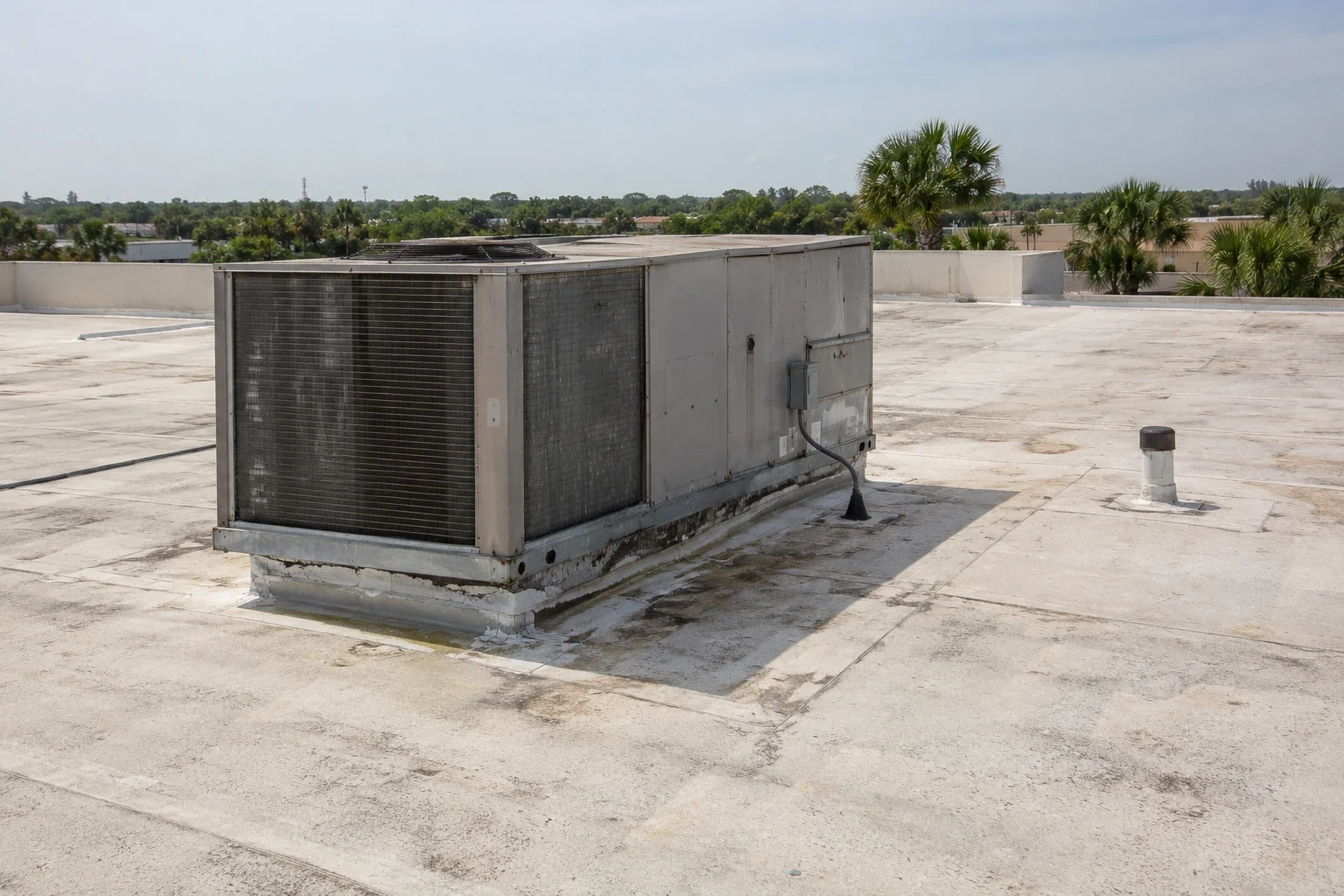
An opening can be reported after closing, overnight or on a holiday. We coordinate safe entry with the location contact, protect the affected space and record which work is temporary before planning the lasting repair.
Use One Record Format Without Assuming One Roof
Each location record should carry its address, roof plan, system information, access contact, inspection date, leak history and open recommendations. During a survey, label each elevation, edge, curb, drain and prior repair so a corporate facilities team can compare findings by the same fields. Keep the property’s photos and test results attached to its own record. Identical brand signage does not mean identical roof layers or repair history.
Cape Coral’s Pine Island Road corridor serves retail and light-industrial activity; City Centrum includes commercial and civic land uses. These different settings require access instructions tied to each address. A multi-location roof review can standardize labels and action categories, while a property management contact can confirm building-level access and repair records. Keep local findings attached to the actual address rather than rolling them into a chain-wide condition statement.
Protect Store Hours and Receiving Routes
Retail and restaurant operations share a need for safe entrances, active receiving and clear fire access, but their work windows differ. Confirm customer hours, food preparation, delivery schedules, exhaust shutdowns, service corridors and approved staging for each location. If materials arrive before opening, document where they can be unloaded and how the route clears before customers enter. Noisy tear-off above dining or sales areas may require another shift or a smaller phase.
South Cape includes more than 60 restaurants across a compact commercial district, while the Pine Island Road corridor includes retail, office, industrial and mixed-use planning. A brand working in both settings needs local access instructions rather than a single schedule copied from another store. Coordinate a shared retail-center roof phase with the landlord when roofs or staging are common. For restaurant locations, kitchen exhaust and service details can affect the roof scope. Our occupied-property sequence identifies which section opens and how it is made secure at the end of the shift.
Classify the Finding Before Dispatch
A fresh leak, blocked drain and recurring curb failure call for different dispatch decisions. We compare the report with roof-level evidence, determine whether water is active and identify any temporary measure that remains. A ceiling mark alone may not locate the opening, so record the room or sales area and check seams, walls, equipment and drains above it. If testing could change the repair, document approval and the exact sample location first.
For an urgent opening, emergency roof response is available outside normal hours, subject to safe access and weather. A recurring detail may need a defined repair scope and review of the material around it. Keep the brand’s reporting process separate from the physical work order: note who authorized access, which location was visited, what was repaired and what remains open. A regional operations contact can then reconcile the ticket without treating a different store’s roof as evidence.
Compare Repair Decisions Across the Portfolio
A patch is appropriate where the defect is local and surrounding material is sound, dry and able to accept a compatible tie-in. Repeated seam or curb failure may indicate that a larger assembly review is needed. Recover depends on existing layers, attachment, deck and drainage; replacement exposes more of the roof but changes access, debris and schedule. A corporate summary should preserve the evidence behind each decision, including which areas were not inspected.
For Cape Coral, Fort Myers Page Field is the nearest long-running climate reference; its normals list June through September average highs of 91 to 92 degrees and annual precipitation near 57 inches. Hurricane Ian generated severe surge along portions of Lee County’s Gulf coast in 2022. At each store, document roof conditions and compare confirmed repair needs with the chain’s capital schedule. A location-level roof inspection and a capital schedule can help the chain compare work by condition and timing. If a claim or restoration file is involved, restoration records should keep observed damage separate from cause and coverage decisions.
Return Findings to the Store and Facilities Teams
At closeout, mark each completed roof zone, include dated photographs and materials, and list deferred or inaccessible areas. Confirm that drains, air intakes, exhaust clearances and service paths are open. For repeat service, retain the same location labels and route the record to both the store contact and the central facilities file. This gives later work a usable history without turning one repair into a claim about every location.
City Centrum, South Cape and Pine Island Road represent different Cape Coral commercial contexts. The project record should still start with the exact address, roof plan and operating contact. Send the location list, prior roof reports, leak tickets, access windows and equipment details. We can survey the buildings separately, return consistent records and define repair or replacement work that fits each store’s actual conditions.
Commercial Roofing Questions
Can chain-wide roofing be scheduled under one contract?
A common service framework can simplify contacts and reporting, but each location still needs its own access, inspection and repair limits. We can use consistent line items and records while varying work windows, materials and staging by building. The property contact should confirm who can approve access or a change at each address.
How should a store report a roof leak to a regional facilities team?
Record the address, room or sales area, time observed, active water, nearby equipment and any immediate safety concern. Do not assume the interior stain marks the entry point. The roofing inspection should add roof-level photographs, likely path and the limits of any temporary repair so the next decision has a location-specific basis.
Can repairs take place before opening or after close?
Those windows may work when deliveries, food preparation, security, staging and roof access are confirmed. We agree on the work boundary and the time required to protect or close it. A crane, exhaust shutdown or weather delay can change the sequence, so the store contact should receive an updated access plan before crews proceed.
Does a leak at one store indicate the same defect elsewhere?
No. A shared brand does not establish a shared roof system or failure. Compare installation records and inspect each building before applying a repair detail elsewhere. If several locations report the same symptom, note the pattern as a reason to investigate, not as proof of a common cause.
Share the store list, addresses, roof records, operating windows and local contacts. We will inspect each location, preserve its own findings and return scopes that corporate and site teams can review together. Call 555-555-5555 or request a roof assessment for Retail and Restaurant Chains in Cape Coral, FL.